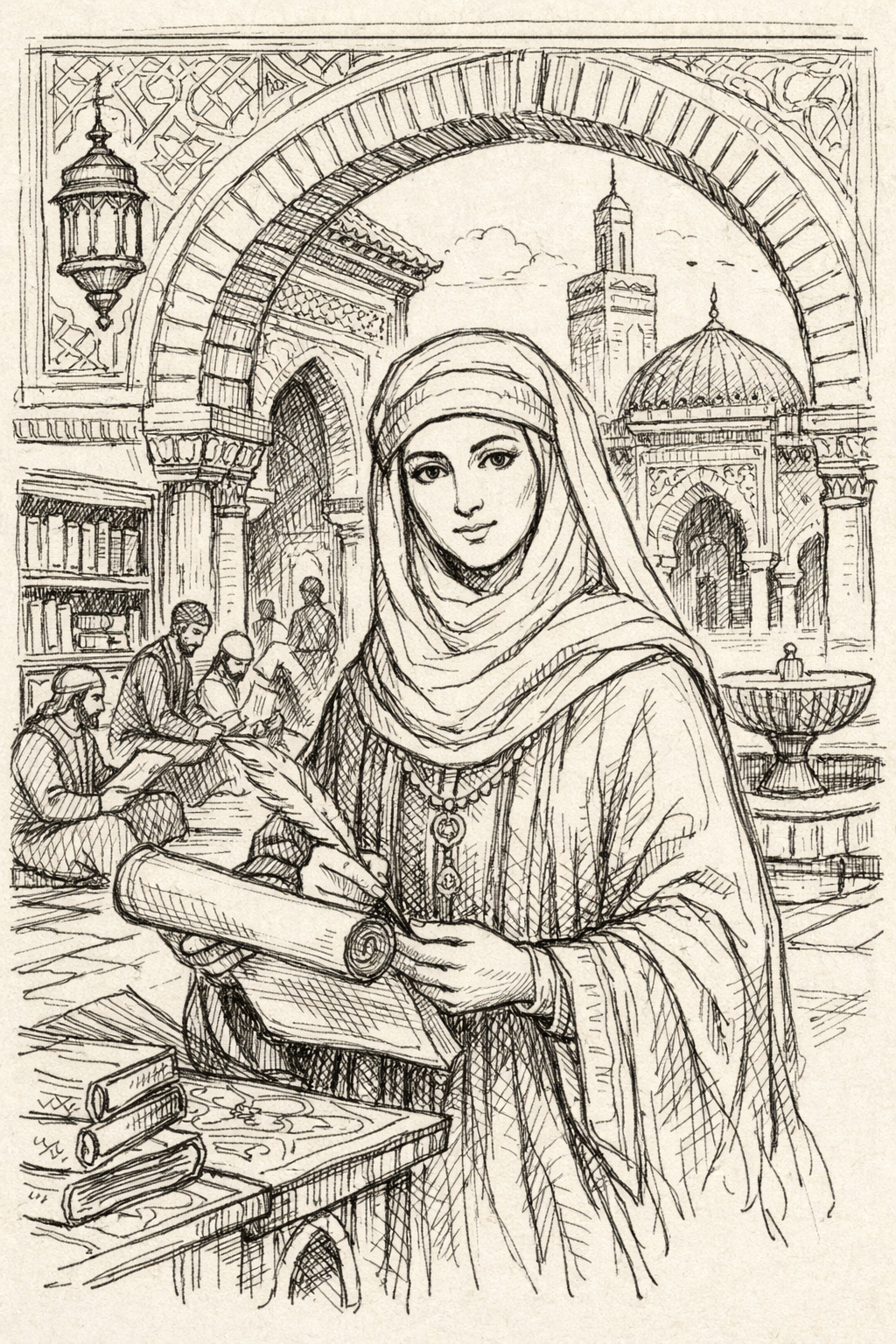
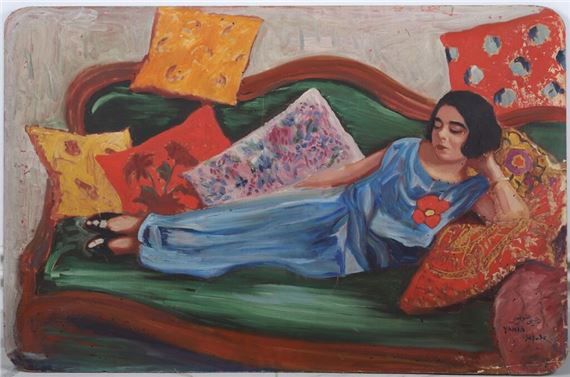
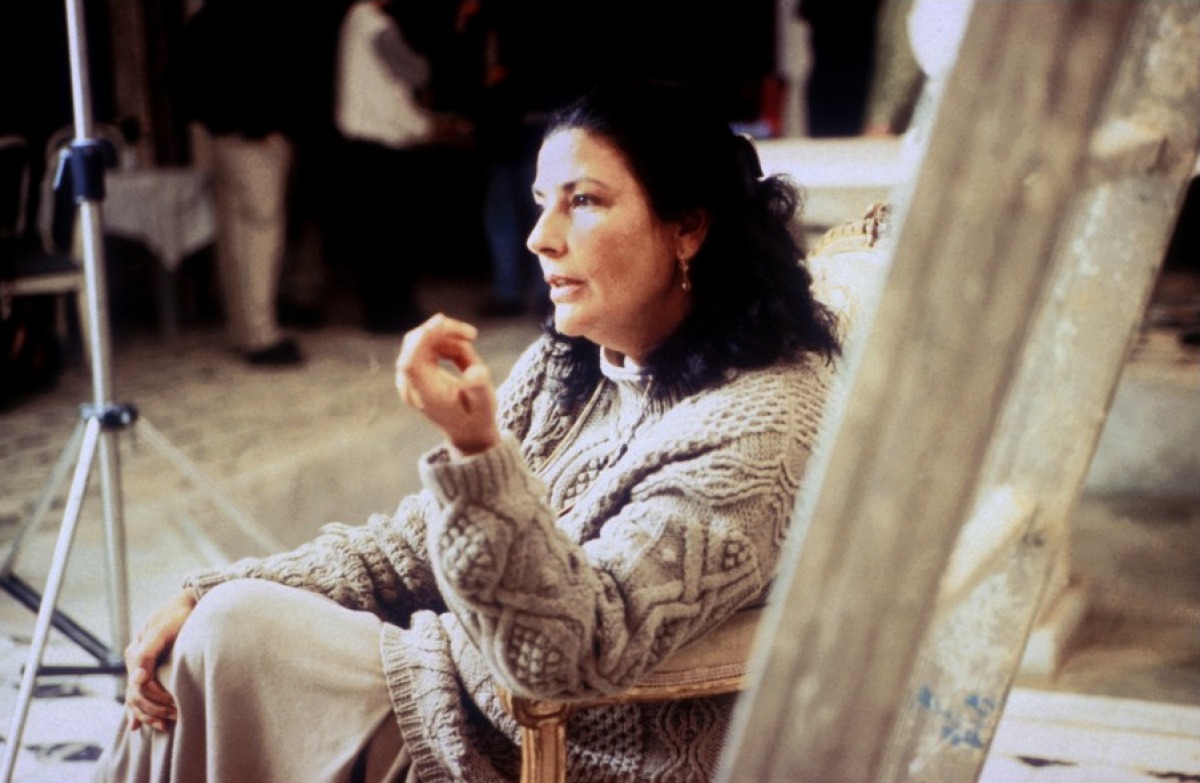
The Story of Tewhida Ben Sheikh (1909-2010)
Tunis, 1909
A girl is born into a well-known Tunisian family. They name her Tewhida. She never knows her father. He dies when she is young, leaving her mother Hallouma alone with four children, three girls and a boy. The son is born after his father's death. A widow raising five children in early 20th century Tunisia, under French colonial rule. This should be a story of hardship, of limitation, of doors closing before they open.
But Hallouma is an extraordinary woman. She is educated in Arabic, devout in her faith, and remarkably open-minded. Despite being alone, despite the whispers, despite a society that expects girls to stay home, she does something radical. She ensures all her children, including her daughters, get secondary educations. Her own mother, her brothers, her sisters all tell her she's crazy. She doesn't listen. Tewhida and her sisters become the first Tunisian girls to complete secondary school.
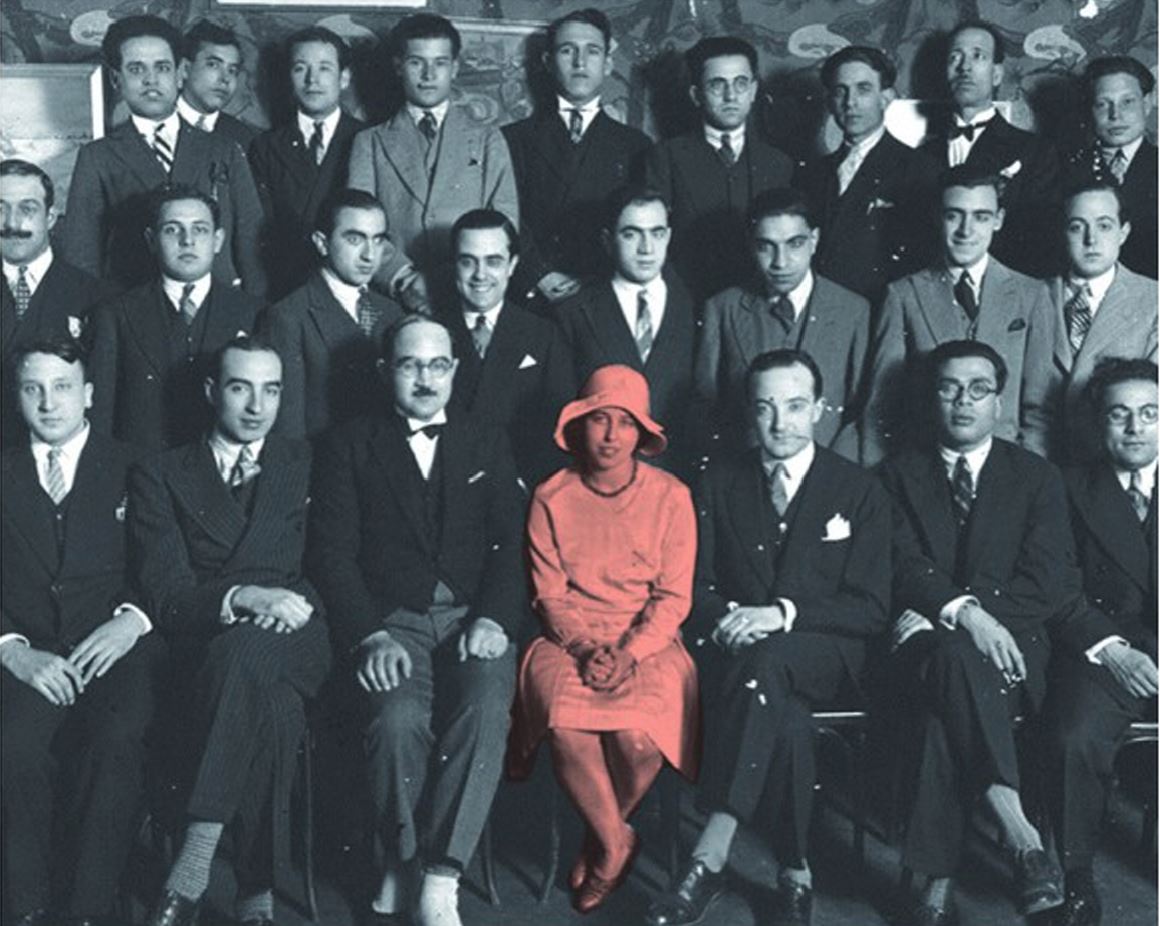
Tunis, 1928
Tewhida is nineteen years old. She sits for the baccalauréat exam, the first Muslim girl in Tunisia to do so. She passes. The newspapers notice. The French authorities notice. Her family notices. Everyone asks the same question. Now what?
She wants to do social work, to help others. Maybe work at the Pasteur Institute in Tunis. A professor introduces her to Dr. Étienne Burnet, the Deputy Director of the Institute, and his Russian wife. The Burnets are cultured people. He's a literary man, a philosopher who studied Greek and Latin, and a famous medical researcher. Tewhida goes to see them on a summer day in 1929. She remembers it perfectly, even decades later.
"So, my little one, what would you like to do?" Dr. Burnet asks.
"I would like to do something. Perhaps study medicine. But there is no medical school here in Tunis, so perhaps Algiers?"
He looks at her, hesitates, and then says something that will change her life. "My little one. If you want to accomplish something, to study medicine, you must enter by the big door. You must go to Paris."
She almost laughs. "You are dreaming, sir."
"I can help you. I know many people in Paris and can arrange for you to go there."
She goes home and tells her mother. Hallouma doesn't reject the idea outright. This small opening of possibility is enough.
Tunis, September 1929
The family erupts. Everyone, her grandmother, her uncles, her aunts, the extended family, descends on Hallouma. "You've lost your mind," they say. "Sending a young girl to the city of perdition alone?" One uncle, Tahar Ben Ammar, who studied in France himself and whom Tewhida thought she could count on, joins the opposition. "Your mother is crazy."
But Dr. Burnet has been working. He writes to friends in Paris and finds a place for her in a brand new residence for women students, the Foyer International des Étudiantes, founded by an American woman named Mrs. Anderson. One hundred rooms for young women from around the world. They telegraph back. There's an opening. Without even consulting her, Dr. Burnet reserves it.
He has to leave for Geneva soon, but his wife will stay a few weeks longer. She can accompany Tewhida to Paris in October.
The day of departure arrives. Tewhida waits for the car that will take her to the port. Instead, another car arrives. Inside, a cleric, two uncles, and a cousin. They've come to stop her. A family council is convened on the spot. A young girl, an orphan, trying to go to France alone. The men argue. They reason. They invoke tradition, propriety, danger.
Hallouma faces them all. She is in her sitting room with these men, her daughters and sisters hidden downstairs. The discussions drag on. Hours pass. The car to the port waits outside. Tewhida manages to whisper to the driver. Don't leave without me, no matter who tells you to go.
Finally, one of the uncles offers a compromise. "She can leave next week. A young girl should only travel with her father, a maternal uncle, or a brother."
Hallouma answers quietly. "She is leaving with a woman of whom I am as confident as my own self."
Tewhida puts on her coat. She runs downstairs. She jumps in the car. They race to the port. The boat sails a few minutes late that day. Because of her.
Paris, 1929 to 1936
She arrives in a city she's only read about. The Foyer International becomes her home. A hundred young women from everywhere, all studying, all pushing against the boundaries of their worlds. She enrolls in the Faculty of Medicine in Paris. She is the only Tunisian, the only Muslim woman, the only one who looks like her.
Seven years pass. She studies pediatrics first, then gynecology. She learns how to deliver babies, how to save mothers, how to listen to women's bodies. She watches French medicine at its best and absorbs everything.
In 1936, she earns her medical degree. The first Muslim woman from North Africa to do so. The first woman doctor in the entire Arab world.
Tunis, 1936
She returns home. The local doctors give her a dinner in her honor. They don't know what else to do with her.
The colonial authorities know exactly what to do. They bar her from public hospitals. Those are reserved for French doctors. A Tunisian woman, even one with a Paris medical degree, cannot work there.
So she does what pioneers do. She opens her own private practice in Bab Menara, near the medina of Tunis. A small clinic where women can come to her.
And they do come. In droves. Women who have never seen a female doctor, who have suffered in silence because custom forbids them from being examined by men, suddenly have someone they can talk to. Someone who speaks their language. Someone who understands their bodies and their lives.
Tunis, 1937
She is twenty eight years old. A new magazine appears on the streets of Tunis. Leila, an illustrated monthly magazine for the evolution and emancipation of the Muslim woman of North Africa. They ask her to direct it. She accepts.
Through its pages, she reaches women who cannot come to her clinic. She writes about health, about education, about the rights they deserve. She becomes part of a network of women fighting for change, the Muslim Union of Tunisian Women, founded by Bchira Ben Mrad. She joins them.
Tunis, 1943
War rages across the world. Tunisia is occupied, then liberated. In the middle of it all, she marries a dentist. Life continues. She gives birth to three children. Faycel, who becomes a veterinarian. Omar, who becomes a dentist. Zeineb, who becomes a historian and archaeologist, eventually directing research at the National Heritage Institute.
She is a wife, a mother, and a doctor. She does not stop being any of them.
Tunis, 1955
The colonial walls finally crack. She is named head of the maternity department at Charles Nicolle Hospital. The first Tunisian woman to hold such a position in a public hospital. Nine years later, she moves to Aziza Othmana Hospital, where she will work until her retirement in 1977.
Tunis, 1960s
She walks through the wards of Charles Nicolle. Women line the corridors waiting for her. Poor women. Working women. Women who cannot pay. She sees them all. She treats them all. Sometimes they bring eggs, vegetables, whatever they can spare. Sometimes they bring nothing but gratitude. Her daughter remembers. "I remember the line of women always waiting for her on the street, at any hour of the day. When she went to her patients' homes for deliveries, many had no water or hygiene conditions, and often they couldn't pay her. That's why they called her the doctor of the poor."
She becomes the doctor of the poor.
But she sees something deeper than poverty. She sees women destroyed by repeated pregnancies, by bodies that never get a rest, by children they cannot feed. She sees unmarried mothers abandoned by their families, their babies left in gutters, their lives destroyed by shame. She sees what happens when women have no control over their own bodies.
Tunis, 1963
She does something unprecedented. At Charles Nicolle Hospital, she opens the first family planning clinic in Tunisia. Not quietly, not secretly. Officially, publicly, with the intention of giving women the choice to decide when and whether to have children.
This is years before the law will catch up. Abortion is still illegal. But she knows that women will have them anyway, in back alleys, with coat hangers, bleeding out on dirty floors. So she does what doctors do. She saves lives. She performs abortions. Not many people talk about this part of her story, but her daughter does. "They were single mothers. She didn't want women to suffer and she didn't want children to be abandoned."
Tunis, 1970
She opens a specialized family planning clinic in Montfleury. She trains other doctors in contraception and abortion procedures. She builds an institution that will outlast her.
Tunis, 1973
Tunisia legalizes abortion. One of the first countries in the Arab world to do so. The law bears the mark of her work, her advocacy, her quiet insistence that women's lives matter.
Tunis, December 6, 2010
She is 101 years old. She has lived through two world wars, through colonization and independence, through the reign of nine French presidents and three Tunisian presidents. She has seen her country transform from a French protectorate to a republic, from a place where girls couldn't go to school to a place where women are doctors and lawyers and ministers.
On this December day, she dies. The Tunisian medical family goes into mourning. The newspapers fill with obituaries. People who never knew her name suddenly learn about the woman who delivered their mothers, who trained their doctors, who fought for their right to choose.
Twenty three days later, across the country, a fruit vendor in Sidi Bouzid will set himself on fire. The revolution will begin. She misses it by less than a month.
Tunis, March 27, 2020
The Central Bank of Tunisia releases a new 10 dinar banknote. On it is her face. Not a politician. Not a general. Not a poet. A doctor. A woman who delivered babies and fought for family planning. The first woman to appear on a banknote in North Africa.
The timing is deliberate. COVID 19 is sweeping the world. Healthcare workers are dying on the front lines. The bank's governor announces that the note is meant to pay tribute to healthcare personnel on the front line in this crisis.
Her face goes into every pocket, every market, every transaction. Women pull out the note and see themselves reflected. Little girls hold it and ask, who is this? Their mothers tell them. The first woman doctor. The doctor of the poor. Our doctor.
Tunis, 2021
March 27. Google celebrates her with a Doodle on its homepage. Millions see her face. The algorithm learns her name.
Ras Jebel, November 25, 2022
They unveil a bust of her in the town where her family originated. Her image cast in bronze, standing in public space, visible to everyone who passes. A woman. A doctor. A pioneer. Immortalized.
Tunis, 2026. Today.
You can hold her face in your hands. The 10 dinar note, worn soft at the edges, passes from palm to palm in the souk, in the bakery, in the taxi. A woman buying vegetables hands it over. A child receives it as change for bread. A groom stuffs it into an envelope at a wedding. Her image circulates through the country like blood through a body.
But a face on money is not the same as a story in the heart.
Her daughter Zeineb still carries her memory. The association that bears her name still fights for women's reproductive health. The clinic in Montfleury still operates. The hospital wards she walked still bear the imprint of her steps. But these are fragile things. Associations lose funding. Clinics close. Hospitals rename their wings. Memory requires more than institutions. It requires telling.
The young women who benefit from her work often don't know her name. They walk into family planning centers that exist because she fought for them, and they sign forms, and they receive care, and they leave without knowing who made this possible. This is how progress works. The battle becomes invisible. The ground gained becomes just ground.
And the ground can always be lost.
The conservative currents that she fought against are rising again. Contraceptives sometimes disappear from pharmacy shelves. Some doctors refuse to perform abortions for ideological reasons. Sex education is almost nonexistent in schools. Young people, a third of the population, don't know their own bodies. Don't know their rights. Don't know that a woman fought for them to have choices.
In 2015, a survey found that 90 percent of Tunisians consider sex outside marriage haram. Half of young people don't know any contraceptive method. Half believe abortion is illegal. Eighty percent don't know that family planning centers exist.
The work is not finished. It never is.
But here is the thing about Tewhida Ben Sheikh. She did not wait for the work to be finished. She did not wait for permission. She did not wait for the law to catch up, for society to approve, for her family to agree. She ran downstairs, jumped in the car, and sailed away on a boat that waited for her.
She opened a clinic before it was legal. She saved women before it was permitted. She trained doctors before it was expected. She lived to be 101 years old, and she never stopped delivering.
Delivering babies. Delivering choices. Delivering a nation.


.png)
More
more
like this
like this
On this blog, I write about what I love: AI, web design, graphic design, SEO, tech, and cinema, with a personal twist.