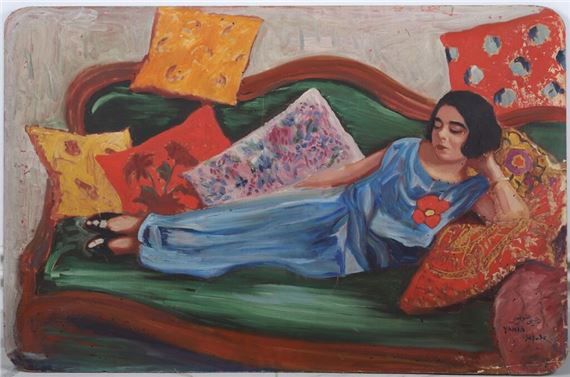
The Story of Fatima El Fehria (c. 800-880)
Kairouan, Tunisia. Around the year 800.
A girl is born in the holy city of Kairouan, the city of fifty mosques, the city of scholars, the city that carries Islam into North Africa. Her father is Muhammad al-Fihri, a wealthy merchant from the noble Quraysh tribe, the tribe of the Prophet himself .
They name her Fatima. Fatima bint Muhammad al-Fihri al-Qurashiya .
Her family is part of something larger. They are among the many who carry the name of their city with them wherever they go. Al-Fihri means "from the Fihr tribe," a branch of Quraysh. They are Arabs, merchants, people of learning and faith .
She grows up in Kairouan surrounded by the rhythms of commerce and scholarship. Her father trades in goods that travel across the Mediterranean. Her mother manages a household that values education. Fatima and her sister Mariam both attend school, both learn to read and write, both study the Quran and the Hadith, the sayings of the Prophet .
But Kairouan in the early 9th century is not peaceful. Uprisings shake the city. Violence spills into the streets. Her father watches his home become unstable, dangerous, no place to raise his daughters .
Around 820, when Fatima is about twenty years old, he makes a decision. He will leave. He will take his family to Fez.
Fez, Morocco. 820s.
The city is still young, founded only decades earlier by Idris I. But under Idris II, it is growing fast, becoming a metropolis, a magnet for migrants from everywhere. From Andalusia, eight hundred families arrive, Muslims and Jews fleeing the Umayyads. From Kairouan, three hundred families arrive, fleeing the unrest .
The river divides the city. On the right bank, the Andalusians settle. Their quarter becomes the Andalusian Quarter. On the left bank, the Kairouanis settle. Their quarter becomes the Qarawiyyin Quarter, the quarter of the people from Kairouan .
The al-Fihri family settles on the left bank, among their own. Fatima marries a man from the neighborhood. She has two sons. The community calls her "Oum Al Banine," Mother of the Two Sons .
Her father continues his trade. He prospers. The family that was not born wealthy becomes wealthy through his work .
And then, in quick succession, death comes.
Her father dies. Her husband dies. Her brother dies.
Fatima and her sister Mariam are left alone. Two women, well-educated, deeply pious, inheriting a vast fortune. In 9th-century Fez, they could do anything with this money. They could live comfortably, marry again, pass the wealth to their children.
But they choose something else.
Fez, 857 to 859. The construction.
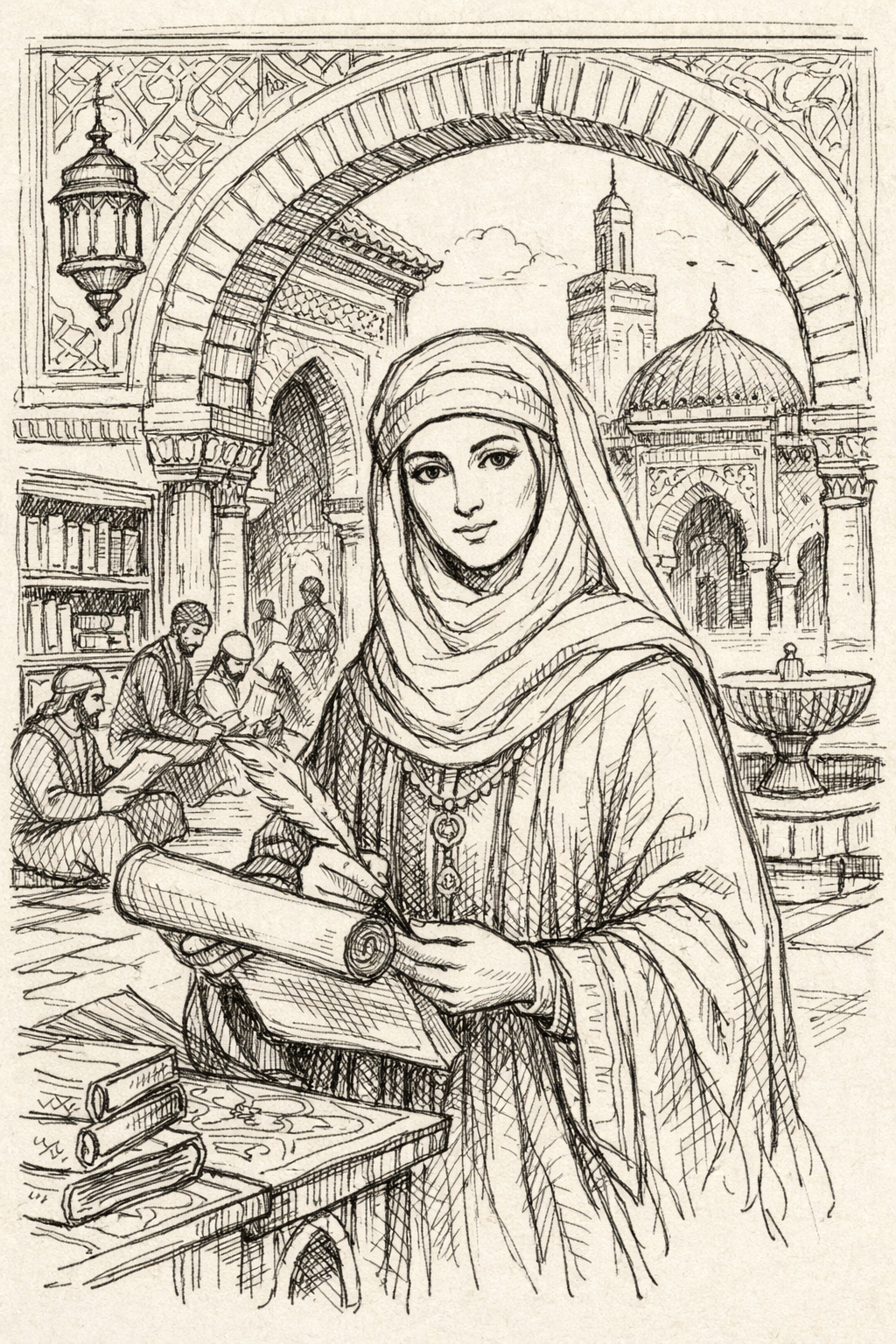
Fatima looks at her community and sees a need. The Qarawiyyin Quarter has no grand mosque. The faithful pray in small spaces, scattered, without a proper place to gather. The refugees from her homeland need a home for their souls .
She makes a vow. She will spend her entire inheritance to build a mosque for her people. A mosque worthy of their devotion. A mosque that will stand for centuries .
She buys a plot of land near the Spice Market, in the heart of the quarter. She pays for it with her own money. The story says she vowed to use only earth that she had purchased from others, nothing seized, nothing taken, everything just .
On the first day of Ramadan in the year 859, she lays the foundation. She is there with her sister Mariam, who will build her own mosque on the other side of the river, the Al-Andalus Mosque, for the Andalusian refugees .
Fatima knows nothing about architecture. She has never built anything. But she supervises every detail. She hires the best engineers, the most skilled craftsmen. She chooses the finest materials. She fasts every day from the start of construction, breaking her fast only at night, praying that this work be accepted .
For two years, she fasts and builds. For two years, she oversees, directs, ensures that every stone is placed correctly, every arch properly curved, every detail exactly as it should be .
When the construction is complete, on the first day of Ramadan two years later, she enters the mosque. She prays there, in the building she built with her wealth and her will and her faith .
She names it Jami' al-Qarawiyyin. The Mosque of the People of Kairouan .
It will become the largest mosque in North Africa. It will become the oldest university in the world. It will become her legacy, though she does not know it yet.
Fez, after 859. The transformation.
At first, it is just a mosque. But in the Islamic world, a mosque is never just a mosque. It is a school, a community center, a place of learning, a place of debate, a place where circles form around teachers, where knowledge passes from mouth to ear, from generation to generation .
From its earliest days, the Qarawiyyin Mosque hosts halaqas, circles of learning. Students sit in a semicircle around a teacher, listening, questioning, memorizing, understanding. They study the Quran. They study Hadith. They study fiqh, Islamic jurisprudence .
As the decades pass, the circles multiply. Scholars come from everywhere to teach and to learn. The curriculum expands. Grammar. Rhetoric. Logic. Medicine. Mathematics. Astronomy. Geography. Chemistry. History. Music .
By the 10th century, it is no longer just a mosque with a school. It is an institution. It attracts students from all over the Muslim world, from Andalusia to Central Asia. It becomes the leading spiritual and educational center of the entire Islamic West .
In the 11th and 12th centuries, under the Almoravids, it becomes even more formal. Historian Mohammed Al-Manouni dates the transformation into a degree-granting institution to the Almoravid period, between 1040 and 1147 . By then, it is granting certificates to scholars, the earliest form of university degrees.
In the 13th and 14th centuries, under the Marinids, it reaches its peak. The curriculum expands further. Philosophy. Sufism. Foreign languages, including Greek and Latin . The library grows into one of the great repositories of knowledge in the world.
But the foundation, the origin, the first stone, was laid by a woman who knew nothing about building but built anyway.
Fez, 880. The end.
Fatima al-Fihri dies at about eighty years old. Her university has been running for twenty-four years .
She never sees what it will become. She never knows that it will be recognized by UNESCO and Guinness World Records as the oldest continually operating educational institution in the world . She never knows that it will predate the University of Bologna by 229 years, Oxford by centuries . She never knows that her name will be spoken a thousand years later, in languages she never heard, in countries that did not exist when she lived.
She dies quietly, as she lived. A pious woman. A generous woman. A woman who took the wealth her father left and gave it all away for God.
They bury her somewhere in Fez. The exact location is lost. But her mosque remains. Her university remains. Her name remains.
Fez, 1963
The modern world arrives. Al-Qarawiyyin is incorporated into Morocco's state university system . It is officially renamed the University of Al Quaraouiyine . The ancient madrasa becomes a modern university, still teaching, still granting degrees, still carrying Fatima's name.
Fez, 2012 to 2016
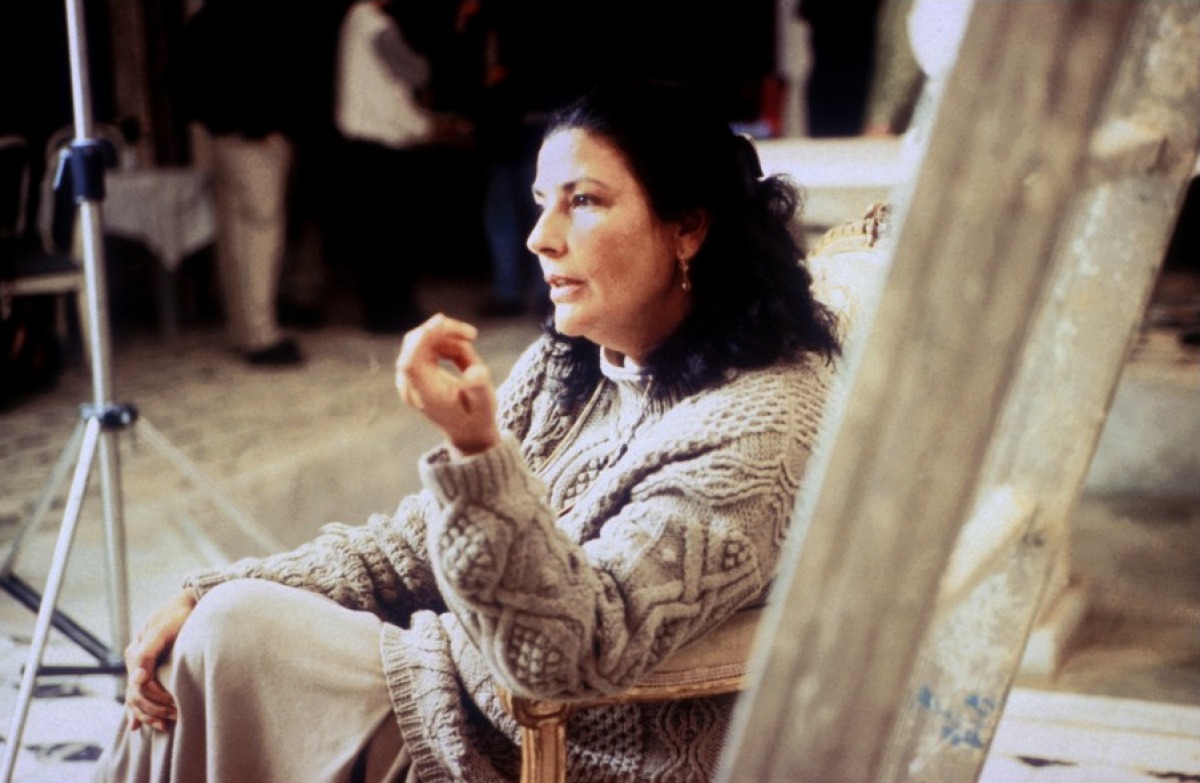
The library, the oldest in the world, is crumbling. For centuries, it has been closed to the public, accessible only to scholars, slowly decaying. The Moroccan Ministry of Culture contacts a young architect named Aziza Chaouni .
Chaouni was born in Fez. She knows the city, the mosque, the library. She leads a restoration project that takes three years. She stabilizes the structure. She repairs the damage. She creates a modern library within the ancient walls, with an exhibition room, a conservation laboratory, a cafe .
In May 2016, the library reopens to the public .
And there, among the treasures, among the 9th-century Quran written on camel skin, among the earliest collections of Hadith, among the manuscripts of Ibn Khaldun's Muqaddimah, among the Gospel in Arabic from the 12th century, Chaouni finds something unexpected .
Fatima al-Fihri's own diploma. Preserved on a wooden board. Her certificate in Islamic jurisprudence and mathematics from the university she founded .
The founder was also a student. The builder was also a learner. The woman who gave everything away also took knowledge for herself.
Fez, 2026. Today.
You can visit the mosque. You can walk through the courtyard with its ceramic tiles and its fountain. You can see the women's prayer gallery, where she prayed, where women still pray. You can stand in the place where she stood, 1,167 years ago, on the first day of Ramadan, laying the foundation.
You can visit the library. You can see her diploma, the wooden board with her name, her achievements, her learning. You can touch, through glass, the proof that she studied at her own institution.
You can walk through the Qarawiyyin Quarter, the left bank of the river, where the refugees from Kairouan settled, where she lived, where she raised her sons, where she decided to spend her fortune on God.
The university still operates. Students still sit in circles around teachers. The oldest university in the world, founded by a woman, still teaches. Still grants degrees. Still carries her name.
Fatima bint Muhammad al-Fihri al-Qurashiya.
Mother of the Two Sons.
Founder of the world's first university.
Kairouan, 800. The beginning.
A girl is born in the holy city. She is the daughter of a merchant, the granddaughter of nothing, the descendant of the tribe of the Prophet. She will cross the sea, lose everyone she loves, inherit a fortune, and give it all away for God.
She will build a mosque that becomes a university that becomes a legend. She will create something that outlasts empires, dynasties, centuries. She will be forgotten and remembered, erased and recovered, again and again.
And at the end, she will leave behind a wooden board with her name on it, proof that she studied, proof that she learned, proof that a woman in the 9th century could be both founder and student, builder and learner, giver and receiver.
The world's oldest university was founded by a woman.
That woman was from Tunisia.
Her name was Fatima.


.png)
More
more
like this
like this
On this blog, I write about what I love: AI, web design, graphic design, SEO, tech, and cinema, with a personal twist.