The Story of Aïcha Bellagha (1916-2002)
Casablanca, July 1916
A girl is born in Casablanca, Morocco. Her father is Othman Ben Omar, a lawyer and journalist who fled Tunisia to escape colonial harassment. In Tunisia, he had directed the newspaper *Al-Haqiqa* (The Truth), but the French protectorate authorities made it impossible for him to continue. He sought refuge in Morocco, but did not find what he was looking for there either. He later moved to Paris .
They name her Aïcha. Aïcha Ben Omar.
Her father settles in Paris with his family. Aïcha begins her primary education there. But in 1926, her father dies. She is ten years old. Her family returns to Tunisia .
She continues her education at the Armand-Fallières School in Tunis, then at the École des Sœurs in Carthage. In 1937, she obtains her baccalauréat. She is one of the first Tunisian women to achieve this. Then she goes to Paris to continue her higher education, specializing in Natural Sciences .
Paris, late 1930s
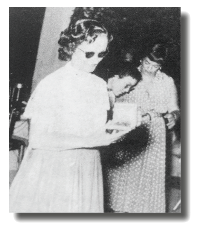
While studying in France, she joins the North African Students Association. The association was founded in 1927 and brings together patriotic students from across the Maghreb. Tahar Safar from Tunisia. Ali Belhouane from Tunisia. Ahmed Afrij from Morocco. They are all imbued with anti-colonial ideology. She is exposed to nationalist ideas for the first time, developing a deep awareness of the injustices of colonialism .
She completes her degree. She returns to Tunisia in 1946 .
Tunis, 1946 to 1950
She returns home with a higher education degree in Natural Sciences. The colonial administration refuses to employ her. The Public Education Department closes the door of hiring competitions. Despite her university degree, she remains jobless for four years .
She gives private lessons in mathematics to students of the Sadiki Institute. She marries Lamin Bellagha and becomes known as Aïcha Bellagha .
The colonial authorities may have known about her proximity to nationalist circles in Paris. They may have known about her connections to Tunisian women activists like Saïda Sassi and Chadhlia Bouzgarrou. They keep her out of the civil service .
In 1950, a relative political breakthrough occurs. Mohamed Chnik forms a negotiating government, and more Tunisians are employed in the administration. Aïcha Bellagha is finally appointed to a position. She becomes School Supervisor of the El Bacha Street high school. It is not her field of expertise, but it is a job. She takes it .
Tunis, 1946 to 1956. The nationalist years.
Since her return from France, she has been involved in the national struggle. She is active in the Union Musulmane des Femmes de Tunisie, the Islamic Women's Union headed by Bchira Ben Mrad. Her colleague Asma Rebai will later testify: "Aïcha Bellagha was with us in the Islamic Union, and she is an educated woman who had her higher education degree in Paris and came back" .
In Ramadan 1947, she gives a lecture at the headquarters of the Association of Sadikia Veterans. The title is "Tunisian Women at a Crossroad." The lecture resonates with large segments of society. She is already known as a champion of Tunisian women's liberation .
She is also involved in charitable projects. After World War II, Tunisia suffers from drought, economic crisis, widespread misery. Together with her colleagues in the Islamic Women's Union, she supervises assistance to the poor and homeless children .
At Nahj El Bacha high school, she is not deterred by colonial policies. She raises awareness among her students about the drawbacks of colonialism. She supports student movements that advocate nationalist demands .
In March 1952, Muslim girls at Nahj El Bacha School demonstrate. The French gendarmerie tries to storm the school to arrest them. Aïcha Bellagha protects her students. She smuggles them out of the school, including Radhia Belkhoja .
She loses her job. The colonial authorities exclude her from her position as school supervisor .
Tunis, 1953 to 1961
The government of Mohamed Salah Mzali tries to pacify the situation. She is reinstated. She is appointed professor of secondary education at the Paul Cambon High School on Rue de Marseille .
She teaches until 1961. Then something unprecedented happens. She is appointed headmistress of the same school. She is the first Tunisian headmaster of this institute. Until then, it was always run by a French principal .
She will remain in charge of the Rue de Marseille High School until her retirement in 1979 .
Tunis, 1955 to 1958. Founding the UNFT.
Even before independence, she commits herself to the feminist struggle alongside her comrades: Asma Belkhoja, Saïda Sassi, Radhia Haddad, Neila Ben Ammar. They seek to activate the structures of the Islamic Women's Union, but Aïcha believes something new is needed .
She will later declare: "Every era has its own thinking." In a newly independent country, she says, there is a pressing need to establish an organization "based on the principles of a new vision and inclusiveness in work" .
A new organization is born. In June 1956, the Tunisian Women's Union, the Union Nationale des Femmes Tunisiennes, is granted its permit .
Aïcha Bellagha is appointed its first president .
She will hold this position until the first conference in 1958, when President Habib Bourguiba decides to nominate Radhia Haddad in her stead .
Tunis, 1956 to 1958. Her presidency.
During her two years as president, her work is well documented. She supports women economically. She creates cooperatives for spinning wool and weaving. She establishes sewing factories. She educates women and exhorts them to attend literacy centers .
In February 1956, during a harsh winter, she supervises aid distribution. She opens popular restaurants. She opens a shelter for homeless children. She helps the victims of the earthquake in Souk El Arbaa, now Jendouba. She ensures the implementation of training programs for girls in the Red Crescent .
With her colleagues, she works to grant women the right to vote. She heads two delegations that meet with the Head of Government Habib Bourguiba, on March 30 and May 14, 1957. She encourages women to register and vote. With her fellow activists, she presents female candidates in municipal elections as part of the Social Advancement lists .
She travels to the interior regions, opening branches of the Women's Union. She conducts awareness campaigns to publicize the Code of Personal Status. The focus is on health education, maternal and child health .
Tunis, 1958. The first congress.
The first congress of the UNFT meets at the Bourse du Travail in Tunis from April 7 to 9, 1958. When it ends, Habib Bourguiba intervenes. He sends Abdelmajid Chaker, the director of the Néo-Destour party, to deliver the results. Aïcha Bellagha is replaced. Radhia Haddad is designated the new president .
Aïcha does not disappear. She continues her work within the Union as assistant treasurer .
Tunis, 1960s. International activism.
She supports women's causes outside Tunisia. She seeks to publicize the Tunisian experience. In March 1961, she participates in the Yugoslav Women's Conference in Zagreb with Jalila Ben Mustapha .
In June 1962, she is an active member of the preparatory committee in Bamako, Mali. The committee includes eleven countries. Its task is to prepare the organic law for the Conference of African Women to be held in Dar es Salaam, Tanzania on July 25, 1962. The Tunisian delegation includes Aïcha Bellagha, Souad Boughnim, Radhia Haddad, and Faika Farouk. They are working to form a regional women's organization that will bring together African countries .
She is also part of the delegation representing Tunisia at the Fifth Conference of African and Asian Women's Federations in Colombo. One of the main topics is the presentation of the Code of Personal Status .
In July 1962, she participates in the World Conference on Peace and Disarmament in Moscow .
She attends the symposium held by the Union of Family Organizations in Rome. She is elected secretary general, succeeding Fethia Mzali .
In March 1966, she supervises study days for Tunisian female students organized by the UNFT branch in Paris, alongside President Radhia Haddad .
Tunis, 1960s to 1970s. Continued service.
She serves as treasurer of the Family Planning Organization between 1966 and 1970 .
She is a member of the Economic and Social Committee of the ruling party. She is a member of the Economic and Social Council in 1969 .
She serves as treasurer of the Education and the Family Organization from 1969 to 1972, working to encourage girls to continue their secondary education and to establish dormitories for girls in schools across the country .
At the Fifth Congress of the UNFT, held from August 13 to 16, 1973, she chairs the Economic and Social Committee. She runs as a candidate for the Central Board but does not win membership. She continues her work in the grassroots structures of the Women's Union after 1973 .
Tunis, 1961 to 1979. The headmistress.
All these years, she is also running the Rue de Marseille High School. According to oral testimonies of those who worked with her, she is a highly organized headmistress. She ensures that students adhere to the rules. She has an awareness-raising and human rights role, educating girls about the role of education in their advancement .
She communicates with students in the school courtyard on several occasions. She introduces them to the Code of Personal Status and their rights. She calls on them to continue this message by passing it on to the next generation. Women's rights are one of her main concerns during her direction of the school .
She retires in 1979 .
Tunis, December 2002
Aïcha Bellagha dies at eighty-six years old .
She has lived through the colonial period, the nationalist struggle, independence, the building of the republic. She was discriminated against by the colonial authorities. She was excluded from her teaching position for protecting students. She was replaced as president of the UNFT by Bourguiba's intervention. She continued to serve anyway .
Throughout her life, she combined social and nationalistic activism. She never ceased to support women's rights and education in many forms and on many levels .
She receives several medals in her honor. The second and third classes of the Order of the Republic. The Order of Independence .
Tunis, 2026. Today.
The school she headed for eighteen years bears her name. The Aïcha Bellagha School of Rue de Marseille. One of the most important high schools in Tunis .
Her legacy is immortalized there, in the students who pass through its doors, in the education she gave, in the women she mentored .
She was born in Casablanca in 1916. She died in Tunis in 2002. In between, she was a student in Paris, a teacher in Tunis, a protector of students under colonial rule, a founding president, an international delegate, a headmistress, a treasurer, a member of committees, a recipient of medals. She was the first Tunisian headmaster of a school that had always been run by a French principal. She was the first president of the Union Nationale des Femmes Tunisiennes .
She was replaced, but she stayed. She was passed over, but she served. She was not a revolutionary. She was a builder. And she built institutions that still stand .


.png)
More
more
like this
like this
On this blog, I write about what I love: AI, web design, graphic design, SEO, tech, and cinema, with a personal twist.