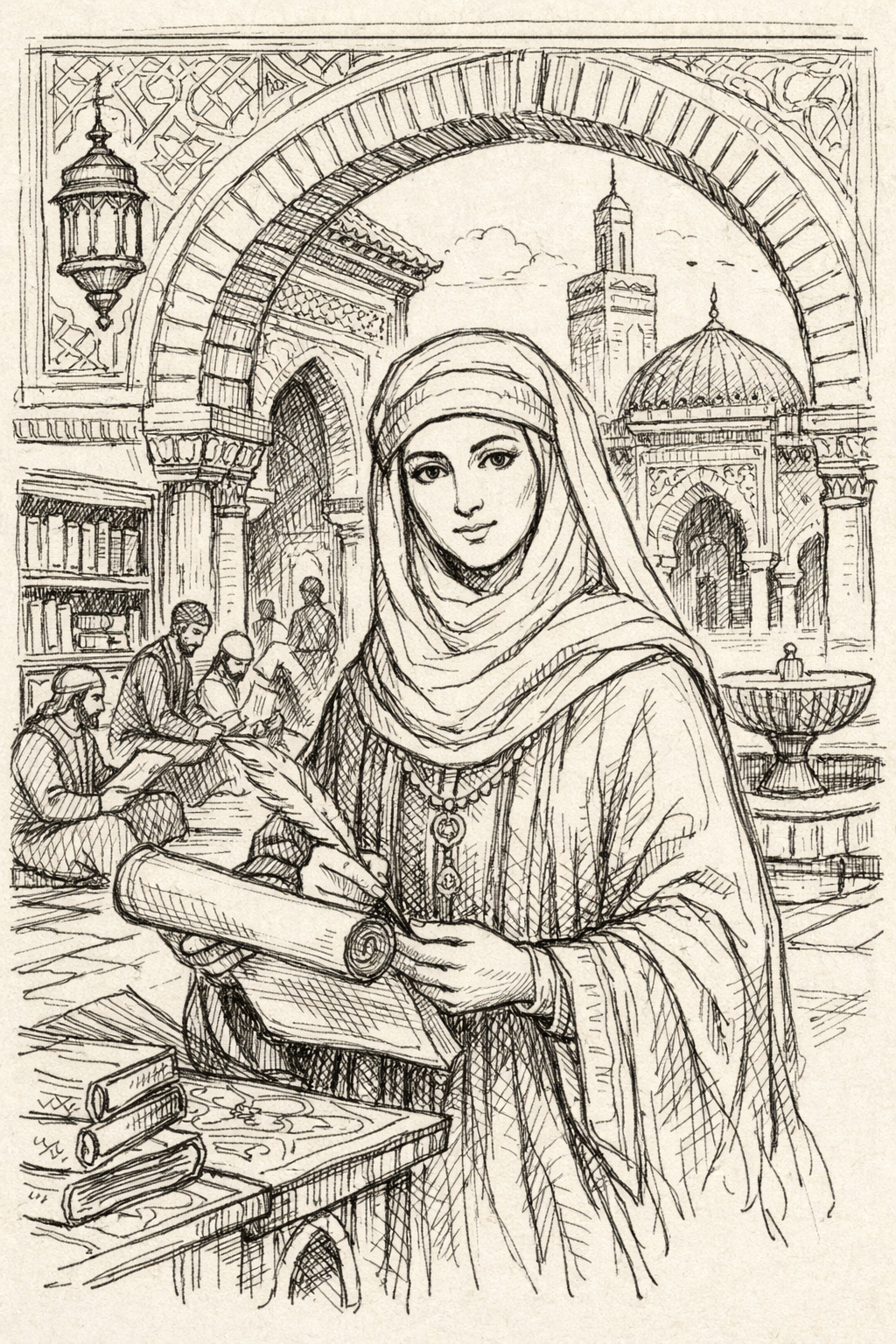
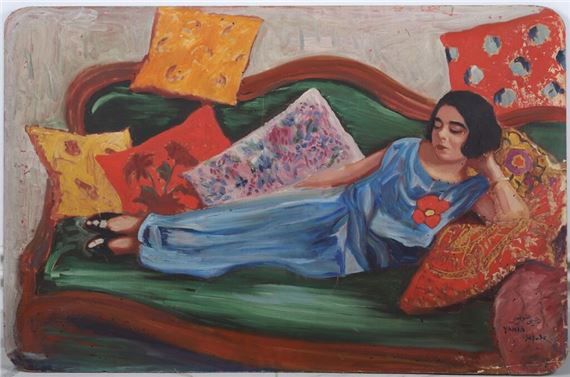
The Story of Bchira Ben Mrad (1913-1993)
Tunis, 1913
A girl is born into one of the most learned families in Tunisia. Her father, Mohamed Salah Ben Mrad, will one day become Sheikh El Islam, the highest religious authority in the land. Her grandfather, Hmida Ben Mrad, is a mufti of Tunis. Her mother, Sallouha, is the daughter of Mahmoud Belkhodja, another Sheikh El Islam. On both sides, her blood runs with scholarship, with piety, with the weight of religious knowledge passed down through generations .
They name her Bchira. She is the firstborn.
The family traces its origins to Khodja Ali Al Hanafi, an Ottoman military imam who came to Tunis in 1574 for the battle of La Goulette against the army of Charles V. For centuries, they have been scholars, jurists, keepers of the faith .
No one expects the daughter of such a family to change the country. They expect her to be pious, to marry well, to raise children who will continue the line. They do not expect her to found a nation.
But Bchira has her mother's blood and her father's mind, and neither of them is content to sit still.

Tunis, 1920. She is seven years old.
Her mother dies suddenly. Bchira is too young to understand fully, but old enough to feel the absence like a hole in the world. Her father remarries. Life continues. But something shifts inside her, some early knowledge that the world is not safe, that the people you love can disappear, that you must hold on to yourself .
She is sent to a mosque school to learn the Quran. The teacher watches over her memorization of the sacred text. When she finishes, the family throws a celebration. There is a party for the children. The teacher receives payment. This is how things are done .
But then something happens that will shape her entire life. Her father's elder brother, senior in the family hierarchy, steps in. He decides that Bchira's modern education should stop. She is a girl. She has learned enough. More than enough, perhaps.
Her father bows to his brother's authority. This is how families work. The elder decides. The younger obeys .
Bchira does not obey. Not inside.
She continues her education at home. Teachers from Zitouna University come to the house. They teach her law, grammar, mathematics. Her grandfather Mahmoud Belkhodja supervises the exams. She learns in secret, in private, in the spaces between what her uncle forbids and what her father permits .
Her father brings home satchels filled with newspapers. Through them, she discovers a world beyond her walls. She reads about the women's movement in Egypt. She learns about Hoda Shaarawi, the Egyptian feminist who founded the Egyptian Feminist Union, who cast off her veil in public, who fought for women's education. In Shaarawi, Bchira finds a model, a mentor she has never met, a woman who proves that the fight is possible .
Her father speaks to her of Ataturk's revolution in Turkey. He introduces her to poetry. He advises his daughters not to chatter with women, not to imitate foreigners blindly. He is preparing them for something, though perhaps even he doesn't know what .
Tunis, 1929. She is sixteen years old.
Her marriage is arranged. Ahmed Zahar. A family she has never heard of before. This is how it works. You trust your elders. You marry whom they choose. You make the best of it .
She marries him. She tries to be a wife. But her body rebels in ways she cannot control. She becomes pregnant. She loses the child. She becomes pregnant again. She loses another. Multiple miscarriages, one after another, each one a small death .
She needs medical attention. But to be examined by a male doctor is unthinkable. The shame would be unbearable. So she suffers in silence. She bleeds in silence. She mourns in silence.
Tunis, 1936. She is twenty-three years old.
The country is on fire. Nationalist leaders meet in secret, in public, in the spaces between French surveillance and Tunisian resistance. Bchira listens to them. She hears Mahmoud El Materi and others discussing the dire situation of the country, the occupation, the humiliation, the need for action .
And she has an idea.
Not just an idea. A conviction. Women must be part of this fight. Not as helpers, not as supporters, but as organizers, as actors, as the ones who make things happen.
At the same time, a group of nationalist activists led by Ali Belhouane tries to organize a fair to raise money for North African students in France. The fair fails. The men cannot make it work .
Bchira watches. She learns. She decides to try something different.
She approaches the nationalist leaders, Belhouane and Mongi Slim. They are skeptical. Women organizing? Women raising money? Women in politics? They doubt her. But they agree to let her try .
She assembles a committee. Naima Ben Salah. Tewhida Ben Sheikh, the first woman doctor in Tunisia, just returned from Paris. The Hajjaji girls, whose father is a minister. Hassiba Ghileb, granddaughter of Cheikh El Medina Sadok Ghileb. Nabiha Ben Miled, wife of Ahmed Ben Miled. Women with names, with families, with connections .
They organize an event at Dar El Fourati, a house belonging to a bourgeois family of merchants. They send out invitations. They spread the word. They work.
Nine thousand people come.
Nine thousand.
The house overflows. The streets fill. Women and men, together, raising money for the nationalist cause. They collect a significant amount, a sum that stuns the skeptical leaders. They hand the money over to the nationalists. They prove that women can do what men could not .
Tunis, May 1936
One week after the event, Bchira Ben Mrad founds the Union Musulmane des Femmes de Tunisie. The Muslim Union of Tunisian Women. The first Tunisian women's organization in history .
She does not ask permission. She does not wait for the colonial authorities to approve. She simply creates it, with her sisters, with her friends, with the women who worked beside her.
The goals are clear. To build knowledge among women. To direct them toward education within the limits of morality and religion. To promote institutions for young people and children. This is not a radical break with tradition. It is a careful, strategic advance. She grounds her fight in Islam, in the values her family taught her, in the faith she never abandoned .
Her father supports her. Her sisters join her. Hamida Zahar becomes Secretary General. Essia Ben Miled, another sister, becomes a permanent member. The family that tried to limit her education now helps her build a movement .
The permanent members of the office read like a who's who of Tunisian women's history. Tewhida Ben Sheikh. Nebiha Ben Miled. Hassiba Ghileb. Souad Ben Mahmoud. Naima Ben Salah. Jalila Mzali. Mongiya Ben Ezzeddine. Later, others will join. Moufida Bourguiba. Wassila Ben Ammar. Radhia Haddad. Fethia Mzali. The women who will shape Tunisia for decades all pass through Bchira's organization .
Tunis, 1936 to 1951
The colonial authorities refuse to recognize the Union. They deny it a visa, official permission to exist. For fifteen years, the UMFT operates without legal status. The French know what Bchira is building. They know that women organizing means a nation organizing. They try to stop her by refusing to see her .
She does not stop.
She publishes articles in her father's journal, Shams al-Islam, The Sun of Islam. She writes about women's rights, about education, about the role of women in the national movement. Her words reach readers across the country .
The Union works with the Neo Destour, the nationalist party led by Habib Bourguiba. They are allies in the same fight. Independence. Freedom. A nation of citizens, not subjects .
Bchira expands her networks beyond Tunis. She reaches into the interior, into the rural regions where women's lives are harder, more isolated, more forgotten. She builds solidarity across class, across region, across the divides that keep women apart .
The colonial authorities watch. They wait. They refuse to legalize her organization. But they cannot stop her from organizing.
Tunis, 1951
Finally, after fifteen years of existence, after fifteen years of work, after fifteen years of proving herself and her women, the UMFT obtains official recognition. The colonial authorities cannot deny her any longer. The visa comes .
She has built an institution that will outlast the occupation.
Tunis, 1956
Independence arrives. Tunisia is free. The Neo Destour becomes the ruling party. Habib Bourguiba becomes the father of the nation.
And Bchira Ben Mrad is pushed aside.
The Union Musulmane des Femmes de Tunisie is dissolved. A new women's organization is created, the Union Nationale de la Femme Tunisienne, affiliated with the ruling party. The women who built the movement are replaced by women loyal to the new regime .
Bchira does not fight it publicly. She does not protest. She does not make a scene. She simply disappears from public life.
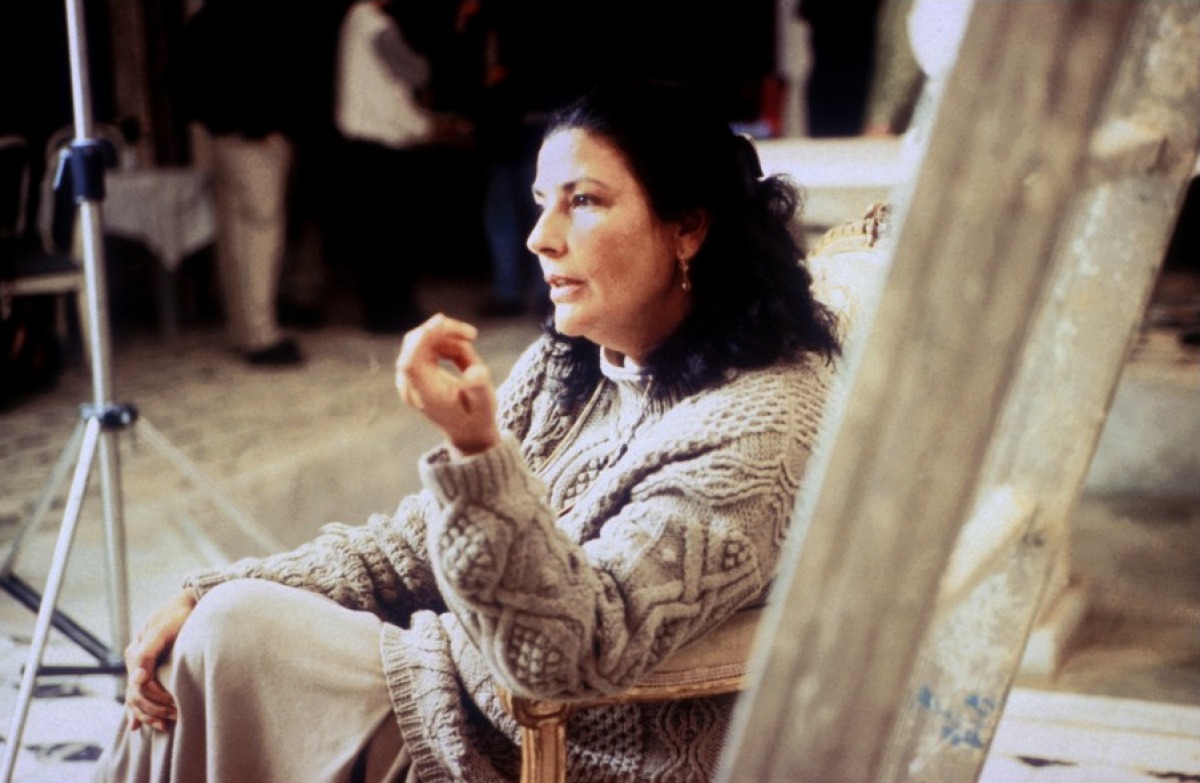
Salma Baccar, the filmmaker who would later make Fatma 75, a landmark film about Tunisian women's history, remembers. Bchira Ben Mrad was "écartée de la scène après l'avènement de l'indépendance." Removed from the scene after independence. Excluded by Bourguiba from all political and public activity .
Moncef Ben Mrad, her relative and biographer, is blunter. "Après ses longs combats, elle a été exclue par Bourguiba de toute manifestation politique et publique et a terminé sa vie dans des conditions déplorables." After her long struggles, she was excluded by Bourguiba from all political and public events, and ended her life in deplorable conditions .
The father of the nation could not tolerate a mother of the nation who was not his creation.
Hammam-Lif, 1980s
She lives in the Bey's palace in Hammam-Lif, a structure administered by the state and falling into dilapidation. The walls crack. The paint peels. The grandeur of the past crumbles around her .
A researcher named Lilia Labidi comes to visit. She is collecting life stories of women leaders from the nationalist period. Bchira welcomes her. She is open, generous, unguarded. She does not hide her aspirations or her disappointments .
Returning to the past can be very painful, Labidi notes. And Bchira had her share of painful experiences. But she tells her story anyway. She wants it recorded. She wants it remembered.
She speaks of her childhood, her education cut short, her miscarriages, her shame at being examined by male doctors. She speaks of the movement she built, the women she organized, the money they raised. She speaks of her father's newspapers, of Hoda Shaarawi, of the dream of a free Tunisia.
She does not speak bitterly of Bourguiba. She does not curse the men who erased her. She simply tells her story and lets it stand.
Tunis, May 4, 1993
She dies at eighty years old. The newspapers note her passing. The obituaries are respectful. But the country she helped build barely pauses.
She is buried quietly. The woman who founded the first women's organization in Tunisia, who raised money for the nationalist cause, who trained a generation of female activists, who fought for women's education when it was forbidden, slips out of the world the same way she slipped out of public life. Quietly. Unnoticed. Forgotten.
Tunis, 2013. One hundred years after her birth.
December 1. The Municipal Theatre of Tunis hosts a centenary celebration. An exhibition of photos and portraits. Documentary films. A book distributed to attendees: Bchira Ben Mrad, celle par qui le jour des femmes arriva. Bchira Ben Mrad, she through whom the women's day arrived. Written by Moncef Ben Mrad .
Actors and singers perform. Raouf Ben Amor. Sonia Mbarek. Raja Farhat. Leila Chebbi. Recordings of Bchira's voice are played. A sequence from Salma Baccar's film Fatma 75 is shown. Testimonies from women across the country are heard .
Salma Baccar speaks at the event. She says Bchira Ben Mrad "restera toujours le symbole du militantisme féminin." Will always remain the symbol of women's activism. She speaks of the need to preserve collective memory, to build a better future on the foundation of the past .
Tunis, 2026. Today.
Her name is on streets in several governorates. A postage stamp bears her image. Books have been written about her. A film was finally made, Attounissia, The Tunisian, released in 2023 after years of struggle for funding .
But ask a young Tunisian woman today who Bchira Ben Mrad was. Most will not know.
She was excluded twice. First by Bourguiba, who erased her from public life. Then by history, which forgot her. The father of the nation got statues, streets, schools, his face on money. The mother of the nation got a postage stamp and a few streets in provincial towns.
But here is the thing about Bchira Ben Mrad. She did not fight to be remembered. She fought because the fight was necessary. She organized because the country needed organizing. She built because something needed building.
She was the firstborn daughter of a family of scholars. She was denied education by an uncle's decree. She suffered miscarriages in shame-filled silence. She listened to nationalist men and decided women could do better. She raised nine thousand people and a mountain of money. She founded the first women's organization in Tunisian history. She ran it for twenty years. She trained the women who would shape the country after independence.
And then she was erased.
But erasure is not the same as disappearance. Her name remains on streets. Her image remains on stamps. Her story remains in books, in archives, in the memories of those who knew her. And in the women who came after her, whether they know her name or not, her work continues.
Every Tunisian girl who goes to school walks on ground she helped clear. Every Tunisian woman who works, who organizes, who speaks in public, who refuses to be silenced, inherits something from Bchira Ben Mrad.
The story is all we have. The story is everything.


.png)
More
more
like this
like this
On this blog, I write about what I love: AI, web design, graphic design, SEO, tech, and cinema, with a personal twist.