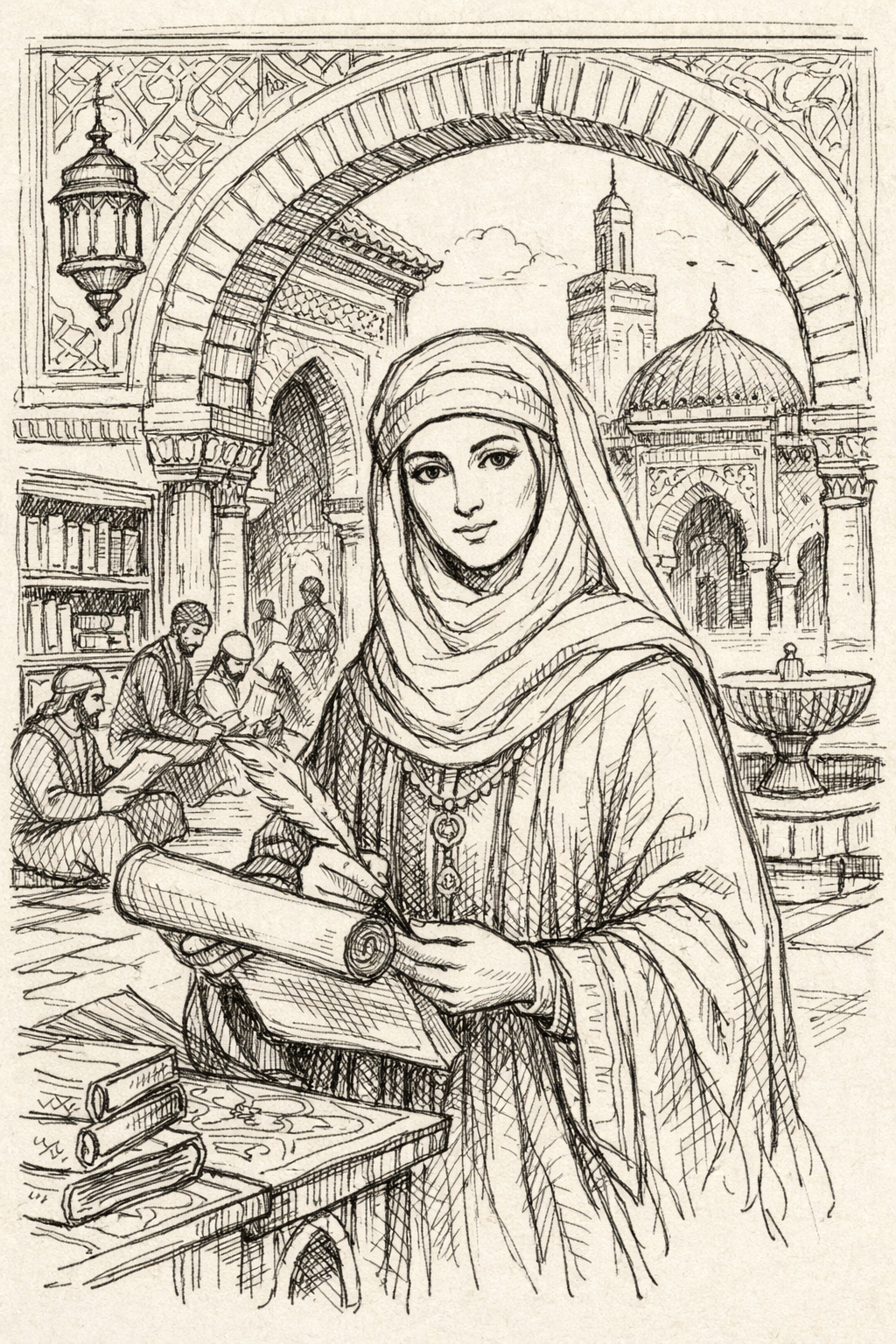
The Story of Habiba Msika (1903-1930)
Tunis, 1903. The Jewish quarter.
A girl is born into poverty. Her parents, Daida and Maïha, sell wire for a living. Threads and metals, small things, the kind of trade that keeps you alive but never lifts you up .
They name her Marguerite. Marguerite Msika.
Her parents die when she is young. She is raised by her aunt Leila Sfez, a singer. This matters. Leila Sfez is not just any singer. She is one of the first Tunisian artists to record for French Pathé in 1910, a fixture of the café-concert scene in Tunis . The girl grows up surrounded by music, by performance, by the strange alchemy of turning voice into gold.
She attends the school of the Alliance Israélite Universelle for seven years. She learns to read and write. But the real education happens outside, with her aunt, with the famous composer Khemaïs Tarnane, with the Egyptian tenor Hassan Bannan. They teach her singing, music theory, classical Arabic. They give her the tools she will need to become someone else .
She marries young. Her cousin Victor Chetboun. The marriage lasts almost no time. She is not made for domesticity, for staying in one place, for being someone's wife .
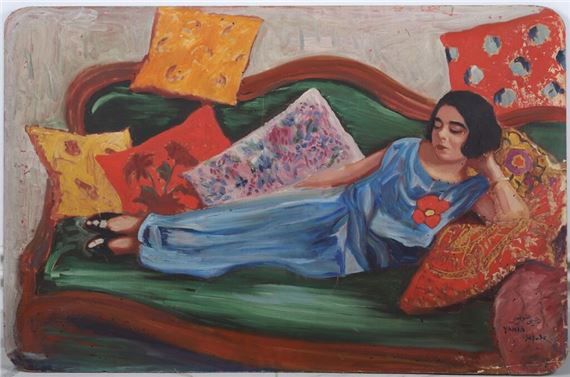
La Marsa, around 1918. The Assous Palace.
Her first real recital. She is fifteen, maybe sixteen. The venue is the palace of La Marsa, overlooking the sea, where the powerful gather.
In the audience: a man known only as "the Minister of the Pen." A high official in the Tunisian government under the French protectorate. He is older, connected, powerful. He becomes her mentor. He becomes her lover .
Through him, she will go to Paris. Through him, she will meet people she could never have imagined.
Tunis, 1920
Her career explodes.
She takes a stage name. Not Marguerite. Too French, too foreign, too much like the colonizer. She chooses Habiba. Beloved. The beloved one .
The city falls in love with her. They call her "the beautiful of the beautifuls." They call her "the green-eyed tigress." Her eyes are green, striking, unforgettable. When she walks on stage, men forget to breathe .
She creates a phenomenon. Her fans, mostly young dandies from the Tunisian bourgeoisie, call themselves "the soldiers of the night." They follow her everywhere. They protect her. They would die for her .
Among these soldiers: a young nationalist named Habib Bourguiba. Years later, he will become the first president of independent Tunisia. But in the 1920s, he is just another young man infatuated with a Jewish singer who burns too bright .
Paris, somewhere in the 1920s
She arrives in the city of lights with her lover, the Minister of the Pen. He opens doors. She walks through them.
She meets Pablo Picasso. The greatest painter of the century, maybe of any century. She meets Coco Chanel. The woman who dressed the world in black and white and pearls .
Chanel looks at this young Tunisian woman with green eyes and fire inside her, and she says something that will be remembered: "Habiba is a fiery temperament beneath her Oriental graces. She will impose Paris on North Africa" .
The line is strange. It suggests that she will bring Paris to Tunis, not the other way around. But maybe Chanel understood something. That this woman was a bridge. That she would carry something back across the sea.
Tunis, 1924
She begins recording in earnest. For Pathé. For Gramophone. Between 1924 and 1930, she will release nearly one hundred records. A staggering output .
She records Egyptian hits, Tunisian folklore, Andalusian classical pieces. She sings Sayyid Darwish's songs, including one about cocaine, "Cham el Cocaine," because the 1920s were the 1920s everywhere. Her voice is crisp, clear, smooth, sensual. She becomes known as "the queen of musical ecstasy" .
She records for multiple labels simultaneously, breaking the exclusive contracts that bind other artists. She demands royalties, not just a one-time payment. She wins .
Her records sell more than anything else in the Maghreb since the recording industry began. They cross borders. They cross languages. They cross communities. Jews and Muslims both buy her records. Both love her .
Tunis, 1924. The Ben Kamla Theatre.
She plays Romeo.
Not Juliet. Romeo. The male lead. She wraps herself in a cape and speaks Shakespeare's lines in Arabic, translated by the poet Mahmoud Bourguiba (no relation to Habib, different family) .
Her Juliet is Rachida Lotfi, a Jewish actress from Libya. Two women, playing the most famous lovers in history.
At the climax of the play, they kiss.
The audience erupts. Not in applause. In fury. Conservative spectators, outraged by two women kissing on stage, rush the theater. They set fire to the set. They scream. They try to reach the actresses .
Her soldiers of the night form a wall. They protect her. They fight off the attackers. They save her life.
The next day, everyone talks about it. The kiss. The fire. The soldiers. She becomes more famous than ever.
Berlin, April 1928
She travels to Berlin to record for Baidaphon, a Lebanese label headquartered in the German capital. Berlin in the 1920s is wild, creative, dangerous. She fits right in .
She writes to the label executives: her recordings for them are "better than anything I have recorded previously."
She records pan-Arabist songs. Songs about unity, about resistance, about the dream of a free Arab world. These songs will come back to haunt her. Or rather, they will come back to haunt the French authorities who fear her.
Tunis, 1928
She performs in a play called Patrie: Les martyrs de la liberté. Homeland: The Martyrs of Freedom.
At the climax, she wraps herself in the Tunisian flag. The red crescent on white. The symbol of a country that does not yet exist, not really, not independently. She sings nationalist slogans. She calls for freedom from France .
The colonial authorities arrest her. They drag her off stage. Her soldiers of the night are arrested too. They spend the night in cells, together, for the crime of loving their country .
The French ban her records. Intelligence reports describe her shellac discs as having the potential to "provoke unrest in the Muslim milieu." They confiscate them from nationalists. They try to silence her voice .
But you cannot silence a voice that has already been heard.
Cairo, around 1928
She performs at the court of King Fuad I of Egypt. The most prestigious venue in the Arab world. She has arrived .
In the audience or backstage, she meets Eliyahu Mimouni. A wealthy Jewish landowner from Testour, the town where some say she was born, though most say Tunis. He is older. He is rich. He is completely, utterly obsessed with her .
He builds her a palace. Not a metaphor. An actual palace. He thinks this will win her.
It does not.
Tunis, 1929
She reconnects with an old friend. Mondher Maherzi. A Muslim. Someone she grew up with, knew as a child, before fame, before Paris, before everything .
They fall in love.
She becomes pregnant. She decides to marry him.
She announces their engagement.
Tunis, February 20, 1930. Early morning.
She has spent the night singing at an engagement party. Not her own, someone else's. She returns to her apartment on Rue Alfred Durand-Claye, in the center of Tunis .
She is tired. She is happy. She is twenty-seven years old. She has everything: fame, money, love, a baby growing inside her, a future unfolding.
Eliyahu Mimouni is waiting.
He has not accepted her rejection. He has not accepted that she chose someone else. He has built her a palace and she will not live in it, and this fact has curdled inside him into something dark and violent.
He carries gasoline.
He finds her in her apartment. He pours the gasoline over her. Over her bed. Over everything. He strikes a match.
The fire catches. It catches her. It catches him too, the flames spreading to his own clothes. But he holds her down. He makes sure she burns .
She screams. The neighbors hear. They come. They find two people on fire, a woman and a man, and they try to save them.
Tunis, February 21, 1930
She dies. Twenty-seven years old. Pregnant. Beloved. Burned alive by a man who claimed to love her .
Mimouni dies too, of his burns, soon after .
Tunis, February 23, 1930. The funeral.
The French Director of Public Security watches and worries. He writes in his report: "Never before in Tunisia has such a funeral taken place" .
Thousands gather on the Avenue de Londres. Maybe five thousand. Maybe more. They walk two and a half kilometers to the Borgel Cemetery, the Jewish burial ground on the edge of the city .
Muslims and Jews walk together. Nationalists walk with them. The Destour, the independence party, is well represented. Her soldiers of the night, the young dandies who loved her, walk in silence .
At the grave, the theater director Bechir Methenni speaks. His voice carries across the crowd:
"Alas dear comrade, your voice may no longer be with us but rest assured that its memory remains etched in our minds. When our children listen to your records, it will be with tears in our eyes that we will tell them about your life, about your generous spirit, and that we will instill in them the idea that no one was ever the equal of your genius" .
A week later, a film of her funeral screens in Tunisian cinemas. People watch themselves mourning. They watch her coffin pass. They weep again .
The months after
Her records spread everywhere. The French ban them, so they become more valuable, more desired. They pass from hand to hand, from city to village, from one nationalist to another .
Tunisian and Algerian artists record songs of grief. Flifla Chamia, a Jewish vocalist and dancer, records "Moute Habiba Messika" for Gramophone in December 1930. She sings from the perspective of the slain Habiba, asking what strange and unprecedented events have befallen her .
The voice, even dead, will not be silenced.
Tunis, 1994
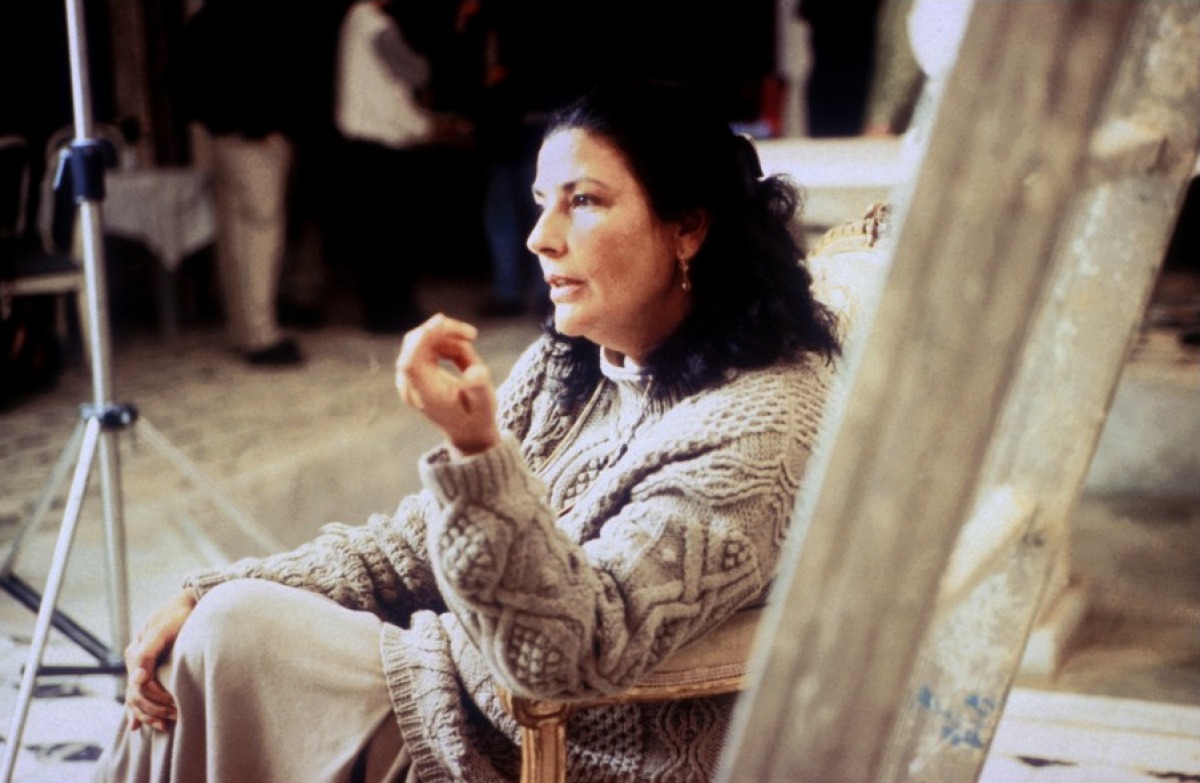
Salma Baccar, the filmmaker who told Bchira Ben Mrad's story in Fatma 75, makes a film about Habiba Msika. It is called The Dance of Fire. It follows her through the last years of her short life .
The film reminds Tunisia who she was. The beloved. The green-eyed tigress. The woman who kissed a woman on stage and caused a riot. The Jew who wrapped herself in the Tunisian flag. The singer whose voice traveled across borders and languages and communities.
Tunis, 2012
Sarah Benillouche makes a documentary: Ciao Habiba! .
The exclamation mark says everything. The astonishment that she existed. The grief that she died so young. The love that never faded.
Tunis, 2026. Today.
You can find her recordings, if you know where to look. The Phonothèque Nationale de Tunisie has a collection. Digitized, preserved, available. Her voice, scratched and crackling, still reaches across the decades .
You can visit the Borgel Cemetery. Her grave is there, among the thousands of others. Sometimes people leave flowers. Sometimes they just stand and remember.
You can walk through the old Jewish quarter of Tunis, the Hara, where she was born poor and became a star. The buildings are older now, more faded. But the streets are the same streets. The light is the same light.
She was Marguerite. She became Habiba. Beloved. And she remains beloved, nearly a century after the fire.
Tunis, 1930. The day after she died.
The newspapers are full of her. The story spreads across North Africa, across Europe, across the world. A Jewish singer. A Muslim lover. A jealous suitor. Gasoline and matches. Fire and death.
But there is another story underneath. The story of a girl from the wire-sellers who taught herself to be a star. Who learned classical Arabic and sang like an Egyptian. Who played Romeo better than any man. Who kissed Juliet and meant it. Who wrapped herself in the flag and went to prison for her country. Who met Picasso and Chanel and the King of Egypt. Who made nearly a hundred records in six years. Who demanded royalties and broke contracts and won. Who was loved by thousands, maybe millions.
And who died at twenty-seven, pregnant, engaged, happy, because a man could not accept that she did not belong to him.
Her last word, if she had one, is not recorded. But her last gesture is. She tried to live free. She tried to love whom she chose. She tried to be an artist and a woman and a Tunisian and a Jew and everything at once.
They could not stop her while she lived. They could not stop her after she died.
Her records kept spreading. Her voice kept singing. Her name kept being spoken.
Habiba. Beloved.
Still beloved.


.png)
More
more
like this
like this
On this blog, I write about what I love: AI, web design, graphic design, SEO, tech, and cinema, with a personal twist.