The Separation of Art and Artist: The Woody Allen Dilemma
There is a particular kind of discomfort that comes with loving something made by someone you cannot respect.
You watch a film and it moves you. The colours wash over you like a warm sunset. The jazz between every cut feels like a comfortable embrace. The characters talk and talk, and you feel like you are sitting at the table with them, listening to their fears and their jokes and their existential dread. You are immersed. You are transported. You are home.
And then you remember who made it.
This is the Woody Allen problem. It is not a new problem. But it is one that refuses to go away, because the art is so beautiful and the man is so troubling. And the two refuse to reconcile.
The Art: A World You Want to Live In
To understand the dilemma, you have to first understand the work. Woody Allen, whatever else he is, is one of the most distinctive filmmakers in the history of cinema. His films have a signature that is instantly recognisable.
Take "Manhattan." Shot in lush black and white by the legendary cinematographer Gordon Willis, it captures New York City as a moving painting, as though each shot could be made into a still frame and put in an art museum. Nearly every image looks iconic. The city is romanticised, idealised, turned into a dreamscape of jazz and intellectual longing.
Or take "Midnight in Paris." It is a portrait of Paris no painter could have done, full and gorgeous and serene. The opening sequence is a whimsical travelogue of Parisian imagery accompanied by Allen's favoured tinkling jazz score. The colours are warm, the light is golden, and the whole thing feels like a comfortable pillow wrapping around you.
His films often follow a familiar pattern. A man who wants to live in Paris's golden era, only to discover that there is no such thing as a golden era. A man who has lost all hope and finds himself again when he starts thinking about killing a judge he does not know to help a woman he does not know. American characters wandering through Europe, interacting with the world outside them and the world inside them.
The shots are usually long. Mostly static. Mostly two people or more talking. We as viewers feel like we are part of the movie, part of a beautiful world that has issues, but a world we would still rather live in than our own.
Allen's films often question whether the projected illusions of artists benefit the audience or the artist themselves. They repeatedly revisit the tension between image and reality, art and life, fabrication and factuality. It is almost as if he was preparing us for the question we would eventually have to ask: can we separate the art from the artist?
The Man: A Complicated and Troubling Figure
And then there is the other side.
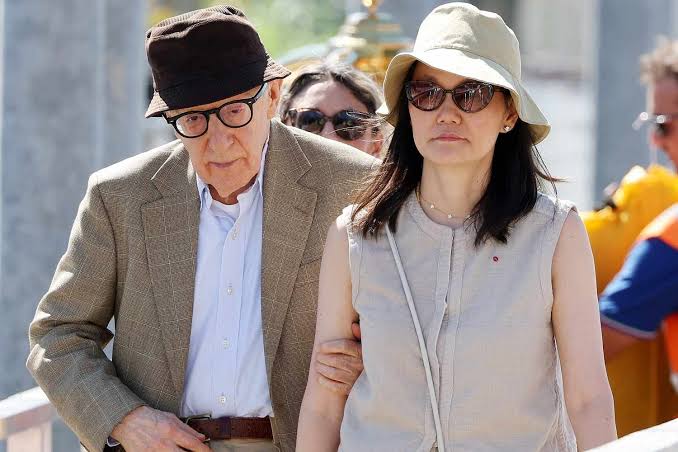
In August 1992, Allen was accused by his former partner Mia Farrow of sexually molesting their seven-year-old adopted daughter, Dylan. Allen has always denied the claim, calling it "untrue and disgraceful". A New York judge in the 1994 custody battle ruled that the abuse allegations were inconclusive, and Allen was never charged with any crime. But the allegations have never gone away. Dylan Farrow has repeatedly spoken about the incident, wishing Allen had been charged. The 2021 HBO docuseries "Allen v. Farrow" renewed questions about the allegations and about Hollywood's embrace of problematic figures.
Beyond the allegations, there are undisputed facts. Allen had an affair with Soon-Yi Previn, the adopted daughter of his partner Mia Farrow, and later married her. This alone has troubled many who find the power dynamics and age gap deeply uncomfortable. Some critics have pointed out that Allen's work is "ethically troubling" and that he has a documented obsession with teenage girls that features prominently in many of his films.
More recently, newly released documents have linked Allen to Jeffrey Epstein. Allen attended dozens of dinners with his wife at Epstein's Manhattan townhouse. Epstein used his connections to help Allen's daughter gain admission to Bard College, effectively arranging preferential treatment. Photographs have emerged showing Allen alongside Epstein. Allen has also been a vocal supporter of Israel.
The picture that emerges is not a simple one. It is a picture of a man who has done terrible things, or at the very least has associated with terrible people and made deeply questionable choices. And yet, it is also a picture of a man who made "Manhattan" and "Midnight in Paris" and "Annie Hall" and "Crimes and Misdemeanors."
The Dilemma: Can We Separate the Two?
This is where the question becomes personal.
There is a view that art and artist are separate things. The work exists on its own terms. It does not belong to the creator once it is released into the world. It belongs to the audience. To judge the work by the actions of the person who made it is to commit a kind of category error.
But there is another view. The separation of art and artist is not a philosophical principle, but a cultural habit, buttressed by shopworn academic dogma. Art and artist are permanently and intrinsically bound. To enjoy the work is to endorse, or at least to excuse, the person who made it.
And then there is a third view, which is that the question itself is a luxury. As one commentator put it, "to some extent, separating the art from the person producing it is a necessity for anyone interested in contemporary culture". If we were to boycott every artist who has done something wrong, we would have very little art left to enjoy.
The Woody Allen case is particularly difficult because the art and the artist seem to be in direct conversation with each other. His films are about complicated people making questionable choices. They are about the tension between fantasy and reality, about the discomfort of being human. They are, in a way, about the very dilemma we are now facing.
As one critic noted, Allen's films constitute a debate he is conducting with himself about the capacities of art to improve the quality of life and about the resulting price exacted upon artists and those around them. He was asking these questions long before we were.
A Personal Response
So where does that leave us?
I can only speak for myself. I watch Woody Allen's films and I am moved. I admire the craft, the writing, the performances, the visual beauty. I feel like I am part of something larger than myself, something that makes the world feel a little more bearable.
And I also dislike the man. I believe the allegations against him. I find his relationship with Soon-Yi Previn deeply troubling. I am disturbed by his association with Jeffrey Epstein. I cannot reconcile the beauty of his art with the ugliness of his life.
But I do not think I have to. I do not think the art and the artist are the same thing. I think the work exists on its own terms, and I am allowed to love it without loving the person who made it. I am allowed to be inspired by the work while being repulsed by the man.
This is not a comfortable position. It is not a clean position. But it is an honest one.
Woody Allen is a great filmmaker. He is also a deeply flawed human being. Those two things are both true, and they do not cancel each other out. They just sit there, side by side, refusing to reconcile.
And that is the dilemma. That is the separation of art and artist. It is not a solution. It is just a way of living with the contradiction.


.png)
More
more
like this
like this
On this blog, I write about what I love: AI, web design, graphic design, SEO, tech, and cinema, with a personal twist.