Hédi Jouini: The Voice That Defined a Nation
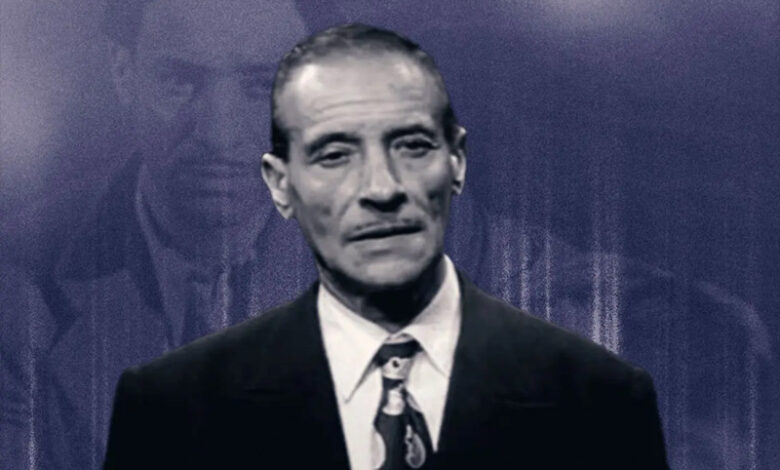
There are singers, and then there are voices that become the soundtrack of a country. Hédi Jouini was the latter. Born in the winding alleys of Tunis in 1909, he rose from singing hymns in local ceremonies to becoming the most beloved musical figure in Tunisian history. They called him "Papa Hédi," the "Frank Sinatra of Tunisia," the "Crooner of Tunis". But to understand his legend, you have to start at the beginning.
From Bab Jedid to the Stage
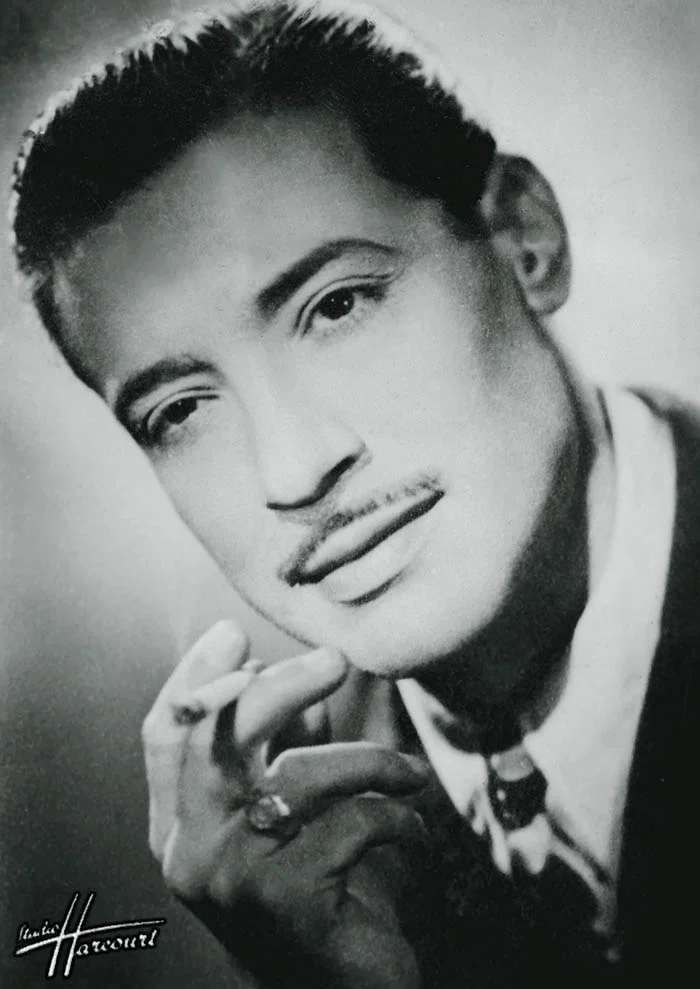
Mohamed Hédi Ben Abdessalem Ben Ahmed Ben Hassine was born on November 1, 1909, in the Bab Jedid quarter of Tunis. Music was in his blood from an early age. As a young boy, he sang religious hymns at local ceremonies, including those for circumcision. But his path to stardom was not straightforward. His father disapproved of his passion for music, so the young Mohamed Hédi did something that would define his career. He adopted the stage name "Jouini," taken from his neighbors, to conceal his singing from his family.
At the age of sixteen, he abandoned his academic pursuits to join a local band called "Hsinia". He started as a mandolin player, performing in small local concerts. It was during this time that he was introduced to the oud by Mouni Jebali. The oud, a stringed instrument central to Middle Eastern music, would become his inseparable companion. By the age of twenty, his popularity had grown significantly, and he was performing with the Arruqi troupe at Bab Souika.
A Career of Unparalleled Output
Jouini's career spanned six decades, and his creative output was staggering. Over his lifetime, he composed close to 1,070 songs and 56 operettas. His music drew from a rich tapestry of influences. He was inspired by traditional Andalusian music and the art of flamenco, which he discovered in the Spanish quarter of Tunis. He also incorporated salsa, rumba, and even the waltz into his compositions, introducing a modernity to Tunisian music that was unprecedented.
Among his most beloved songs are "Lamouni Li Gharou Minni," "Kholkhal Bou Ratlin," "Ah Ya Lmahsouna," "Samra Ya Samra," and "That El Yasmina". "Samra Ya Samra" and "Lamouni Li Gharou Minni" in particular have become anthems, still played at weddings and celebrations, and have been covered by artists across the Arab world and beyond.
His fame was not limited to Tunisia. He toured extensively throughout the Maghreb, the Middle East, and Europe. With the inauguration of Radio Tunis, he became a weekly fixture, delivering live concerts that captivated the nation.
The Man Behind the Microphone
Despite his monumental fame, Jouini remained an extremely modest man. This contrast is captured beautifully in the documentary "The Man Behind the Microphone," directed by his own granddaughter, Claire Belhassine. Claire, a British documentary filmmaker, only discovered the true extent of her grandfather's celebrity when she was thirty years old, in a Parisian taxi, when the driver recognized the name. The film paints a portrait of a man who was a father to a nation, yet a complicated figure within his own family.
Jouini's personal life was as colorful as his music. He was married to Ninette Al-Abitbol, a Jewish-Tunisian woman, and they had six children together. The couple even performed together, with Ninette, known by her stage name "Wadad," collaborating with him on the operetta "Chéri Habitek".
A Legacy Honored and Enduring
In recognition of his immense contribution to Tunisian culture, Jouini was decorated as an "Officer of the Order of the Republic" by President Habib Bourguiba in 1966. He received further honors in 1982 for his lifelong work and contribution to enriching Tunisia's cultural heritage.
Hédi Jouini passed away on November 30, 1990, at the age of 81. Yet his music never died. His songs continue to be used in popular Tunisian soap operas like "Maktoub". His voice still drifts out of taxis, homes, and cafes across Tunisia. He is not just a memory; he is a living presence in the daily life of his country.
Hédi Jouini was more than a singer. He was an architect of modern Tunisian identity. He took the classical traditions of Andalusian and Arab music and infused them with the rhythms of the world, creating a sound that was unmistakably Tunisian yet universally resonant. He gave his nation its voice, and for that, he will forever be remembered as a legend.
What did you think?
A thought, a different perspective, a little appreciation. You’re welcome here.

.png)