Hidden History: Iran’s 1953 Coup, Reconstructed From Secret Files
Mohammad Mosaddegh’s removal from office in August 1953 was long described through competing stories: a popular revolt, a royal intervention, or a foreign plot. Declassified U.S. records establish that the CIA and British intelligence helped plan and carry out a covert operation, codenamed TPAJAX, against the Iranian prime minister.
The documents do not make the story simple. They show a foreign operation working through Iranian politics, military loyalties, street mobilization and the Shah’s decisions. They also record an initial failure before a second attempt succeeded.
Story seven in Hidden History. This account draws on the State Department’s documentary history and CIA declassified analysis.

The crisis before the coup
In 1951, Mosaddegh’s government nationalized the Anglo-Iranian Oil Company, bringing the country’s oil industry under Iranian control. Britain responded with economic and diplomatic pressure. In Washington, officials feared that instability might strengthen the Tudeh Party and Soviet influence. These were the stated strategic concerns; they existed alongside Britain’s effort to regain its oil interests.
Operation TPAJAX took shape in 1953. U.S. State Department documents record propaganda, payments to political networks and coordination with Iranian actors. The first attempt in mid-August failed. The Shah left Iran while Mosaddegh remained in office.
A few days later, demonstrations and military action shifted the balance. Units supporting General Fazlollah Zahedi took control of key sites. Mosaddegh was arrested and the Shah returned. The CIA’s later historical account acknowledged the agency’s role. The record makes clear that this was not an invented rumor.
What the documents cannot settle
Foreign intervention mattered, but Iranian actors were not merely pieces moved by outsiders. Royalists, army officers, clerics, street organizers and opponents of Mosaddegh pursued their own aims. Historians debate the weight of each group and how events might have changed without U.S. and British involvement. The archive is clear about covert planning; it cannot make every participant’s motive certain.
The story behind the familiar label
The coup consolidated the Shah’s rule and became a lasting point of rupture in Iran’s relationship with Britain and the United States. It is often summarized as an oil story or a Cold War story. The documents show both, while revealing the practical mechanics: money, messages, persuasion, uncertainty and force.
It is worth keeping the failed first attempt in view. The operation was not a flawless script. Its organizers had to respond when the Shah left the country. A conspiracy becomes history when plans, records and actions can be examined together.
A final thought
What unsettles me is how public politics and secret planning occupied the same streets. The crowd was real. The grievances were real. So was a foreign operation trying to shape the outcome.
That combination is harder to tell than a single-mastermind story, but it is closer to what the documents show. History becomes more honest when it leaves room for outside intervention and choices made inside a country.
Sources and image credits
- U.S. Department of State: Iran, 1951–1954
- CIA: The Central Intelligence Agency and the Fall of Iranian Prime Minister Mosadeq
- National Security Archive: declassified record of the coup
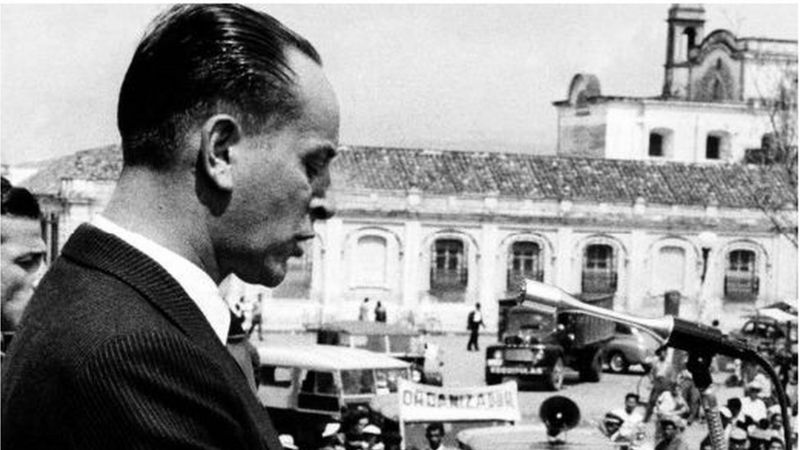
Images: Mosaddegh with supporters via Foreign Policy/Getty Images; Tehran demonstration via Historianet. Rights remain with the photographers and publishers.
Have a project behind the idea?
I work on websites, branding and film. If you need help turning your next idea into something people can see and use, tell me what you have in mind.
What did you think?
A thought, a different perspective, a little appreciation. You’re welcome here.