
Hidden History: The CIA Operation Behind Guatemala’s 1954 Coup
Some political conspiracies remain speculation. Guatemala’s 1954 coup is different: a covert United States operation is documented in declassified government records. The CIA’s Operation PBSUCCESS helped remove President Jacobo Árbenz, whose government had enacted land reform and faced intense opposition at home and abroad.
The important question is not whether a covert operation existed. It did. The harder work is separating what the documents establish from the simplified versions that turn a complicated coup into a single-cause story. The record includes propaganda, psychological pressure, support for an invading force and decisions made inside Guatemala.
Story three in Hidden History. This article distinguishes documented actions from disputed explanations of motive.
A government targeted from outside
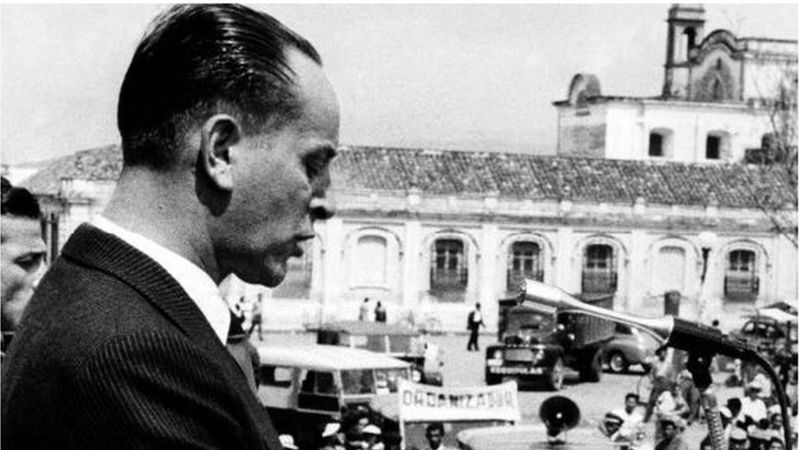
Árbenz became president in 1951. His government’s Decree 900 redistributed uncultivated land from large estates to landless peasants, with compensation based on declared tax values. One of the largest affected landowners was the United Fruit Company, a U.S.-based firm with extensive land and transport interests in Guatemala.
The reform mattered to rural families and to powerful economic interests. It also unfolded at the height of the Cold War. U.S. officials portrayed Guatemala’s government as a communist threat, while Guatemalan political actors disagreed over the pace and direction of reform. These pressures converged; they should not be collapsed into one explanation.
What Operation PBSUCCESS did
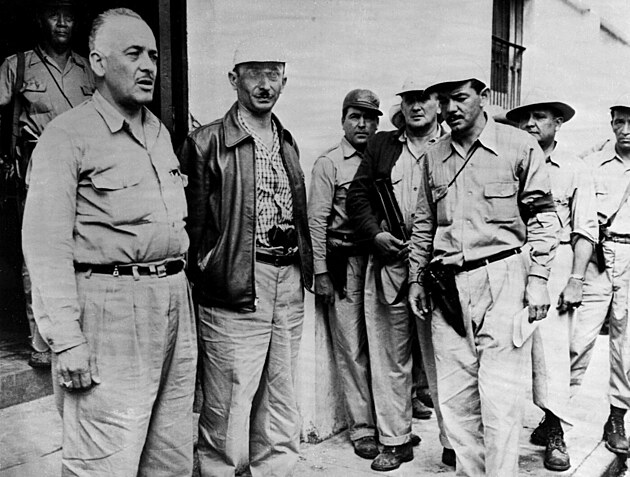
The U.S. Department of State’s Foreign Relations of the United States volume on Guatemala reproduces declassified documents concerning the operation. They show CIA planning for political warfare: propaganda, diplomatic pressure, support for Carlos Castillo Armas and his forces, and efforts to make the government appear isolated and unable to govern.
In June 1954, Castillo Armas’s small force entered Guatemala from Honduras. Aircraft, radio broadcasts and the fear of a wider military confrontation amplified the pressure. Army officers withdrew support from Árbenz. He resigned on 27 June. Castillo Armas took power shortly afterward.
The outcome was not determined by the invading force’s size alone. The operation worked through uncertainty and perception, while internal opposition and military decisions were decisive. The declassified records make it possible to examine that process rather than relying only on later recollection.
When a conspiracy becomes a record
“Conspiracy” can be a useful description when people secretly coordinate an action. It becomes misleading when it is used as a shortcut around evidence. In this case, the paper trail documents U.S. covert intervention and its role in the coup. It does not mean every later claim about the operation, the company, or the participants is automatically true.
United Fruit had clear economic interests and lobbied U.S. officials; the documentary record shows those interests sat alongside strategic and ideological calculations. Historians continue to assess how much each factor mattered. A careful account can name the company without claiming that it alone directed every stage of the operation.
The coup had consequences beyond one presidency. Castillo Armas reversed land reform. The political conflict deepened, contributing to a long period of violence and civil war. That wider history deserves more than a dramatic story about secret agents: Guatemalans lived through the consequences.
A final thought
The unsettling part is how ordinary some of the documents look. A memo, a plan, a report. Once opened, they show that covert interference was not an allegation invented after the fact.
For me, the lesson is to keep asking two questions together: what can the archive prove, and whose experience is missing from the file The first protects us from myth. The second keeps a secret operation connected to the people who had to live with its results.
Sources and image credits
- U.S. Department of State, Foreign Relations of the United States: Guatemala, 1952–1954
- National Security Archive: declassified records on PBSUCCESS
- BBC Mundo: archival coverage and context on Árbenz
- iDNES / Profimedia: archival photograph related to Castillo Armas
- Soy502: photograph of the 1954 leaflet operation, by Annie Grossinger
Images: Jacobo Árbenz photograph via BBC Mundo/Getty Images; group photograph via iDNES/Profimedia; leaflet image by Annie Grossinger via Soy502. Rights remain with the respective publishers and photographers.
Have a project behind the idea?
I work on websites, branding and film. If you need help turning your next idea into something people can see and use, tell me what you have in mind.
What did you think?
A thought, a different perspective, a little appreciation. You’re welcome here.
.png)


