Hidden History: Jeju’s Long-Suppressed Massacre and the Names Left Behind
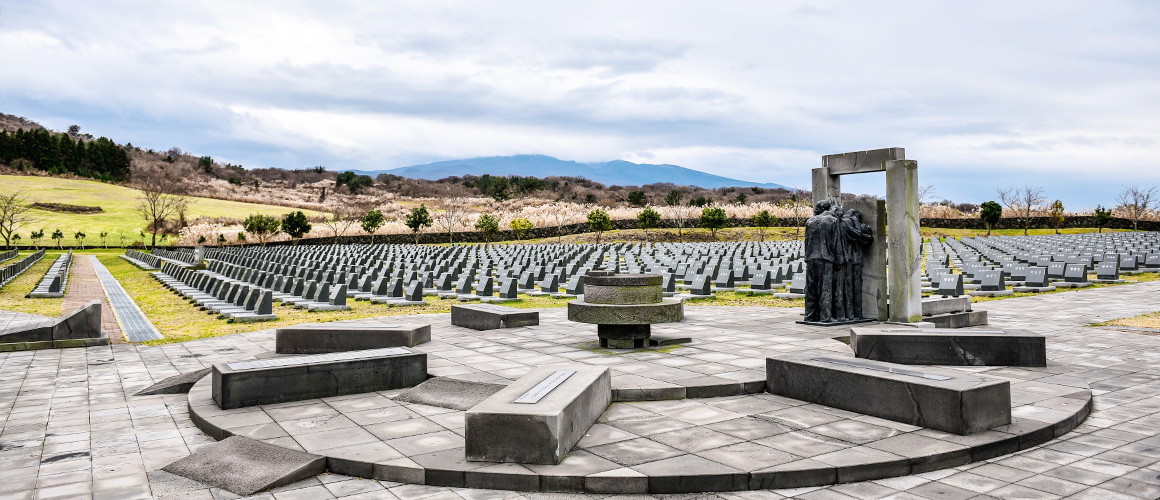
Jeju Island is often introduced through its volcanic landscape. Its modern history holds another image: rows of memorial stones bearing names of people killed or disappeared during the events known as Jeju 4·3. The violence began in 1948 and continued for years; for decades, public discussion was constrained by anti-communist rule and stigma.
The phrase “April 3 Incident” can sound like a single day. It refers to a longer sequence of armed revolt, military and police suppression, civilian killings and later efforts to investigate and remember. Official inquiry has documented thousands of victims and acknowledged that the state used violence against civilians.
Story four in Hidden History. The figures here follow the South Korean government investigation summary; estimates differ across sources.
How the violence began
Jeju had already experienced tension after Korea’s liberation from Japanese rule and the division of the peninsula. On 1 March 1947, police fired on demonstrators during a commemoration, killing civilians. A general strike followed. In April 1948, an armed uprising began, opposing the separate election process planned in the South and demanding political change.
The response expanded into a campaign of counterinsurgency. Police, military forces and right-wing groups targeted people suspected of supporting the rebels, while armed insurgents also committed killings. The civilian population was trapped between armed actors, and village communities suffered forced relocation, burning and mass violence.
Counting people after silence
South Korea’s official Jeju 4·3 investigation report identified 14,532 victims by name and estimated the total dead at 25,000 to 30,000. The report noted that incomplete records and decades of suppression made exact accounting impossible. These are not numbers to round into an easy slogan. They are an official estimate built from cases, documents and testimony.
For many years, families faced stigma when they spoke about relatives labelled as communists or rebels. Public commemoration could bring suspicion. In 2000, South Korea enacted a special law to investigate the truth and restore honour. After the national commission’s report, President Roh Moo-hyun offered an official apology in 2003, acknowledging the state’s responsibility for the violence.

The missing as a form of memory
The Jeju 4·3 Peace Park memorial grounds include grave markers for people whose remains were never recovered. The stones do not claim to be the bodies. They mark the absence of a burial, a name and a place where a family might have gone to mourn.
The island’s landscape is often marketed as beautiful and peaceful. That is true, but incomplete. The contrast matters: the scenery is not a reason to hide history; it is the place where people lived through it. Preserving the history also means respecting survivors and families who have spent decades seeking recognition.
A final thought
What makes Jeju 4·3 difficult is not only the scale of death. It is how long the public story was restricted and how quickly labels can replace people. “Communist,” “rebel,” “victim” and “missing” are not interchangeable descriptions of a life.
Reading the official record does not settle every personal memory or historical debate. It gives families a basis to speak, and the rest of us a responsibility to listen carefully. A name carved in stone cannot return a person. It can keep their absence from being erased twice.
Sources and image credits
- National Institute of Korean History: Jeju 4·3 and the official investigation
- Jeju 4·3 Peace Park
- The Korea Times: memorial markers and the 70th anniversary
Images: Jeju 4·3 Peace Park memorial field via the official Visit Jeju tourism portal; ceremony photograph via UDN Opinion. Image rights remain with the respective publishers.
Have a project behind the idea?
I work on websites, branding and film. If you need help turning your next idea into something people can see and use, tell me what you have in mind.
What did you think?
A thought, a different perspective, a little appreciation. You’re welcome here.
.png)