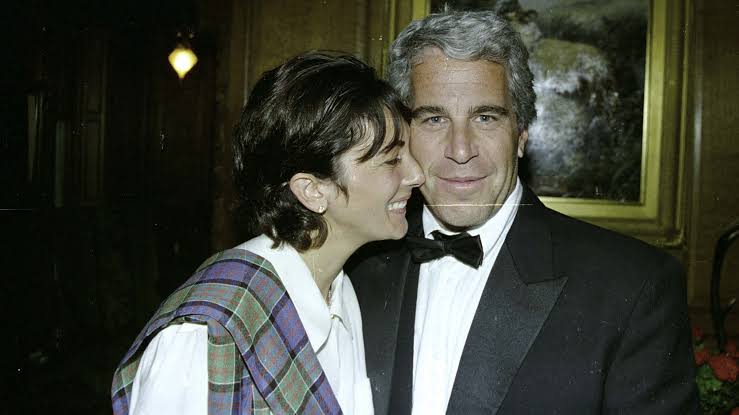
Epstein in the 1990s
The decade he built the network
By the early 1990s, Jeffrey Epstein had moved beyond the role of private money manager and into something harder to define. Journalists who later investigated him repeatedly described this decade as the period when Epstein stopped operating quietly and began constructing a global social web.
Writers at Vanity Fair and The New York Times would later describe Epstein not primarily as a financier, but as a facilitator who inserted himself into overlapping circles of wealth, politics, academia, and international influence.
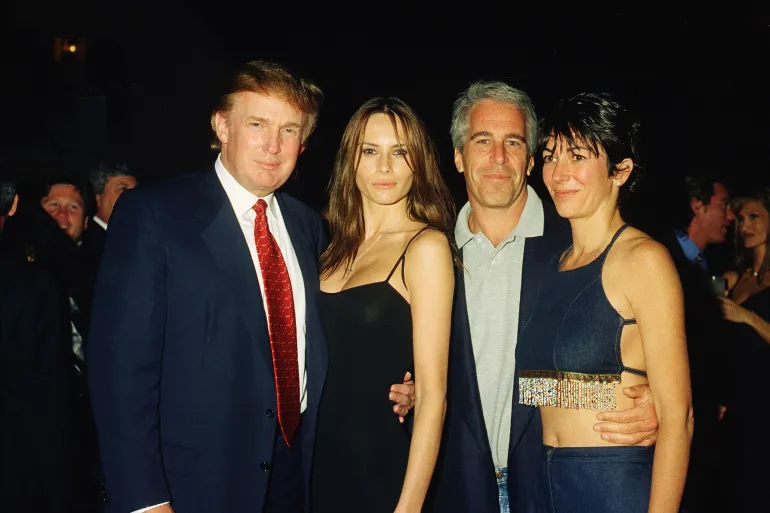
The arrival of Ghislaine Maxwell
In the early 1990s Epstein met Ghislaine Maxwell, the daughter of media tycoon Robert Maxwell. Their relationship became central to Epstein’s social life for decades afterward.
Robert Maxwell himself had been a towering figure in British media and business. After his death in 1991, investigations revealed massive pension fraud within his companies. Multiple journalists and intelligence historians later reported that Maxwell had longstanding connections with Israeli officials and was alleged by some writers to have had links to intelligence circles. Those claims remain debated, but they appear repeatedly in investigative books and reporting about the Maxwell family.
Ghislaine Maxwell entered Epstein’s life shortly after her father’s death. According to reporting in Vanity Fair, she quickly became a key social intermediary, introducing Epstein to European elites, aristocratic circles, and high society networks that he had not previously accessed.
The effect was immediate. Epstein’s world expanded from American billionaires into transatlantic social power.
The Wexner backing still in place
Throughout the 1990s Epstein’s relationship with Leslie Wexner remained central to his credibility. Epstein continued to manage aspects of Wexner’s finances and represented himself as the steward of a billionaire fortune.
The Wexner Foundation, established in the 1980s, funded leadership programs in Israel and the United States and maintained institutional ties to Israeli public sector training initiatives. This is documented in foundation materials and reporting on its programs.
Epstein’s role inside Wexner’s financial world gave him access not only to wealth but to philanthropic networks, donor circles, and political contacts linked to those programs. Journalists later noted that this backing helped Epstein present himself as someone already trusted by powerful institutions.
The island and the image
During the 1990s Epstein acquired Little Saint James in the U.S. Virgin Islands, the private island that would later become central to investigations. At the time, the purchase reinforced the image he was cultivating. Not just a financier, but a man whose wealth allowed him to create private spaces beyond public scrutiny.
Epstein’s homes in Manhattan, Palm Beach, New Mexico, and the Caribbean became gathering points. Reporting in the New York Times and other outlets later described how these locations hosted dinners, meetings, and social events attended by financiers, politicians, academics, and celebrities.
The gatherings often blended philanthropy, science funding discussions, and social entertainment. Epstein presented himself as a patron of research, inviting scientists and intellectuals into his orbit. This helped construct an identity that was part financier, part benefactor, part connector.

Lawyers, legitimacy, and public figures
Epstein also surrounded himself with high profile legal and political figures. Among those associated with him socially and professionally was Harvard law professor Alan Dershowitz, who later represented Epstein in legal matters and publicly acknowledged knowing him during this period.
Dershowitz was also known for work involving constitutional law and international legal issues, including matters connected to Israel. That fact, combined with Epstein’s other relationships, later fueled speculation about the geopolitical dimension of his network.
Journalists emphasized that in the 1990s Epstein was constructing layers of legitimacy. Wealth gave him access. Lawyers, academics, and donors gave him credibility.
The international footprint
Travel records, property acquisitions, and later reporting show Epstein operating across the United States, the United Kingdom, France, and the Caribbean during this decade. His social circle included European aristocrats, American financiers, and political donors.
What stands out in reporting from the period is not a single industry or sector. Epstein’s connections spanned finance, diplomacy, academia, philanthropy, and politics simultaneously. He did not appear to belong to one world. He appeared to move between many.
That pattern is what made later investigators focus on the 1990s as the decade when Epstein constructed the infrastructure of his influence.
The emerging questions
By the end of the decade Epstein had achieved something unusual. He was not publicly famous, but he was privately well known among the powerful. His houses were hosting gatherings. His island was established. His relationship with Maxwell had embedded him in European networks. His connection to Wexner still provided financial legitimacy.
Journalists looking back on the era often asked the same question. Was Epstein primarily managing wealth, or managing relationships?
The public record from the 1990s provides facts about who he met, where he traveled, and how he presented himself. What it does not provide is a single clear explanation for how one man without a traditional financial track record embedded himself so deeply into elite circles across multiple countries.
That question would not be fully confronted until the next decade, when scrutiny began to catch up with the network built during these years.


More
more
like this
like this
On this blog, I write about what I love: AI, web design, graphic design, SEO, tech, and cinema, with a personal twist.

.png)