Epstein and the Power Brokers of the 1980s
Pottinger Khashoggi Leese Maxwell and the network forming around him
Entering a different world
By the early 1980s, Jeffrey Epstein was no longer just a former Wall Street trader trying to reinvent himself. He was moving into circles populated by lawyers tied to political scandals, arms dealers connected to intelligence services, British fixers with opaque client lists, and media barons later accused of espionage. The question that defines this decade is simple. How did a man with no degree and no established financial track record end up inside rooms with figures who were already operating on a geopolitical scale?
This was not ordinary networking. These were people who moved money across borders, handled sensitive legal problems, and in some cases were tied to covert diplomacy and arms trading.
Stanley Pottinger the Washington gatekeeper
Stanley Pottinger was not just a lawyer. He had served in the US Department of Justice during the Nixon years and later built a private legal career representing controversial international clients, including figures tied to financial scandals and political intrigue. By the early 1980s Pottinger’s practice specialized in complex international matters involving banking secrecy, offshore structures, and sensitive political exposure.
Epstein’s relationship with Pottinger appears in financial and legal reporting from later decades, where Pottinger acted as counsel in matters linked to Epstein’s operations. The connection suggests that Epstein understood early that access to elite legal operators was as important as access to capital. Pottinger was someone who knew how to navigate investigations, governments, and international finance simultaneously.
The unanswered question is when exactly Epstein first entered Pottinger’s orbit and through whom. Was it through Wall Street contacts, through Les Wexner’s expanding financial network, or through clients who already operated internationally? The historical record leaves this unclear, but the pattern is revealing. Epstein gravitated toward lawyers who specialized in problems ordinary financiers never encounter.
Adnan Khashoggi the global middleman
Adnan Khashoggi in the 1980s was one of the most famous businessmen in the world. He was an arms broker who facilitated deals between Western manufacturers and Middle Eastern governments, often operating at the intersection of diplomacy, intelligence, and private finance. His name surfaced repeatedly in connection with the Iran Contra affair, covert weapons transfers, and offshore financial webs.
Khashoggi’s lifestyle was legendary. Yachts, private jets, rotating residences across Europe and the United States, and a social circle filled with royalty, intelligence operatives, and political figures. He was not merely rich. He was embedded in the shadow infrastructure of Cold War geopolitics.
Epstein’s presence in circles overlapping with Khashoggi suggests that by the mid to late 1980s he was already comfortable operating in environments where money, intelligence, and influence mixed freely. There are accounts placing Epstein at gatherings attended by figures connected to Khashoggi’s network, though documentation of direct business partnerships remains thin.
The real question is not whether Epstein handled arms deals himself. There is no credible evidence of that. The question is whether proximity to Khashoggi introduced Epstein to the mechanics of offshore finance, shell companies, and discreet wealth movement. That is the skillset Epstein later marketed as his specialty.
Douglas Leese the quiet connector
Douglas Leese is less publicly known but repeatedly appears in investigative reporting about elite financial and political networks in the late Cold War period. Leese operated as a facilitator who connected wealthy clients with banks, legal structures, and political intermediaries. He represented exactly the kind of figure Epstein seemed drawn to. Someone who operated behind the scenes rather than in headlines.
Reports later linked Leese to social and financial networks that overlapped with Epstein’s clientele. This does not prove partnership, but it reinforces a pattern. Epstein’s rise in the 1980s did not occur in isolation. He was moving into a transatlantic web of brokers whose value lay in discretion rather than visibility.
The unanswered question here is whether Epstein learned his later “financial manager to billionaires” model from people like Leese. Did he observe how elite facilitators sold access and secrecy rather than products? The chronology suggests it is possible.
Robert Maxwell the media tycoon with secrets
Robert Maxwell is perhaps the most striking figure connected to Epstein’s wider orbit. Maxwell was a British publishing magnate who controlled major newspapers and companies, but after his death in 1991 it was revealed that he had looted hundreds of millions from employee pension funds. Even more explosively, numerous journalists and historians later alleged that Maxwell maintained links to intelligence services, particularly Israeli intelligence. These claims remain debated but widely discussed in investigative literature.
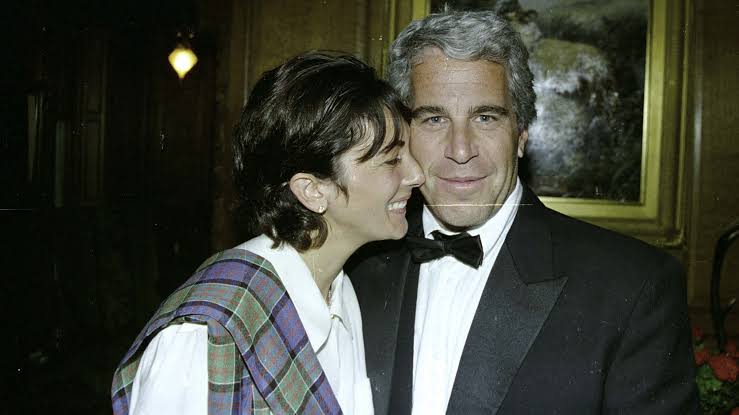
Epstein later developed a close relationship with Maxwell’s daughter Ghislaine Maxwell, which would become central to his life in the 1990s and 2000s. That relationship did not emerge from nowhere. It grew out of overlapping elite networks already forming in the 1980s.
The crucial question is whether Epstein’s entry into the Maxwell family circle began before Robert Maxwell’s death or only afterward. Some accounts suggest Epstein and Robert Maxwell met in the late 1980s. Documentation is incomplete, but what is certain is that Epstein became deeply embedded with the Maxwell family soon after.
If Maxwell truly operated at the intersection of media, finance, and intelligence as many reporters later suggested, then Epstein’s association with that world may explain how he transitioned from obscure financier to someone with international reach.

What this network tells us
Looking at these figures together reveals something important. Epstein’s 1980s trajectory was not defined by traditional finance. It was defined by proximity to people who specialized in moving money quietly, managing sensitive clients, and operating in environments where political and financial power overlapped.
Pottinger represented legal shielding.
Khashoggi represented geopolitical finance.
Leese represented discreet elite brokerage.
Maxwell represented the intersection of media influence and alleged intelligence ties.
None of this proves Epstein was involved in intelligence work. There is no verified evidence establishing that. But it does show that the circles he entered were populated by individuals who routinely interacted with governments, covert finance, and sensitive political actors.
The deeper investigative question remains. Did Epstein deliberately cultivate these relationships as part of a strategy to build influence, or was he simply a financial opportunist drawn to powerful clients? The historical record does not yet give a definitive answer, but the pattern suggests he understood early that the real currency of power was not money alone. It was access to people who could move it invisibly.


More
more
like this
like this
On this blog, I write about what I love: AI, web design, graphic design, SEO, tech, and cinema, with a personal twist.

.png)