Revisiting the Life and Lenses of Peter Bogdanovich
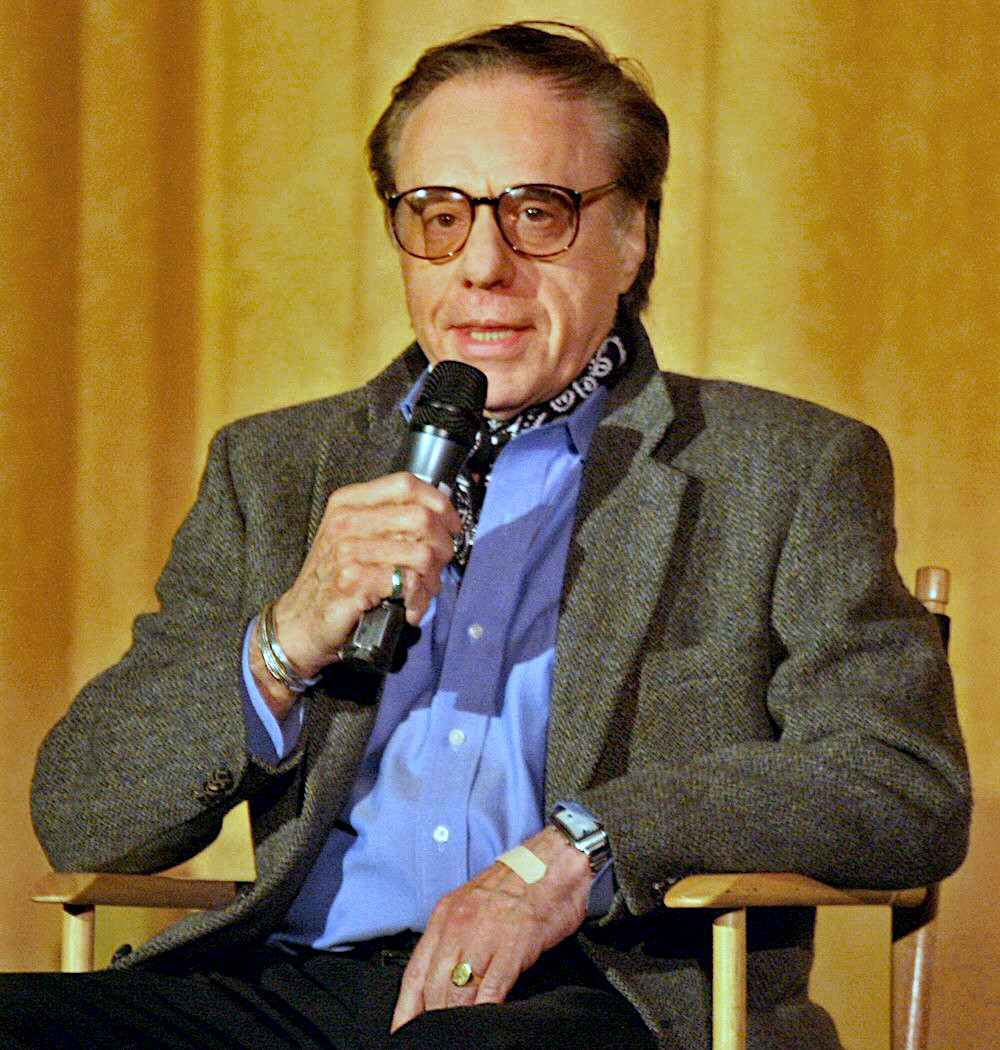
There are directors who tell stories, and then there are those who house them. Peter Bogdanovich, who left us in January 2022 at the age of 82, was a haunted house of cinema. He was filled with the ghosts of John Ford’s Monument Valley, the rapid-fire patter of Howard Hawks’ dames, and the deep focus shadows of Orson Welles. We tend to talk about the "New Hollywood" directors as rebels who broke with the past to reflect a fractured modern America. But Bogdanovich was different. He wasn’t breaking with the past; he was trying to carry its torch through the dark wind of the 1970s, praying the flame wouldn’t go out .
To look at his filmography is to look at a man who believed that the old ways could still say something new. And for a brief, brilliant moment, he was right.
The Student Who Became a Master
Born in 1939 to Serbian and Austrian-Jewish parents who had just fled Europe, Peter was conceived in the Old World but born into the New . By the time he was twelve, he was keeping index cards on every film he saw sometimes four hundred a year. He wasn't just watching; he was archiving, studying, committing light and shadow to memory .
Before he ever held a director’s finder, he held a pen. He wrote for Esquire and Cahiers du Cinéma, and he programmed retrospectives at the Museum of Modern Art. He championed Allan Dwan when Hollywood had forgotten him, and he befriended the titans Hawks, Ford, and Hitchcock—not as a fanboy, but as a peer in the making . This was his film school. He learned the grammar of cinema from the men who invented the sentences.
Following the path of the French New Wave critics who turned directors, he headed to Los Angeles with his wife and artistic collaborator, Polly Platt. Roger Corman, the king of the B-movie, gave him his shot. The result was Targets (1968) .
Targets (1968): The Monster in the Aisles
Shooting Targets was like a magic trick performed with someone else’s rubbish. Corman had Boris Karloff for two days and footage from a previous film, The Terror. He told Bogdanovich to make a new picture out of it .
What Bogdanovich and Platt did with that mess is nothing short of alchemy. They created a diptych: one story follows an aging horror star (Karloff) who thinks his brand of gothic terror is obsolete; the other follows a clean-cut all-American boy who buys a high-powered rifle and climbs a water tower to shoot strangers.
As a cinematographer, I look at Targets and see the brilliance of contrast. László Kovács shot it, and he understood the assignment perfectly. The scenes with Karloff are composed, classical, and warm—lit like the old Hollywood he represents. But the sniper sequences? They are flat, bright, and terrifyingly mundane. The final confrontation at a drive-in theater is a thesis statement on American violence. The real monster isn't the man in the makeup; it's the man in the crosshairs . It was a debut that announced a filmmaker who understood that the scariest thing in America wasn't Transylvania—it was the freeway.
The Last Picture Show (1971): Light and Shadow in Black-and-White
Then came the masterpiece. The Last Picture Show is a film I have studied frame by frame. In 1971, when everyone was going for the gritty, desaturated look of color film, Bogdanovich chose black-and-white. He wasn't being nostalgic; he was being honest. The dusty desolation of Anarene, Texas, didn't need color; it needed texture .
He shot it like a John Ford film stripped of the romance. The compositions are wide, placing the tiny humans against the vast, empty sky and the endless main street. It is a film about looking and being looked at. Think of the pool hall, the picture show, the scenes of fumbling intimacy in the back of cars. Bogdanovich had an almost Renoir-like compassion for his characters; as Peter Tonguette noted, in his universe, everyone has their reasons .
He also had the courage to cast a model named Cybill Shepherd. She was luminous, and the camera adored her because Bogdanovich adored her. It cost him his marriage to Platt, who had been the secret weapon on so much of this work . It was the first of many times his heart would lead him directly into the line of fire.
What's Up, Doc? (1972) and Paper Moon (1973): Rhythm and Control
Proving The Last Picture Show was no fluke, he turned to comedy. What's Up, Doc? is a precision instrument. It is an homage to Hawks' Bringing Up Baby, but it moves with the frantic energy of a silent chase. The timing required to pull off that kind of screwball is brutal. The camera has to be exactly right—it has to be fluid enough to catch the chaos but controlled enough to sell the joke. The sequence in San Francisco with the four cars full of identical plaid luggage is a feat of choreography that most action films can't match .
And then there is Paper Moon (1973). Another black-and-white road movie, this time set in the Depression. The long takes following Ryan and Tatum O’Neal in that Ford Model A, the way the light hits the Kansas flatlands—it looks like it was shot in 1935 but felt utterly fresh in 1973. It won Tatum an Oscar, and it cemented Bogdanovich as the wunderkind who could do no wrong .
The Fall: Hubris, Heartbreak, and the Horror Off-Screen
But the flame flickered. He followed his muse Shepherd into Daisy Miller and At Long Last Love, films that critics savaged. He was accused of hubris, of letting his personal life dictate his art . Looking back, I see a filmmaker who was exhausted by the machinery of success, trying to find refuge in the genres he loved. The studio system that had nurtured his heroes was dead; the "Director's Company" he formed with Coppola and Friedkin was a noble experiment that couldn't last .
The tragedy, however, was not just professional. It was personal. He cast a Playboy model named Dorothy Stratten in They All Laughed (1981). He fell in love with her. It was a romance that felt like a movie, until it felt like a nightmare. Stratten was murdered by her estranged husband .
Bogdanovich was shattered. To ensure the film was seen, he bought the rights himself, driving himself into bankruptcy . I think about They All Laughed often. Bogdanovich once said he felt the picture would never really work until everyone in it was dead, and then it would become neutral again . That is the kind of sadness a director carries when the world outside the frame becomes more violent than anything you can put inside it.
The Long Twilight and the Legacy
He spent the rest of his life recovering. He made Mask (1985), which showed he still had immense empathy. He became an actor, most notably as Dr. Elliot Kupferberg on The Sopranos, playing a therapist—a man who listens to stories, much like a director . He wrote books, he gave commentaries, and he kept the memories of his friends Welles, Ford, and Hawks alive for a new generation .
In the end, Peter Bogdanovich lived the arc of a classical tragedy. He peaked early, burned bright, fell hard, and spent his twilight years as a storyteller, a historian, and a ghost at the feast . But when you look at his best work—the deep focus of The Last Picture Show, the manic energy of What's Up, Doc?—you see a director who understood that the camera doesn't just capture reality. It captures our longing for something more.
He was the last picture show. And damn, the screen was bright.


.png)
More
more
like this
like this
On this blog, I write about what I love: AI, web design, graphic design, SEO, tech, and cinema, with a personal twist.