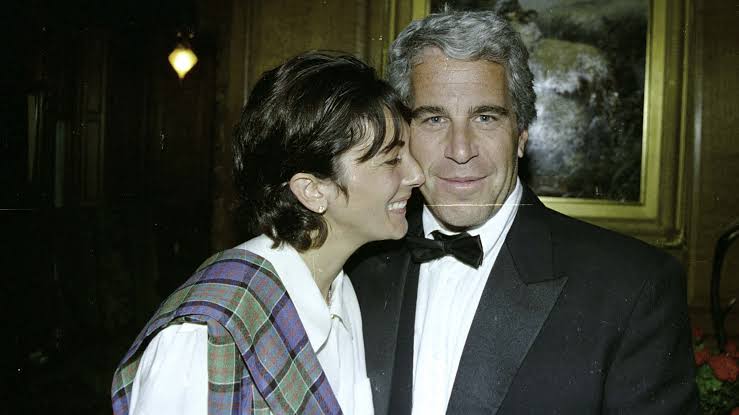
Bassem Youssef is scared of Alan Dershowitz?
When Bassem Youssef opens his monologue with mock surrender — “I’m filing a lawsuit immediately… You are now going to be sued” — he is not retreating. He is setting a trap.
The Egyptian satirist frames his address as an apology to Alan Dershowitz, but the irony is immediate and deliberate: “I admit now that I was wrong, mostly because I’m scared of you.” What follows is not an apology, but a meticulously constructed takedown — one that uses satire as a scalpel.

Framing the Power Imbalance
Youssef begins by establishing what he sees as the core issue: power.
“Who am I to stand against the great Alan Dershowitz?” he asks, before listing a roster of notorious clients — from O.J. Simpson to Jeffrey Epstein — not to relitigate those cases, but to underline what he describes as a pattern: defending powerful men accused of harming others.
Youssef’s argument is not that lawyers should not defend controversial clients. Rather, he suggests that Dershowitz’s career reveals a recurring posture — aggressively discrediting accusers. That theme becomes central to his critique.
The Million-Dollar Question
One of Youssef’s sharpest points concerns a reported payment linked to Virginia Giuffre.
“You didn’t pay Virginia Jeffrey a million dollars, but you paid her lawyers a million dollars as fees or settlement,” Youssef says. He continues: “If you are innocent, why would you pay your accusers’ lawyers a million dollars?”
Here, Youssef moves from satire into logic. His argument hinges not on proving guilt, but on questioning the optics and credibility of such a settlement. He acknowledges that the payment reportedly came through insurance but underscores what he portrays as an odd insistence by Dershowitz to receive $50,000 himself “so you can claim payment.”
The strategy is clear: raise doubt through financial behavior, not through accusation alone.
Multiple Accusers and Pattern Recognition
Youssef broadens the frame beyond one accuser. He references Sarah Ransome and Annie Farmer, noting that more than one woman alleged misconduct connected to Jeffrey Epstein’s network.
He stops short of making legal conclusions. Instead, he builds a pattern argument: “Isn’t it weird that two separate women accused you…?”
His point is cumulative rather than definitive. He invites viewers to see repetition not as coincidence but as signal.
The Flight Logs
Perhaps the most pointed section of the monologue concerns flight records.
“I was never on an Epstein plane with a young woman,” Youssef paraphrases from Dershowitz’s public denials. Then comes the pivot: “Well, then I got the flight logs…”
Youssef claims the logs show Dershowitz flying with individuals whose names appear without his wife present — contradicting the assertion that he “only fly[s] with [his] wife.”
Here, Youssef’s rhetorical approach is investigative. He references documentary evidence — flight logs — and suggests inconsistency between public statements and records. Even when he maintains a sarcastic tone (“Listen, Dershowitz, I believe in you”), the structure of the argument is evidentiary.

The Massage Inconsistency
Another significant moment comes when Youssef addresses shifting statements about receiving a massage at Epstein’s home.
“You went from ‘I never got a massage on Epstein’ to ‘I got a massage from a 50-year-old Russian woman named Olga.’”
The substance of Youssef’s critique is not the massage itself, but the change in narrative. He uses humor — exaggerating the imagery — but his underlying argument concerns credibility. In matters involving serious allegations, consistency matters. Any alteration in testimony, Youssef suggests, invites scrutiny.
The Broader Character Argument
Youssef also reaches back into Dershowitz’s past — his divorce proceedings, student complaints during his time at Harvard, and his defense of figures in the pornography and obscenity cases of the 1970s.
This section functions rhetorically to construct what journalists call a “character portrait.” Youssef implies that the Epstein-era controversies are not isolated but part of a longer pattern of behavior and associations.
The cumulative message is blunt: “You lie down with dogs, you get up with fleas.”
Satire as Shield and Sword
Importantly, Youssef couches every major allegation within satire. He repeatedly says, “I believe you,” even as he dismantles the plausibility of the denials. The humor performs two functions:
- It protects him legally and rhetorically.
- It sharpens the critique by exposing perceived absurdities.
His closing is theatrical — “Sue. Sue. Sue. Sue.” — transforming the threat of litigation into comedic rhythm. But beneath the humor lies a serious point about power and intimidation. Youssef suggests that threats of lawsuits are tools used by powerful figures to silence critics.
What Youssef Ultimately Argues
At its core, Youssef’s monologue is not a courtroom brief. It is an argument about credibility, power, and accountability.
He does not claim to deliver a verdict. Instead, he asks:
- Why were settlements made
- Why are statements inconsistent
- Why do flight logs contradict public claims
- Why attack accusers rather than address evidence
In doing so, Youssef positions himself not merely as a comedian, but as a challenger of elite narratives. His central thesis is implicit but unmistakable: when powerful men dismiss multiple accusers as “lying prostitutes,” the public has every right to look deeper.
And Youssef makes clear that, satire aside, he believes the looking should continue.
Have a project behind the idea?
I work on websites, branding and film. If you need help turning your next idea into something people can see and use, tell me what you have in mind.
What did you think?
A thought, a different perspective, a little appreciation. You’re welcome here.

.png)