Wes Anderson’s Criterion Favourites: Ten Places, Twelve Films
We often talk about a director’s influences as if there were a neat line from one favourite film to the next. A list is messier than that. It can move from romance to postwar streets, from a child’s difficult life to a dinner party that refuses to end.
In 2010, The Criterion Collection asked Wes Anderson to share favourite titles from its collection. His list has ten numbered places, but place three is a tie between three Shohei Imamura films, so it names twelve movies. It is a personal selection from Criterion’s catalogue, not a claim to his definitive ten favourite films of all time.
That distinction matters. It also makes the list more interesting: Anderson’s own short notes are as revealing as the titles.

1. The Earrings of Madame de . . . (Max Ophuls, 1953)
Anderson puts Max Ophuls’s film first. A countess sells a pair of earrings to cover debts; their circulation through a small world of money, marriage and desire becomes a portrait of social performance. The camera seems to glide through the rooms as gracefully as the characters, while the consequences grow less graceful. Anderson calls it a perfect film, after recounting how Louise de Vilmorin, who wrote the novel, apparently disliked the adaptation.
2. Au hasard Balthazar (Robert Bresson, 1966)
A donkey passes from one owner to another, and the people around him reveal tenderness, cruelty and indifference in the process. Anderson’s note is unguarded: you hate to see Balthazar suffer, and your heart goes out to him. It is a small remark about a film that refuses to make suffering feel small.
3. Pigs and Battleships, The Insect Woman and Intentions of Murder (Shohei Imamura)
This is the list’s only tie, and it is where the count moves from ten to twelve. Anderson describes discovering Imamura beyond Vengeance Is Mine and places all three selections in the same unfolding encounter with the director.
Pigs and Battleships follows people living around a U.S. naval base in postwar Japan, where black-market business and the American military presence shape everyday survival. The Insect Woman traces a woman’s life through poverty, sexual exploitation and social change across decades. Intentions of Murder centres on a housewife whose life is altered by sexual violence and the choices that follow. Together, they suggest an interest in cinema that looks directly at how power settles into ordinary life.
4. The Taking of Power by Louis XIV (Roberto Rossellini, 1966)
Rossellini turns court ritual into political drama. The film follows Louis XIV as he learns to organise power around himself, including through clothes, ceremony and the daily choreography of Versailles. Anderson remembers being fascinated by the performance even while questioning it. His curiosity becomes part of the recommendation: what counts as “good acting” when the whole political world is a performance?
5. The Spy Who Came in from the Cold (Martin Ritt, 1965)
Adapted from John le Carré, the film follows British intelligence officer Alec Leamas into a dangerous deception during the Cold War. Its appeal is not the fantasy of espionage as glamour, but the exhausting ambiguity of a job in which loyalty can be another instrument. Anderson’s note singles out both the film and a moving interview with le Carré.
6. The Friends of Eddie Coyle (Peter Yates, 1973)
Robert Mitchum plays an ageing Boston gunrunner trying to manage a precarious relationship with the law and the people who depend on him. Anderson’s entire note is: “It’s not upbeat.” That dry understatement fits a crime film in which survival has little room for victory.
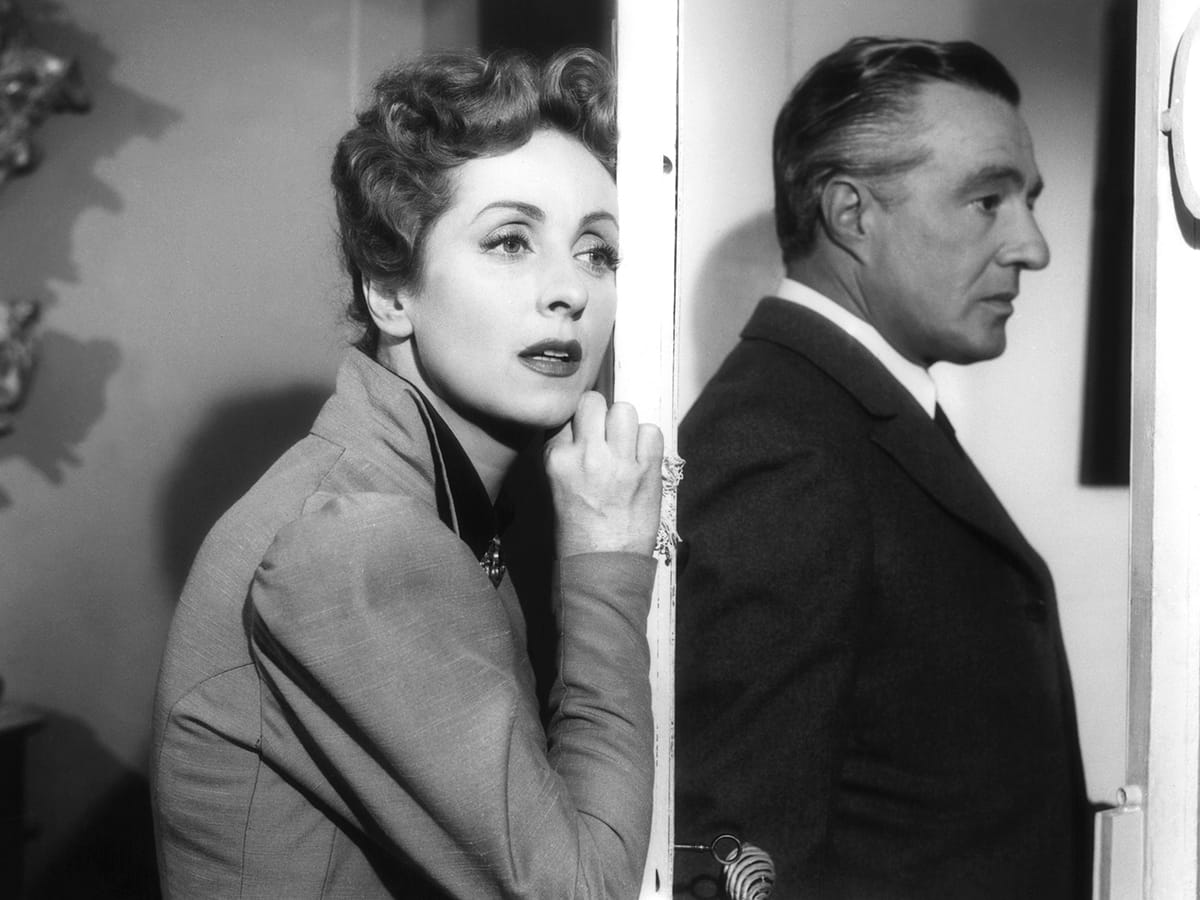
7. Classe tous risques (Claude Sautet, 1960)
A fugitive gangster, Abel Davos, tries to return to France with his family while old loyalties and the police close in. The title promises danger, and the film makes it intimate: crime presses against domestic life. Anderson writes that he is a great fan of Sautet, naming Un cœur en hiver as another favourite.
8. L’enfance nue (Maurice Pialat, 1968)
Pialat’s first feature follows a troubled boy moved between foster families and institutions. The film’s attention stays close to the instability of childhood and to adults who cannot always offer the care they intend. Anderson says an earlier Pialat release introduced him to the director, then urges viewers to seek out more of his work.
9. Mishima: A Life in Four Chapters (Paul Schrader, 1985)
Paul Schrader’s film braids episodes from Yukio Mishima’s life with staged passages from three of his novels, building a portrait around the tension between art, body and action. Anderson describes immediately watching it again with Schrader’s commentary. He also places it among his favourites by Schrader, alongside Blue Collar.
10. The Exterminating Angel (Luis Buñuel, 1962)
After a formal dinner, guests discover that they cannot bring themselves to leave the drawing room. Buñuel turns a simple impossibility into a social and psychological trap. Anderson remembers returning to it after years and describes the director as a personal hero. The choice ends the list with a film that makes the rules of polite society look suddenly absurd.
What this list leaves with us
Anderson’s selections cross national cinemas, periods and moods, but the notes resist a tidy theory. Sometimes he writes about a film’s form; sometimes about the circumstances in which he first met it; sometimes one dry sentence is enough.
That may be the useful thing about asking artists what they love. Their answers do not always explain how to make their own work. They give us another way to look at the work that stayed with them—and a dozen reasons to make our own list.
Sources and further reading
- The Criterion Collection: Wes Anderson’s Top 10 (published October 6, 2010; Criterion describes it as Anderson’s favourite titles from its collection)
- The Criterion Collection: The Earrings of Madame de . . .
- The Criterion Collection: Au hasard Balthazar
- The Criterion Collection: Vivre sa vie
- BFI Sight and Sound: Wes Anderson’s separate ballot of ten French favourites
Film details and selection checked against the cited sources on October 5, 2026.
Image credits
List artwork and film images from The Criterion Collection image servers. Film artworks remain the property of their respective rights holders.
What did you think?
A thought, a different perspective, a little appreciation. You’re welcome here.
.png)