Nicolas Winding Refn’s Ten Favourite Criterion Films, from Tokyo Drifter to Branded to Kill
Nicolas Winding Refn’s Criterion ten moves between crime, horror, science fiction and melodrama, with several films that seem to belong to the margins of their own moment. Taken together, the choices make a case for the expressive possibilities of genre.
This is Refn’s published selection of favourite Criterion titles, not a claim to a private definitive canon. The list becomes most revealing where the films’ worlds feel stylised, damaged or slightly out of time.

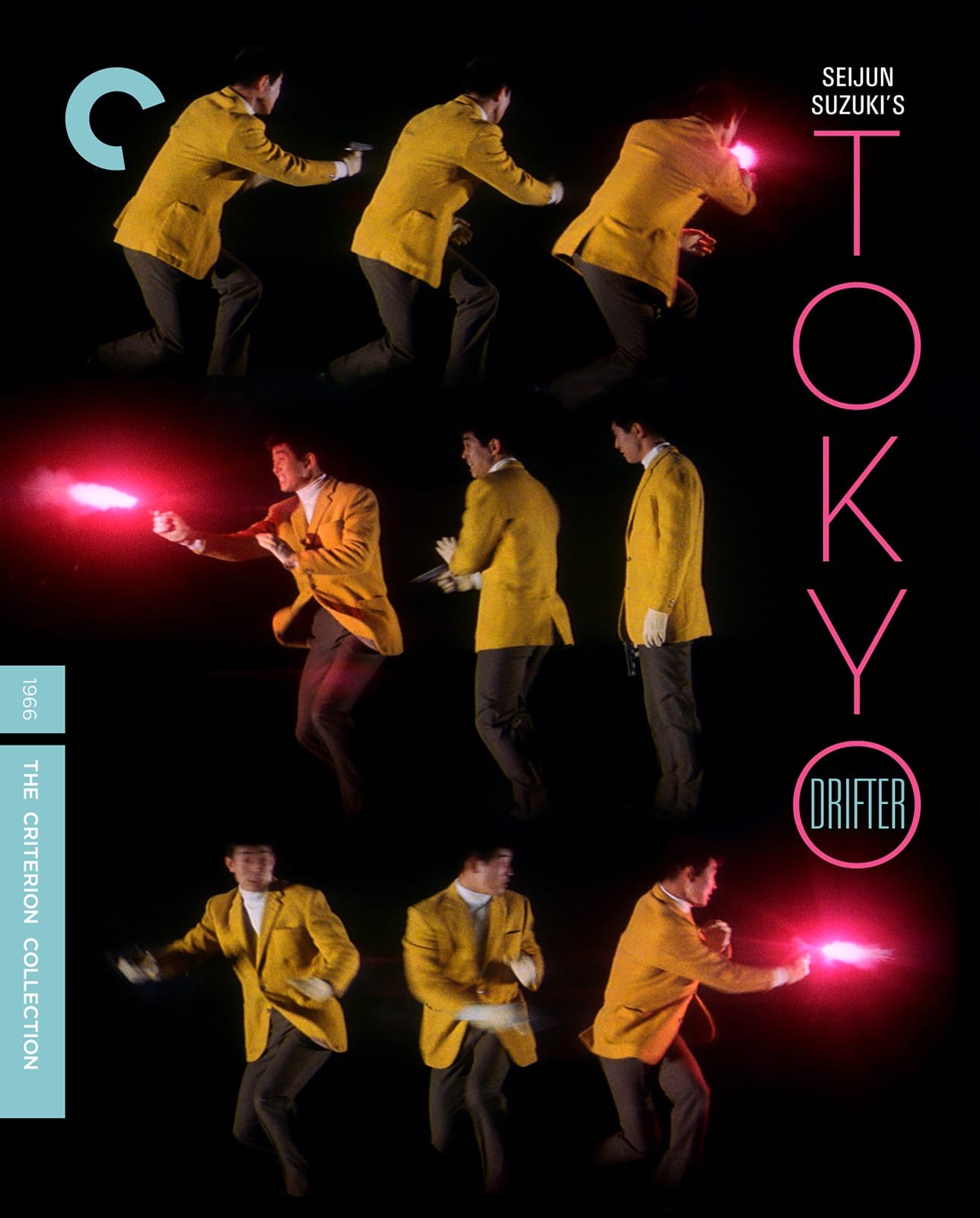
1. Tokyo Drifter (Seijun Suzuki, 1966)
A yakuza enforcer is forced to leave Tokyo after his boss abandons their criminal organisation. Suzuki turns the crime story into an audacious play of colour, geometry and sudden musical flourishes. Refn’s selection begins with a film that treats style as an active force.
2. The Battle of Algiers (Gillo Pontecorvo, 1966)
Pontecorvo reconstructs the conflict between French colonial authorities and Algerian independence fighters in a documentary-like style. Its close attention to tactics and civilian life keeps political history tied to people on the ground.
3. Vampyr (Carl Th. Dreyer, 1932)
A traveller arrives at a village haunted by supernatural events and becomes drawn into a family’s struggle against a vampire. Dreyer’s soft focus and drifting shadows make uncertainty part of the film’s atmosphere.
4. The Night of the Hunter (Charles Laughton, 1955)
A murderous preacher pursues two children who know where their father hid stolen money. Laughton stages the story as a shadowed American fable, shifting between menace and dreamlike beauty.
5. Videodrome (David Cronenberg, 1983)
A television programmer discovers a pirate broadcast that seems to affect the minds and bodies of its viewers. Cronenberg’s technology horror turns media consumption into something physical and disturbing.
6. Flesh for Frankenstein (Paul Morrissey, 1973)
Baron Frankenstein builds a pair of bodies in a deliberately grotesque, theatrical take on the monster story. Its lurid excess makes horror, satire and camp difficult to separate.
7. Sweet Smell of Success (Alexander Mackendrick, 1957)
A ruthless newspaper columnist uses his influence to control the people around him, while a press agent works to stay in his favour. The film’s sharp dialogue and night-time New York settings turn ambition into a trap.
8. My Life as a Dog (Lasse Hallström, 1985)
A boy sent to live with relatives in a small Swedish town copes with loss by comparing his troubles to those of people and animals elsewhere. Hallström balances sadness with the strange resilience of a child’s imagination.
9. Beauty and the Beast (Jean Cocteau, 1946)
A young woman enters the enchanted home of a beast to save her father, discovering tenderness beneath the frightening surface. Cocteau’s handmade effects create a fairy tale that feels intimate and uncanny.
10. Branded to Kill (Seijun Suzuki, 1967)
A professional assassin with an unusual obsession becomes the target of a rival after a job goes wrong. Suzuki bends the crime genre into a jagged, highly stylised game of images and sound.
Genre as a door into cinema
Refn’s selections make space for films that refuse to behave politely. Some are severe, some playful, some lurid, but each has a distinct visual language. Their genres are not limits; they are ways into questions about power, identity and desire.
A list like this is a good reminder that a director’s taste can be an invitation to explore outside the films we already know. Start with the title that sounds least like your usual choice. It may be the one that stays.
Sources and further reading
- The Criterion Collection: Nicolas Winding Refn’s Top 10
- List artwork, The Criterion Collection
- Film image, The Criterion Collection
Selection and film details checked against the cited Criterion Collection source on October 5, 2026. Film artwork remains the property of its respective rights holder.
Have a project behind the idea?
I work on websites, branding and film. If you need help turning your next idea into something people can see and use, tell me what you have in mind.
What did you think?
A thought, a different perspective, a little appreciation. You’re welcome here.