How the Iran War is Reshaping the Global Economy
On February 28, 2026, the United States and Israel launched a military campaign against Iran. Within hours, the global economy began to buckle.
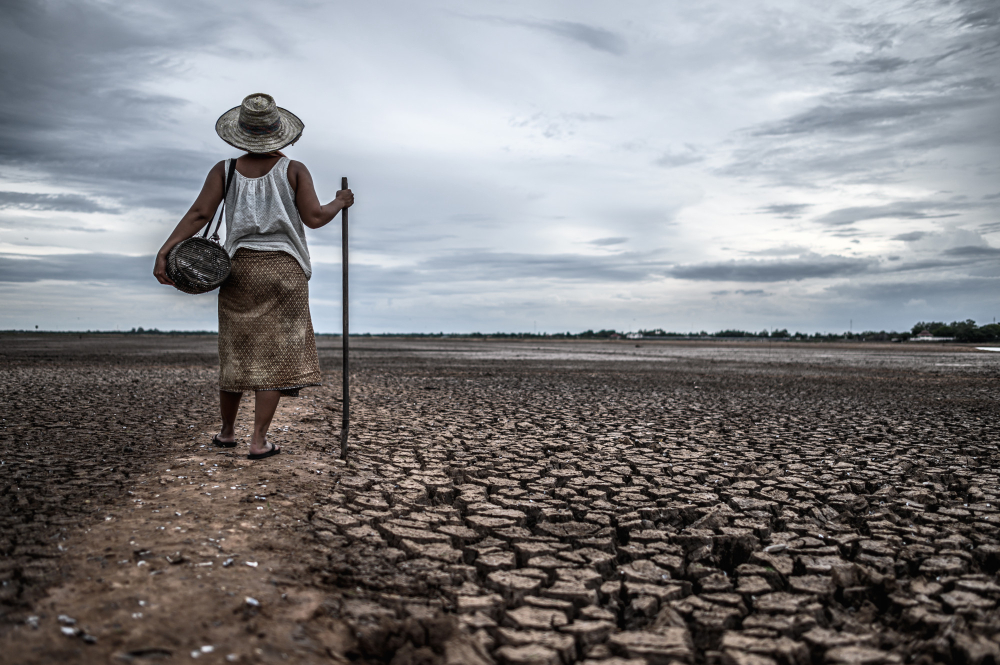
Twenty-five days later, oil prices had surged roughly 60 percent. European gas markets were experiencing their sharpest spike since the depths of the energy crisis following Russia's invasion of Ukraine. The world's largest liquefied natural gas export facility was burning. And the International Monetary Fund was warning that a prolonged conflict could shave a full percentage point off global output while adding two percentage points to inflation worldwide .
This is not a speculative forecast. These are the numbers already recorded.
The war between Israel, the United States, and the Islamic Republic of Iran has entered its fourth week with no end in sight. It has already killed more than 2,000 civilians, displaced hundreds of thousands, and plunged a nation of 90 million people into darkness—literally. Residents of Tehran reported widespread power outages across the capital on March 23 after heavy airstrikes struck multiple areas of the city . Israel's military said it had begun a new wave of strikes targeting Iranian infrastructure. It did not provide further details .
But the consequences of this conflict extend far beyond the battlefields of the Middle East. They are rippling through supply chains in India, raising diesel prices for winemakers in Italy, delaying Bollywood film releases, and threatening to push the global economy into a recession that economists are already comparing to the 1970s .
This is the story of those consequences. It is based on verified data, official statements, and the testimony of people living through the crisis. It contains no speculation beyond the scenarios outlined by the world's most credible economic institutions.

I. The War That Began in February
The current conflict traces its immediate origins to February 28, 2026, when the United States and Israel launched coordinated strikes against Iranian targets. The military campaign was described by US President Donald Trump as necessary to contain Iran's regional ambitions and its nuclear program.
Iran responded in kind. By mid-March, the conflict had escalated into a full-scale war, with both sides targeting energy infrastructure—a red line that previous conflicts had largely avoided.
On March 18, the situation intensified dramatically. Iran struck the Ras Laffan industrial complex in Qatar, the world's largest liquefied natural gas export facility. QatarEnergy confirmed the attack on social media, reporting that emergency crews had been deployed to control fires at the site . The facility processes and exports natural gas from Qatar's North Field, the largest non-associated gas field in the world.
Israel had struck Iran's South Pars gas field earlier the same day. Iran's response was to hit the facility that processes the gas Qatar extracts from the same geological formation. The symmetry was not coincidental. Both sides were now deliberately targeting the energy infrastructure on which global markets depend.
President Trump responded with an ultimatum. If Iran attacked Qatar again, he warned, the United States would "massively blow up" South Pars entirely .
Then, on March 22, two Iranian ballistic missiles evaded Israel's multilayered air defense system—the most sophisticated missile defense network in the world—and crashed into residential neighborhoods in Dimona, eight miles from Israel's main nuclear research facility, and the nearby city of Arad. More than ten people were seriously injured. Dozens more were hurt. The Israeli military admitted that the missiles had struck despite interception attempts, raising uncomfortable questions about whether the country's stockpiles of its most advanced interceptors were being depleted .
By March 23, the war had claimed at least 1,398 civilian lives in Iran, according to the US-based Human Rights Activists News Agency. Lebanese officials reported more than 1,000 dead in Lebanon. Fifteen people had been killed in Iran's attacks on Israel. Thirteen American service members were also dead .
The human toll is devastating. But the economic toll is already reshaping the world.
II. The Numbers Already Recorded
Let us begin with what is already known, what has already happened, what has already been measured and verified.
Oil Prices
On February 27, 2026, the day before the war began, Brent crude, the global benchmark, was trading at approximately $72 per barrel.
On March 19, twenty days into the war, Brent crude surged 8 percent in a single day to reach $116 per barrel .
That represents a roughly 60 percent increase since the war began. Sixty percent in less than three weeks.
As of March 19, the price remained above $110 per barrel, according to the International Monetary Fund .
Natural Gas
European gas markets have followed a similar trajectory. The Dutch wholesale gas price, the benchmark for European trading, jumped 24 percent to €68 per megawatt hour on March 18—the highest level since December 2022, when Europe was still reeling from the cutoff of Russian pipeline gas .
The attack on Ras Laffan was the direct cause. The facility is not merely important. It is irreplaceable. Qatar is the world's largest exporter of LNG. Ras Laffan is the facility through which nearly all of it flows. When it burned, global markets understood that no amount of spare capacity elsewhere could compensate for a prolonged disruption.
Inflation
The February inflation data, released in mid-March, showed global consumer price increases stuck at 3 percent in the United States and the United Kingdom—still above central bank targets, but stable .
Those numbers, critically, were collected before the war began. As the UK's Office for National Statistics Chief Economist Grant Fitzner noted, the February data reflected "prices collected before the start of the conflict in the Middle East and subsequent rise in crude oil prices" .
What comes next will be worse. Pantheon Macroeconomics has projected that if the current spike in gas prices is sustained, UK inflation could reach 4 percent later this year .
The Strait of Hormuz
Approximately 20 percent of the world's oil and natural gas passes through the Strait of Hormuz, the narrow waterway between Iran and Oman .
Since the war began, Iran has effectively throttled traffic through the strait. On March 19, President Trump gave the Iranian government 48 hours to allow shipping to resume, warning that otherwise the United States would "obliterate" Iranian power plants . The deadline came and went. On March 23, Trump extended it by five days, citing ongoing negotiations .
The strait remains contested. Iran has vowed to close it entirely if its energy infrastructure is attacked . For now, shipping continues at reduced capacity, but the threat of complete closure hangs over global energy markets like a sword.
The IMF's Assessment
On March 19, the International Monetary Fund held a press briefing. Chief spokesperson Julie Kozack delivered a stark assessment.
If oil prices remain above $100 per barrel for a year or more, Kozack said, the estimated impact on global inflation would be an increase of up to two percentage points. Global output would drop by one percentage point .
Those are not worst-case scenarios. They are the IMF's "broad rule of thumb" for what happens when energy prices remain at levels already observed.
Kozack also noted that fertilizer shipments had been disrupted by the conflict, and that transportation disruptions were spreading. "This, along with transportation disruptions, raise risks that we could see increases in food prices, and those could be substantial, again, depending on the duration and intensity," she said .
III. What Has Already Happened to Ordinary People
Behind the macroeconomic indicators, individual lives are being upended.
In Iran
On March 25, Al Jazeera published a dispatch from Tehran. The headline read: "Amid US-Israeli attacks, people in Iran struggle to survive ailing economy" .
Annual inflation in Iran was officially about 70 percent just before the war began. Food inflation was pushing more than 100 percent . Then came the war.
A vendor selling textiles in Tehran's Grand Bazaar told Al Jazeera that his sales were about one-third of usual levels around Nowruz, the Persian New Year, which is supposed to be the busiest time of the year. "Nobody is sure what comes next when we open back up after the holidays," he said. "Things have only gotten worse over the past few years" .
A small grocery shopkeeper in western Tehran said that while most goods remained available, rising prices had dismayed customers. "You can see a lot of people double-checking the prices or making calculations when coming in to buy things," he said. "It's not an uncommon sight these days" .
Then there is the internet. Iran has now been under a near-total internet shutdown for 25 days—the longest such blackout in the country's history . The shutdown has prevented most Iranians from communicating with the outside world, limited the flow of information to state-run outlets, and inflicted "serious psychological and financial pain on the population," according to Al Jazeera .
A young woman who ran a small online business selling jewelry and accessories on Instagram and Telegram explained that she has not had a sustainable income in months. "This time, there is not even a word about when the internet might get reconnected," she said. "It is not only humiliating, but it is also forcing businesses to close down and inflation to grow" .
On March 22, President Trump threatened to strike Iranian power plants if the Strait of Hormuz was not fully reopened. The threat triggered widespread fear across Iran. "Cutting off electricity means cutting off the lifeline," Golshan Fathi, an activist in Tehran, posted on social media. "Gasoline, banks, water, health care, mobile phones, disruption to vital devices like ventilators and dialysis machines, home patients (with oxygen generators, medical devices), cold storage and everything" .
Dr. Hossein Kermanpour, the spokesman for Iran's Ministry of Health, warned in a social media post: "As a doctor, I warn the organizers of the imposed war against Iran, that attacking the infrastructure of my country, including water and electricity, means the indirect killing of thousands of innocent people lying on Iranian hospital beds" .
On March 23, the strikes came. Power went out across large parts of Tehran. Residents described sustained airstrikes across eastern, western, and northern regions of the capital. The strikes hit residential neighborhoods. The casualties were civilian .
In Israel
The same night, two Iranian ballistic missiles struck Dimona, eight miles from Israel's main nuclear reactor. More than ten people were seriously injured. The missiles evaded the Arrow 3 antiballistic missile system, developed jointly by Israel and the United States at a cost of billions of dollars .
Brigadier General Ran Kochav, a reservist and former commander of Israel's air and missile defense forces, acknowledged what had happened. "Dimona is protected with multilayered defense systems—Israeli and American," he said, "but nothing is perfect. There was an operational failure" .
Prime Minister Benjamin Netanyahu visited the impact sites the next day. He called it a "miracle" that nobody had been killed. He urged Israelis to use the time provided by incoming missile alerts to head to bomb shelters. "Don't be complacent," he warned .
He did not explain why two missiles had gotten through.
IV. What Is Happening to Global Trade
The war's effects are now reaching industries that seemed insulated from the fallout.
India
India imports about 90 percent of its crude oil and nearly half of its liquefied petroleum gas. About half of its crude and over three-fourths of its LPG imports pass through the Strait of Hormuz .
The impact is already visible. In Pune, a city of more than 3 million people, authorities halted the use of LPG for cremations . From factories to restaurants to delivery drivers, gas shortages are being felt.
In Bengaluru, the producers of "Toxic: A Fairy Tale for Grown-ups," a film with a budget of 6 billion rupees ($65 million), delayed its release from March to June. The reason: the Gulf region is a huge market for Indian films due to its vast South Asian diaspora, and the war has made distribution impossible. The delay meant the March 19-22 Eid holiday passed without a major Indian film release for the first time since 2020 .
Lead actor and co-producer Yash explained on X: "The current uncertainty, especially in the Middle East, has created a situation that impacts our goal to reach and connect with the widest possible audience" .
Movie business analysts have warned that box office collections in the Gulf region could decline by 20 to 25 percent as a result of the war. Others peg the combined losses in the UAE-GCC market at close to $15 million .
Madhavi Arora, an economist at Emkay Global Financial Services, described the broader impact: "Oil and gas supply constraints are now impacting demand and operational capacities across industries. Growth could face headwinds through several transmission channels: softer consumption as household purchasing power erodes; constrained government spending as possibly higher oil subsidies complicate fiscal deficit management; and weaker investment as elevated input costs compress corporate margins and profitability" .
Italy
Francesco Scala is a third-generation winemaker in Calabria, the region at the toe of Italy's boot. He faces a 60 percent jump in the price of diesel. He sends out tractors to prepare the soil for the growing season from April through mid-July. "Everything will be more expensive," he told Bloomberg .
Even with diesel available to farmers tax-free from the government, Scala worries about the affordability of producing everything from wine to pasta. The fuel price pressures are hitting growers and winemakers at the same time as Trump's tariffs. And because wine sales have been slowing not just in the United States but around the world, Scala said he will probably have to swallow the higher costs himself.
"If we put one euro more on the price, I'm sure that we will sell less wine," he said .
Global Supply Chains
The World Trade Organization warned last week that its forecast for a 1.9 percent increase in the volume of global goods trade this year would be at risk if the war keeps energy prices elevated for a sustained period .
International services would be hurt, too. "The Middle East is a transportation hub and a tourism hub, and those services are very important to the global economy," WTO chief economist Robert Staiger told Bloomberg Television .
V. What Could Happen Next
The war continues. No ceasefire has been agreed. No diplomatic breakthrough has been achieved. The following scenarios are not predictions. They are the assessments of the International Monetary Fund, Bloomberg Economics, and other credible institutions about what will happen if the war continues at its current intensity.
Scenario One: Oil at $110 for a Prolonged Period
If the high-intensity war continues and the Strait of Hormuz remains blocked for the next few weeks, a Bloomberg Economics model projects oil prices reaching close to $110 per barrel—a level already observed on March 19—with damage spreading across the global economy .
Under this scenario, the United Kingdom and euro area would see GDP reduced by approximately 0.5 percentage point. Inflation would rise by 1 percentage point above baseline projections. In the United States, the impact would be concentrated on prices, with inflation approximately 0.7 percentage point above the pre-war path .
Scenario Two: Oil at $170 for Three Months
Bloomberg Economics also modeled a more severe scenario: a three-month war that drives oil prices to $170 per barrel. The analysts described this as "less likely" in their assessment, but they calculated its impact.
"At that level, the shock intensifies and the economic damage to growth and inflation is nearly doubled" .
The world has not seen oil prices at $170 per barrel. The 2008 financial crisis pushed prices to $147. The 1970s oil shocks, which triggered years of stagflation across the Western world, saw prices reach levels that, adjusted for inflation, are comparable.
The Stagflation Risk
On March 24, the Daily Mail reported that economists were warning of "1970s style Stagflation" if energy prices continue to rise . Stagflation—the combination of stagnant economic growth and persistent inflation—was the defining economic malady of the 1970s. It was caused by oil shocks. It ended only after the Federal Reserve raised interest rates to levels that triggered a deep recession.
Rachel Reeves, the UK Chancellor of the Exchequer, acknowledged the risk, stating that the government was grappling with an "uncertain world" but insisted she was taking a "responsible approach" .
The Bank of England said on March 19 that recent increases in wholesale energy costs would delay the return of CPI inflation to target, as it was already seeing higher fuel prices. The central bankers stressed that the situation is volatile and that events over the next six weeks could shed light on the scale of the disruption and impact to prices .
The Food Crisis Risk
The IMF's Kozack identified another risk: fertilizer.
Fertilizer shipments from the Middle East have been disrupted by the conflict. Fertilizer production is energy-intensive. Higher energy prices mean higher fertilizer prices. Higher fertilizer prices mean higher food prices.
"This, along with transportation disruptions, raise risks that we could see increases in food prices, and those could be substantial, again, depending on the duration and intensity," Kozack said .
The world already experienced a food price crisis following Russia's invasion of Ukraine in 2022. The mechanisms that drove those price increases—disrupted supply chains, higher energy costs, export restrictions—are all in play again. The difference is that this time, the disruption is centered on the Persian Gulf, the single most important region in the world for energy exports.

VI. The Geopolitical Reckoning
Beyond the economic indicators, the war is reshaping the Middle East's political landscape.
The Gulf States
On March 19, the Asia Times published an analysis arguing that Iran may be "where the US-led world order ends" . The argument centers on the Gulf states.
Since the 1970s, the United States has offered security guarantees to Gulf monarchies such as Saudi Arabia, Qatar, and the United Arab Emirates. In return, these states agreed to price and trade oil primarily in US dollars—the petrodollar system that reinforced the central role of the dollar in global finance while ensuring reliable energy supplies .
The February 28 strike on Iran has raised serious questions about both the credibility and sustainability of US leadership in the region. Reports indicate that negotiations between the US and Iran were ongoing in Oman when the first strike occurred. Launching a military attack during diplomatic engagement risks undermining confidence in negotiation processes .
More importantly, Iran's retaliatory actions have targeted infrastructure associated with Gulf states. For these governments, the episode raises a fundamental question: if the United States cannot shield them from regional escalation, can it still serve as a reliable security guarantor?
The silence of Saudi Arabia and the United Arab Emirates during the conflict has been notable. As one analysis put it, "The silence of Saudi Arabia and the United Arab Emirates does not indicate indifference or fear in the literal sense, but rather a calm reassessment" . These states, aware that Iran has become an unpredictable actor jeopardizing their economic diversification plans, are opting for a strategy of allowing the Western coalition to lead the confrontation while they watch from the sidelines .
The Diplomatic Front
On March 23, President Trump announced that the United States was in negotiations with Iran to end the war. He said there were "major points of agreement" with Iranian negotiators, and that US conditions included Iran abandoning any nuclear ambitions and giving up its enriched uranium stockpiles .
Iran denied that any negotiations were taking place. Mohammad Bagher Ghalibaf, the speaker of Iran's parliament, said on X that "no negotiations" were underway, insisting Trump was seeking "to manipulate the financial and oil markets" .
The following day, Iran launched a new wave of missiles at Israel .
Prime Minister Benjamin Netanyahu acknowledged that Washington believed a deal was possible, but vowed to continue striking Iran and Lebanon. "Trump believes there is a chance to leverage the tremendous achievements of the IDF and the US military... in an agreement," he said .
On March 24, Trump extended the deadline for Iran to reopen the Strait of Hormuz by five days, citing ongoing talks. The extension sent oil prices tumbling and global equities rebounding . But the missiles continued to fly.
VII. The Human Cost, Continued
On March 24, the Iranian judiciary announced that it had confiscated the assets of a renowned actor, Borzou Arjmand, for being "active elements who are colluding and collaborating with the terrorists and the US-Israel child-killing regimes" . Arjmand had been advocating for the overthrow of the government since leaving Iran.
The judiciary also announced that it now has the ability to "identify and confiscate assets online" for people believed to be aligned with "hostile countries" .
Meanwhile, the executions continue. Iran has executed multiple people over the past week based on national security charges related to last year's June war and the nationwide protests in January .
In a video message on Monday, Hamzeh Khalili, the first deputy of the judiciary, told state television: "The court cases of terrorist agents of the enemy that have led to definitive sentences are being implemented" .
The IRGC-affiliated Fars news agency released the "confessions" of an unidentified young woman on March 24. She had her eyes and mouth covered with a black mask. She was arrested because she filmed a missile impact point from the window of her home. "Those who send videos to anti-Iranian media must await this moment," said Fars .
Iranian authorities have explicitly warned that anyone who protests against the establishment on the streets will be shot and killed as an "enemy" .
VIII. The Question Without an Answer
The war is now in its fourth week. More than 2,000 people are dead. Oil prices are 60 percent higher than when it began. The world's largest LNG facility has been attacked. A nation of 90 million people is living under blackouts and an internet blackout. The IMF is warning of a global recession.
And no one knows how it ends.
On March 19, Bank of America strategist Michael Hartnett said: "The market is looking for an offramp, the market is looking for a ceasefire" .
President Trump has offered offramps, then withdrawn them. He has issued ultimatums, then extended them. He has said the United States is negotiating, then said the bombing will continue if talks fail. Iran has denied that any talks are happening and launched more missiles.
Israel's military chief said on March 23 that the campaign against Hezbollah, the Iranian-backed armed group in Lebanon, had "only just begun," adding that Israeli forces would push deeper into that country. Defense Minister Israel Katz ordered the military to step up the demolition of bridges and houses in Lebanon, deepening fears that Israel is preparing for a long-term occupation .
The economic consequences, meanwhile, are no longer hypothetical. They are already being felt by a textile vendor in Tehran, a winemaker in Calabria, a film producer in Bengaluru, and a young woman in Tehran who lost her online business when the internet went dark.
The IMF's Kozack put it plainly: "If prolonged, higher energy prices will lead to higher headline inflation" .
The question is how long "prolonged" will be. The war has now lasted 25 days. If it lasts 25 more, the $110 oil price will become embedded in the global economy. If it lasts 100 more, the $170 scenario begins to look less like a model and more like a forecast.
And if it lasts beyond that, the question will no longer be whether the world faces a recession. It will be how deep that recession will be, and how long it will last.


More
more
like this
like this
On this blog, I write about what I love: AI, web design, graphic design, SEO, tech, and cinema, with a personal twist.

.png)