A Scene Needs a Want, an Obstacle and a Change
Two people talking in a room is not yet a dramatic scene. Something has to make this conversation matter here, now, between these people.
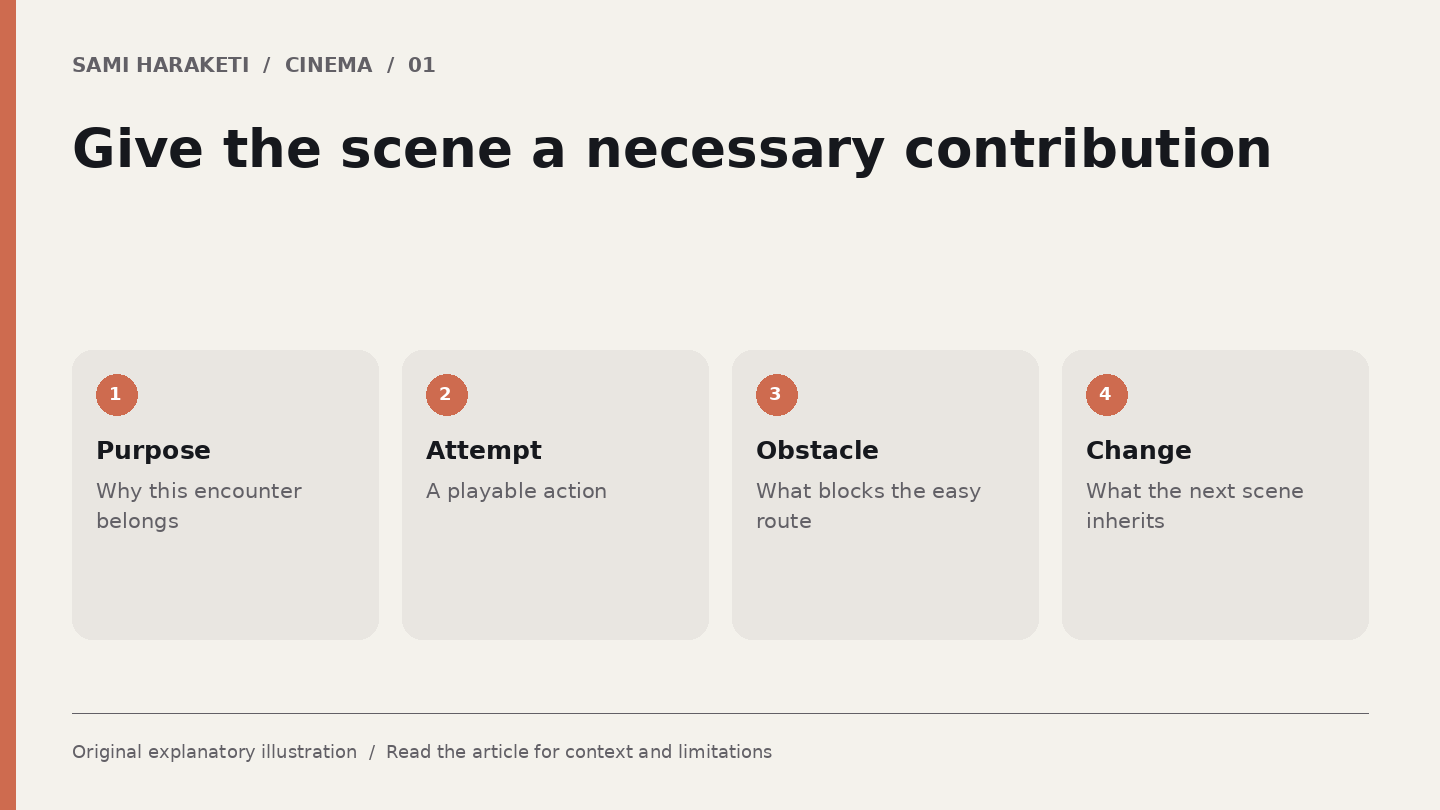
For a scene built around dramatic conflict, I use three questions: what is someone trying to achieve, what prevents the easy version of that attempt and what changes by the end?
This is a working method, not a law for every form of cinema. An observational or experimental film can organise experience differently.
Start with the scene's purpose
John August's writing on scene construction asks what needs to happen and what would be lost if the scene were omitted. He also cautions against allowing a character's preferences to substitute for the writer's responsibility to the story.
I find that distinction useful. A character may want to avoid the difficult conversation. The scene may need to make avoidance impossible.
Write one sentence describing the scene's necessary contribution. It might reveal a lie, force a decision or change who holds the useful information. If the sentence only says “we learn more about them,” make it more precise.
An original scene exercise
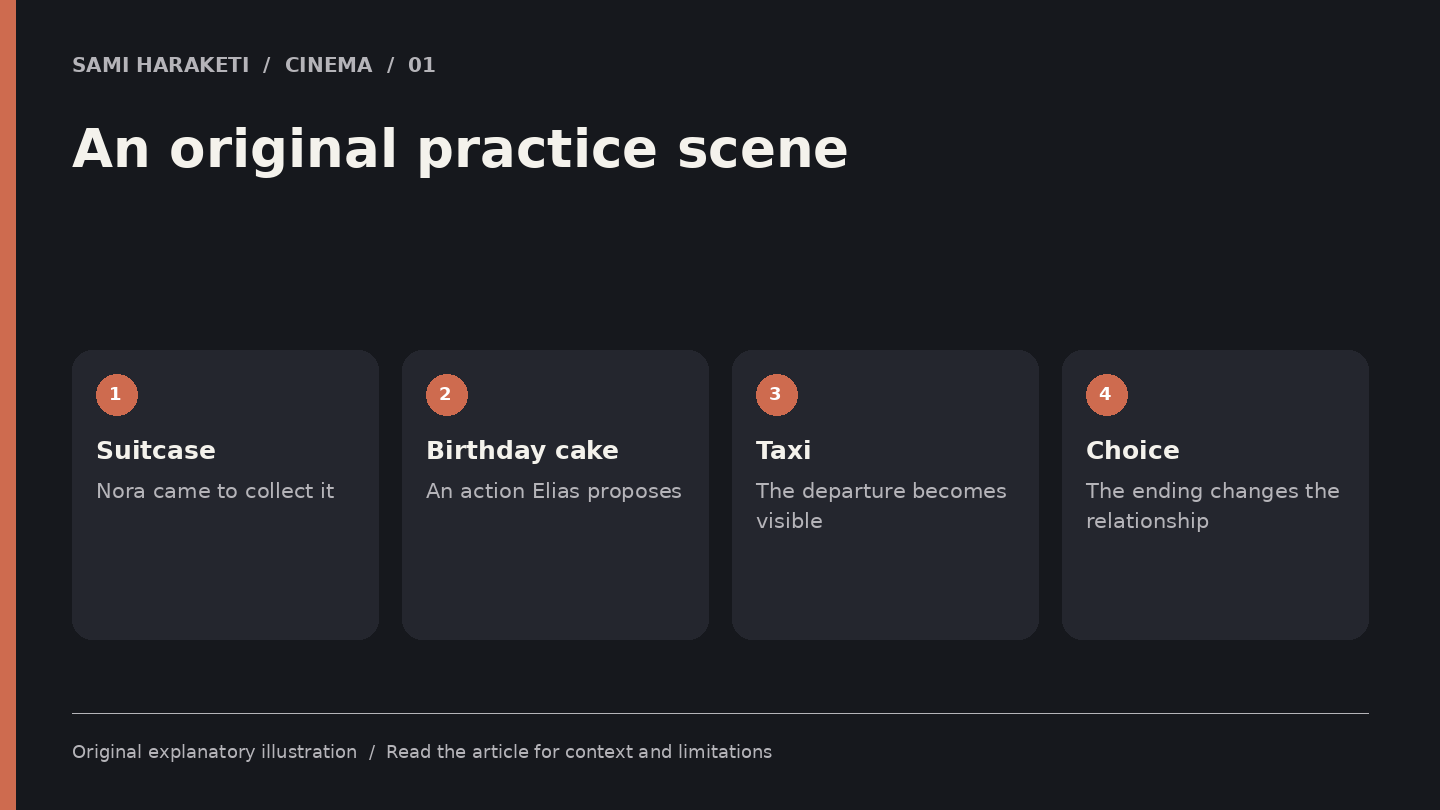
Here is a fictional situation for practice. Nora has returned to collect a suitcase. Her brother Elias wants her to stay for their mother's birthday. Nora wants to leave without discussing why.
An easy version lets them explain their feelings and reach a tidy understanding. A more specific version gives them actions. Elias has repaired the suitcase's broken handle. Nora has already booked a taxi. The birthday cake is visible in the kitchen.
Now write the attempt. Elias asks Nora to help carry the cake to the table. She agrees because refusing would expose her intention. When she lifts it, the taxi arrives outside.
The obstacle is not simply that Elias disagrees. It is that the ordinary action brings Nora's competing commitments into the same moment. She has to decide what to do while holding the thing that represents the event she is leaving.
You can make this scene quiet. The pressure does not require a speech or a raised voice.
Make the ending alter the next scene
Suppose Nora places the cake down and leaves the repaired suitcase behind. Elias now knows she has chosen to go with less than she came to collect. That action could change how he responds when she contacts him later.
Another ending has Elias carry the suitcase to the taxi without saying anything. He accepts the departure, but the acceptance may be more painful than the argument Nora expected.
These endings are original alternatives for the exercise. Neither is automatically better. Choose according to the film's larger relationship and the experience you want to create.
Read the scene again and identify the turn. If the ending returns everyone to the same practical and emotional position, ask whether the scene needs a different consequence or whether its purpose belongs elsewhere.
Then remove the explanation that the actions already communicate. You may still need dialogue, but it should do work the visible behaviour cannot do alone.
Finally, imagine the scene played by actors at its actual pace. A clever outline can produce an inert scene if nobody has a playable action.
The useful test is not whether you filled three boxes in a writing exercise. It is whether the encounter creates a specific change that the film can carry forward.
Sources and further reading
Research checked on October 5, 2026. Original explanatory illustrations by Sami Haraketi, prepared for this article.
Sources and further reading
Research checked on October 5, 2026. Original explanatory illustrations by Sami Haraketi, prepared for this article.
What did you think?
A thought, a different perspective, a little appreciation. You’re welcome here.
.png)