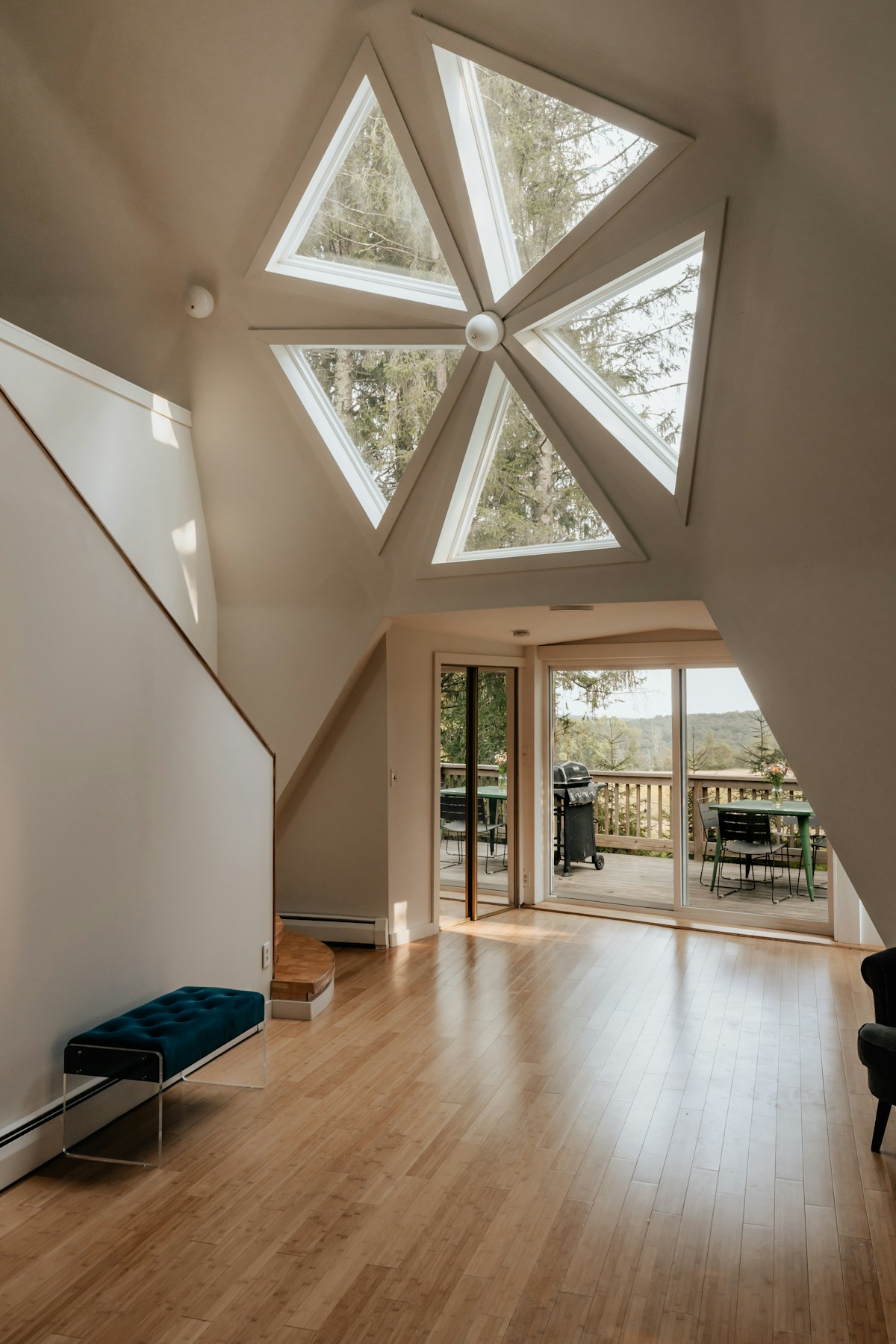
A room is never quite the same twice.
There is the room in the early morning, before the day has properly begun. There is the room at noon, when its edges feel sharper. And there is the room in the evening, when attention moves from the window to the things within it. Light makes each of these versions possible.
In this sample journal essay, the starting point is observation rather than a formula. A photograph can hold one moment beautifully. A lived space needs to make sense across many moments.
Begin with a way of life.
Before discussing the shape of a window, it is useful to ask where someone will sit, work, cook or read. The answer gives the conversation a human scale. It moves the focus from an impressive opening to the experience of the person beside it.
That does not mean every activity needs its own special corner. Often, a clear arrangement of a few shared places feels more natural. The design intention is to make those places easy to find and comfortable to use.
Leave room for contrast.
A quiet interior does not have to be evenly lit in every photograph. A brighter threshold beside a calmer room can give a space depth. What matters in a design story is explaining why a particular relationship has been chosen.
A material sample helps here. Its surface can be looked at in more than one condition, rather than judged under a single studio light. The question is how the material belongs to the whole.
Look again, later.
The most useful design habit may be returning to the same place at another time. Notice what has changed and what still feels right. Sometimes the answer is an adjustment. Sometimes it is the confidence to leave a good thing alone.
A considered space gives the day somewhere to unfold. The light does not need to perform. It needs room to do its quiet work.
Back to the journal