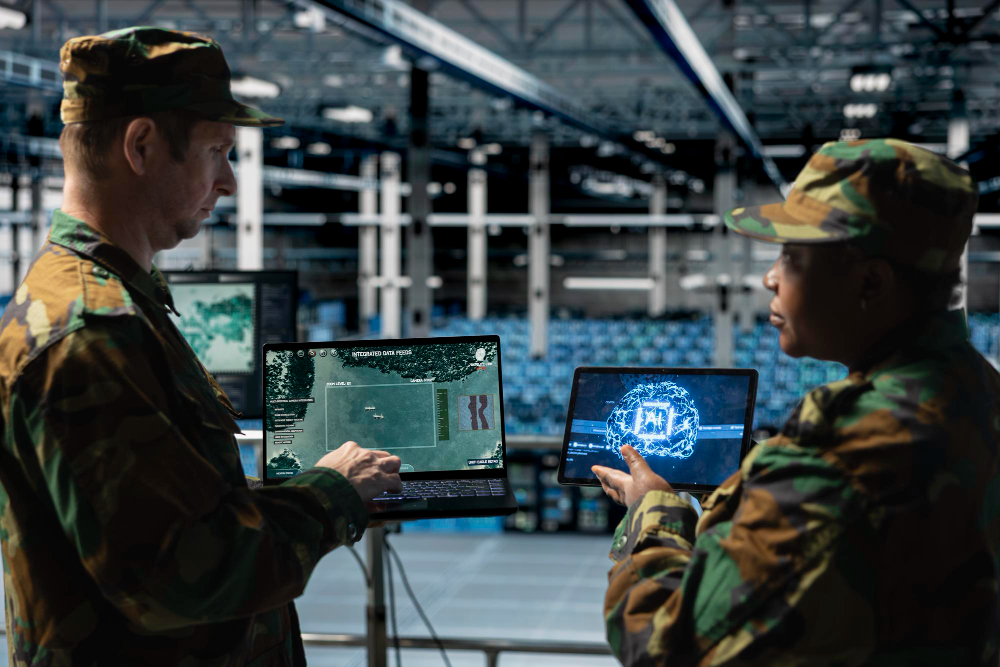
Data Centers: The Hidden Engine of the Digital World and the Fight Over Its Future
Every time you ask an AI to write something, every time you stream a video, every time you send an email that arrives in a fraction of a second, something physical is happening somewhere. A machine is working. A fan is spinning. A building is consuming electricity and water in quantities that are difficult to comprehend.
That building is a data center. And the world is building more of them at a pace that has no precedent in modern history.
How Many Data Centers Exist Right Now?
As of mid-2026, there are approximately 11,959 data centers operating worldwide, spread across 179 countries. Some sources put the number slightly higher, closer to 11,700, depending on how they count facilities of different sizes. But the exact number matters less than the distribution, because the distribution is wildly lopsided.
The United States dominates. As of April 2026, there were 4,423 data centers in the United States, more than any other country by a massive margin. The United Kingdom follows with 555, and Germany with 523. That means the US alone accounts for roughly 37 percent of the world's data center infrastructure.
To put that in perspective, there are about eight times more data centers in the United States than in the entire United Kingdom. And the gap is not closing. It is widening.
The Money Being Spent Is Almost Impossible to Fathom
The capital expenditure on data centers in 2026 is projected to surpass one trillion dollars. Let that number sit for a moment.
Big Tech is leading the charge. Alphabet, Google's parent company, has raised its 2026 capital spending outlook to somewhere between 195 and 205 billion dollars. Microsoft is planning to more than triple its data center footprint to about 38 gigawatts by 2032. The five largest global technology companies are expected to invest more than one trillion dollars in AI infrastructure during 2025 and 2026 combined.
Morgan Stanley estimates that just four companies, Amazon, Microsoft, Google, and Meta, will spend about 630 billion dollars on data centers and AI chips in 2026 alone.
Blackstone has said it will complete approximately 100 billion dollars in investments or commitments within its own data center portfolio by the end of 2026. When you add roughly 200 billion dollars in third-party enterprise AI chip capacity investment over the same period, the short-term AI infrastructure investment scale reaches approximately 300 billion dollars. That is equivalent to the GDP of the world's top 50 economies.
This is not a bubble in the traditional sense. It is a land grab. The companies building these facilities are not guessing. They are responding to demand that is outpacing their ability to supply it.
The Energy Problem
Here is where the story becomes uncomfortable.
Global data center electricity consumption is projected to reach 565 terawatt hours in 2026, according to Gartner. That is a 26 percent increase from 447 terawatt hours in 2025. To put that in perspective, 565 terawatt hours is more electricity than the entire country of France consumes in a year.
The International Energy Agency projects that global data center electricity demand will reach approximately 945 terawatt hours by 2030. Other estimates suggest it could exceed 1,200 terawatt hours by that same year.
AI optimized servers are the primary driver. Gartner estimates that AI optimized server adoption will account for 31 percent of data center power consumption in 2026. By 2027, their power consumption will surpass that of conventional servers.
Worldwide data center power demand is expected to rise 27 percent in 2026 and reach 132 gigawatts, up from 104 gigawatts in 2025. It is estimated to attain 290 gigawatts by 2030.
The United Nations University released a report in June 2026 that put this in stark terms. By 2030, the electricity consumption of data centers powering AI worldwide is projected to reach 945 billion kilowatt hours. That is nearly three times the combined annual electricity consumption of Pakistan, Bangladesh, and Nigeria, countries with a combined population of more than 650 million people.
The report also noted something that is often overlooked. The water consumption associated with AI's electricity use is equivalent to the annual domestic water needs of 1.3 billion people in sub Saharan Africa. The land footprint exceeds 14,500 square kilometers, roughly twice the size of the Jakarta metropolitan area, where more than 32 million people live.

The Water Problem
Cooling is the reason data centers consume so much water. The processors generate enormous heat, and that heat has to be removed. The traditional method is evaporative cooling, which uses water to carry the heat away. It is effective, but it consumes large volumes of water on site.
In 2025, data centers consumed 222 billion liters of water globally for cooling, according to the consultancy Rystad Energy. Without adaptive measures, that figure is projected to nearly triple to 644 billion liters by 2030.
Google's data centers used about 7.1 billion gallons of water in 2024, nearly double their consumption three years earlier. The company replenished 4.5 billion gallons in 2025, but the gap between consumption and replenishment remains significant.
The problem is not just the volume. It is the location. Many data centers are being built in regions that are already water stressed. When a facility consumes millions of gallons of potable water for cooling, it is competing directly with local communities, agriculture, and ecosystems.
The European Union has taken notice. In September 2026, the EU proposed a regulation that would rate data centers on their energy and water use. According to the explanatory memorandum accompanying the regulation, EU data centers consumed 68 terawatt hours of electricity in 2024. That could reach 114 terawatt hours by 2030.
The Carbon Problem
Data centers are also significant sources of carbon emissions, though the picture is more complicated than it first appears.
The carbon footprint depends heavily on where the electricity comes from. A data center powered by coal has a very different carbon profile than one powered by solar or wind. The United States, which hosts the largest share of global data center capacity, has been increasing its coal and natural gas generation to meet AI infrastructure demand. In 2026, US spending on coal and gas fired generation to serve AI infrastructure is projected to reach 50 billion dollars, making it the largest investor in fossil fuel generation for this purpose globally.
China has taken a different path. By 2025, China's renewable energy installed capacity reached 2.337 billion kilowatts, accounting for 60.1 percent of its total installed capacity. Wind and solar combined surpassed thermal power for the first time in history. The country's renewable energy generation reached 3.99 trillion kilowatt hours in 2025, meeting 38.3 percent of total electricity demand.
The UN University report made an important point that is often missed in these discussions. It is not enough to measure carbon alone. Water and land footprints do not always move in the same direction as carbon. Switching from coal to bioenergy, for example, can reduce the carbon footprint of electricity by an average of 70 percent while increasing the water footprint by more than 30 times and the land footprint by 100 times. Being "low carbon" does not automatically mean being low water or low land.
The Future of Data Centers: Three Big Shifts
The Rise of AI Factories
The concept of the data center is changing. What is being built now is not just a place to store servers. It is what the industry is calling an "AI factory." These are facilities designed specifically to train and run large AI models, with compute densities that dwarf anything built before.
Microsoft's planned 38 gigawatt footprint by 2032 is a good example. For context, one gigawatt is roughly the capacity of a large nuclear power plant. Jensen Huang, the CEO of Nvidia, recently valued a one gigawatt facility at 50 to 60 billion dollars. That gives you a sense of the scale of investment involved.
Liquid Cooling and the End of Evaporative Cooling
The traditional method of cooling data centers with chilled air and evaporative water systems is being replaced. Liquid cooling, where a coolant is circulated directly through the servers, close to the chips, is becoming the standard for high density AI facilities.
Nvidia has developed a system that can cool chips with water at 45 degrees Celsius, rather than the industry norm of 6 degrees Celsius. This can cut water consumption by 90 percent. Liquid cooling penetration is projected to exceed 53 percent in 2026 and approach 60 percent in 2027.
High temperature liquid cooling also enables heat reuse. Instead of simply rejecting the heat into the atmosphere, the captured heat can be used for district heating, industrial processes, or even agricultural applications. This transforms data centers from energy consumers into energy providers. Analysis shows that high temperature liquid cooling allows for improved energy efficiency, lower water consumption, and lower capital costs compared to traditional cooling approaches, with up to 75 percent capital cost savings for the cooling and heat recovery equipment.
Edge Computing and the Distribution of Intelligence
Not all computing is moving to massive centralized facilities. A significant portion is moving in the opposite direction, toward the edge of the network, closer to where data is created and where decisions need to be made.
The global edge data center market was valued at approximately 18 to 19 billion dollars in 2025 and is estimated to grow to somewhere between 22 and 71 billion dollars by the early 2030s, depending on the forecast. The growth rate is in the range of 17 to 20 percent annually.
The driver is latency. For applications like autonomous vehicles, industrial automation, and smart city analytics, sending data to a distant data center and waiting for a response is simply too slow. The processing has to happen locally. AI inference, the process of running a trained model to make predictions, is shifting from centralized hyperscale data centers to distributed edge computing. This reduces latency, improves bandwidth efficiency, and lowers energy consumption for real time applications.
The Major Projects Being Built Right Now
The scale of individual projects is staggering.
Meta is building its first Canadian data center in Sturgeon County, Alberta. It is an investment of more than 9 billion dollars in a one gigawatt AI campus. The project is expected to employ roughly 3,000 construction workers at its peak and support more than 300 permanent jobs once operational.
In northeast Louisiana, Meta is expanding its Hyperion campus into what it describes as a 5 gigawatt AI supercluster. Analysts and utility planners say this would have implications beyond conventional hyperscale projects and could influence regional power systems.
OpenAI announced Project Camellia, a long term data center project in Effingham County, Georgia. Filings revealed that months before the announcement, Georgia Power had documented a 3,200 megawatt customer commitment for the project.
Microsoft is deploying over 66,000 Nvidia Rubin GPUs at Portugal's Start Campus, with an additional investment of 465 million euros for a second 200 megawatt building.
AWS has allocated 21 billion dollars for cloud and AI infrastructure in India from 2026 to 2030 as part of a broader 48 billion dollar investment.
In Saudi Arabia, Humain has broken ground on a data center at Neom's Oxagon. The first phase is expected to be operational in 2028.
Pure Data Centres Group is developing a 1.7 billion dollar AI campus in Finland, with plans to expand to 8.6 billion.
The Positive Side: What Data Centers Enable
It would be dishonest to write about data centers without acknowledging what they make possible.
Every AI model that helps doctors diagnose diseases faster, every translation tool that breaks down language barriers, every climate simulation that helps us understand what is coming, every scientific research project that would take decades without massive computing power, all of it depends on data centers.
The COVID-19 vaccines were developed in record time partly because of the computing power available to researchers. Weather forecasting has become dramatically more accurate. Financial systems process billions of transactions every day without collapse. Supply chains that feed billions of people are coordinated through digital infrastructure that runs on servers in buildings most of us will never see.
Data centers are not inherently good or bad. They are infrastructure. Like roads, like power grids, like water systems, they are tools. The question is not whether we need them. The question is how we build them, where we build them, and who benefits from them.
The Negative Side: What We Are Sacrificing
The costs are real, and they are not evenly distributed.
The communities that host data centers often bear the environmental burden without receiving a proportional share of the economic benefit. When a data center consumes millions of gallons of water in a drought prone region, the people who live there pay the price. When a facility draws so much electricity that the local grid becomes unstable, the residents experience the blackouts.
The UN University report was clear about this. The report warned that evaluating AI sustainability by a single metric risks overlooking hidden trade offs and imposing additional environmental burdens on regions already struggling with water and land shortages.
There is also the question of concentration. The data center industry is dominated by a handful of companies. The five largest technology companies are investing more than a trillion dollars in AI infrastructure over two years. This level of concentration gives these companies enormous power over the digital infrastructure that the rest of the world depends on.
And then there is the question of what all this computing is actually for. A significant portion of AI compute is being used for advertising optimization, content generation, and consumer applications. Is that the best use of the planet's energy and water resources? That is a question worth asking.
What Comes Next
The next five years will determine what kind of digital infrastructure the world has for the next fifty.
Three things are certain. First, demand for computing power is not going to decrease. Every projection shows growth accelerating, not slowing. Second, the environmental impact of that growth will depend entirely on the choices being made now. Third, the decisions being made today about where to build, what to power it with, and how to cool it will shape the geography of the digital economy for decades.
The good news is that the technology exists to build data centers that are dramatically more efficient than the ones being built today. Liquid cooling can cut water consumption by up to 90 percent. Heat reuse can turn waste into a resource. Renewable energy can power the facilities without carbon emissions. Edge computing can reduce the need for massive centralized facilities in the first place.
The bad news is that efficiency alone will not solve the problem. The scale of growth is so large that even dramatic improvements in efficiency may not keep pace. If the industry doubles in size every few years, a 90 percent reduction in water use per facility still means a net increase in total water consumption.
The UN University report made a point that applies far beyond data centers. It said that the time remaining to ensure that AI's supporting infrastructure develops within the planet's environmental limits, and that the benefits of AI reach the communities that host the data centers and the mineral extraction sites that supply them, is very short.
That is not a warning about technology. It is a warning about priorities. We have the tools to build a digital future that works for everyone. The question is whether we have the will to use them.



More
more
like this
like this
On this blog, I write about what I love: AI, web design, graphic design, SEO, tech, and cinema, with a personal twist.

.png)