The Metaverse: $80 Billion Later, Where Did It Go?
If there's one thing that made Mark Zuckerberg look unusually quiet in the spring of 2026, it was probably the metaverse. Five years ago, he stood in the spotlight, changed the company name from Facebook to Meta, and said the future of the internet would be immersive, virtual, three-dimensional. People would work there, socialize there, shop there, live there. It sounded like science fiction coming true.
Then $80 billion got spent.
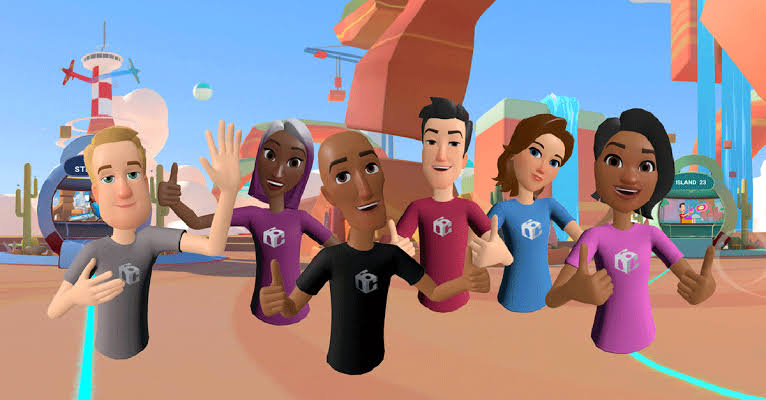
By March 2026, Meta quietly announced it would no longer add new virtual reality experiences to its flagship platform, Horizon Worlds. The fully immersive virtual world that had been hyped as the centerpiece of the metaverse was officially abandoned in VR headsets. Horizon Worlds disappeared from the Quest store. What was once called "the next frontier" by Zuckerberg was now just an app on your phone.
Zuckerberg himself later said: "Sometimes... we make mistakes."
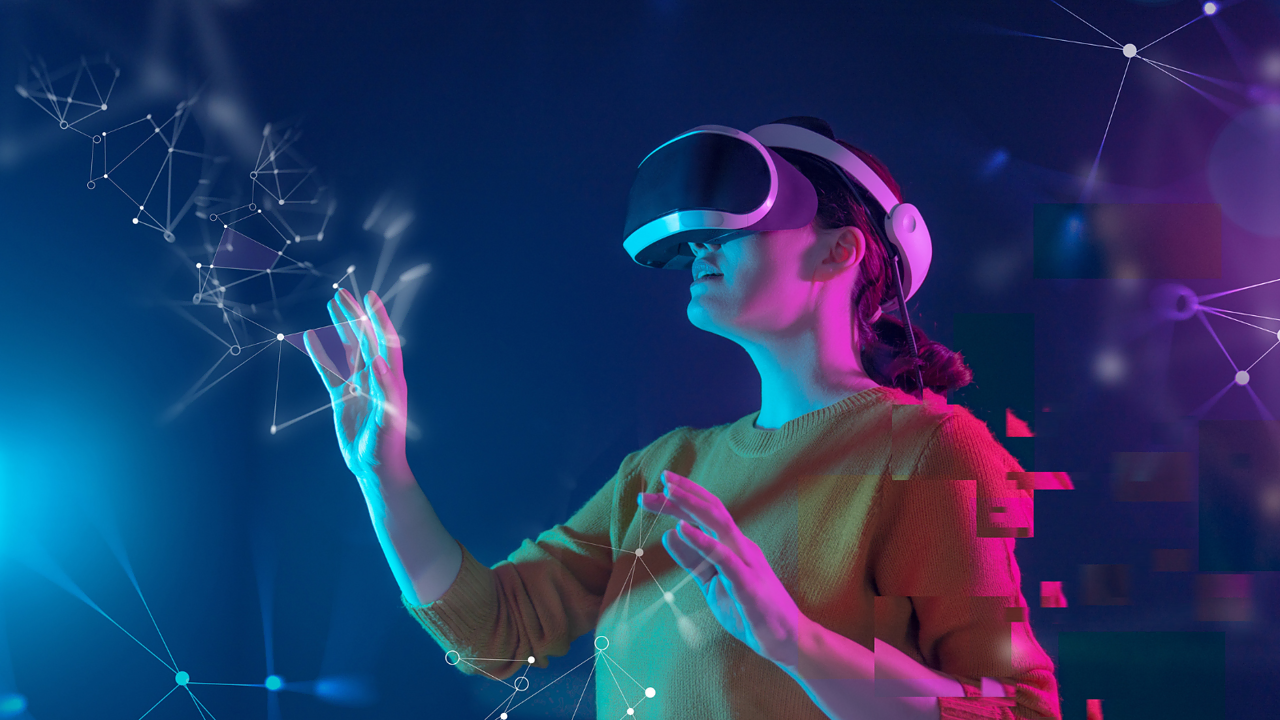
Where Did the Money Go, and Where Did It End Up?
The story starts in 2014. That year, Zuckerberg paid $2 billion for Oculus, a startup making VR headsets. He believed VR headsets would become as common as smartphones, the next computing platform.
By 2021, that belief became a full-blown gamble. Facebook changed its name to Meta, and the entire company narrative pivoted to the metaverse. Reality Labs, the division responsible for metaverse business, started burning money at an incredible rate. According to public financial data, Reality Labs has accumulated operating losses exceeding $80 billion from 2021 to now. In 2025 alone, the loss exceeded $19 billion.
Where did this money go? Part of it became Quest headset research and subsidies, part of it became acquisitions of game studios, and a large part of it became a virtual world almost nobody visited.
A journalist wandered through Horizon Worlds and found the liveliest place was a virtual McDonald's parody called "Metdonald's," with 29 people inside. Twenty-nine. In a world that cost $80 billion to build, that was the busiest corner.
Meta's own data doesn't look good either. The company laid off 10% of its employees in the metaverse division. At the 2025 developer conference, Zuckerberg mentioned "metaverse" only twice in the entire speech, both in the final minutes. He mentioned "AI" twenty-three times.
The wind had changed. The metaverse became the old story, artificial intelligence became the new one.
Did the Metaverse Die, or Did It Never Live?
There's a subtle question here. Meta's Chief Technology Officer, Andrew Bosworth, posted an image of a tombstone on X, with the words "RIP" and the epitaph "the lazy assertion that Horizon or VR is 'the metaverse'".
His point was that people equated the metaverse with Horizon Worlds, then equated Horizon Worlds with VR, then declared "the metaverse is dead" — a lazy simplification. Meta's investment in AI glasses, AR hardware, and Quest headsets continues. They just stopped unilaterally imposing a vision on the world.
There's some truth to this. The concept of the metaverse itself is indeed bigger than Meta's products. Roblox and Fortnite have hundreds of millions of active users, and they have metaverse characteristics: persistent worlds, virtual economies, social interaction. But what Meta tried to build — that thing requiring you to wear a bulky headset to enter, a virtual world controlled by one company — nobody actually wanted.
The problem isn't that the technology isn't good enough. The problem is that people don't like socializing with plastic boxes strapped to their faces. This sounds like a superficial reason, but it's real. Tech companies spent a decade trying to convince people that strapping screens to their faces was the future, and people answered with their actions: no, thank you.
What Happens Psychologically?
The metaverse's retreat doesn't mean all the value of virtual reality has disappeared. On the contrary, VR is proving itself useful in another domain.
A study published in the International Journal of Psychiatry in Medicine tracked 100 participants with mild to moderate anxiety symptoms and found that the group receiving VR exposure therapy saw their Beck Anxiety Inventory scores drop by an average of 12.5 points, while the control group receiving traditional cognitive behavioral therapy dropped only 4 points. The data is significant.
What does this mean? VR as a therapeutic tool has real value. It can let people face their fears in a safe environment, can train the brain's neuroplasticity. For PTSD, social anxiety, phobias, VR provides a controllable, repeatable exposure scenario.
But that's a different thing from "living in a virtual world." Therapeutic VR use is bounded, purposeful, time-limited. Once you treat the virtual world as a substitute for daily life, problems arise. Lonely people may become lonelier. People escaping reality may escape more. Social isolation may deepen rather than ease.
This isn't a problem unique to the metaverse; social media has already proven it. But a fully immersive virtual world that occupies all your senses makes this risk even greater.
What About the Environment?
This question is rarely asked seriously. If the metaverse really became widespread, how much energy would it consume?
Researchers at Manchester Metropolitan University gave a clear answer: the amount of data processing would be "absolutely huge," and data centers would need "vast amounts of water" for cooling. Greater processing means greater heat, greater heat means more cooling resources. This isn't a green technology story, at least not automatically.
The researcher's exact words were: "The metaverse is being presented as a way in which to promote the natural environment. But the suggested energy and efficiency benefits are not enough to make up for the use of resources."
In other words, moving real-world activities into the virtual world doesn't necessarily reduce carbon footprint. It might just shift carbon emissions from your car's tailpipe to a data center somewhere you've never heard of, where the electricity might come from coal, and the water might come from a region experiencing drought.
What About the Future?
The metaverse as "Zuckerberg's product" is essentially over. But as a technological direction, it hasn't completely disappeared.
Meta itself says it remains "the single biggest investor in the VR industry" and has "a robust roadmap of future VR headsets in development". Quest is still selling. Ray-Ban Meta glasses are selling well, though that's more like smart glasses with cameras, not the metaverse.
What's the broader industry doing? Market research reports show the metaverse market is still predicted to grow, but the growth path has become more "pragmatic": enterprise training, medical simulation, industrial digital twins, education scenarios. These are applications with clear use cases and measurable returns. Not "everyone living in a virtual world," but "in specific scenarios, the virtual world is more efficient or safer than the real one."
That sounds less sexy, but probably more real.
What's the Plan for Humanity's Future?
If there's one lesson to learn from the $80 billion metaverse, it's probably this: technology can't create demand. You can build a perfect virtual world, but if nobody wants to enter it, it's just an empty room.
The real future probably isn't "we live in a virtual world," but "we use virtual tools when we need them." Doctors use VR to train for surgery, pilots use VR to simulate emergencies, anxiety patients use VR to face their fears, architects use VR to let clients walk through a building before it's built. These are already happening.
That remaining question — will we one day choose to live in a virtual world instead of the real one — doesn't have an answer yet. Maybe there will never be a clear answer, because most people won't make that choice. They'll choose to go outside, see friends, feel the sun, eat a real meal.
Eighty billion dollars bought that lesson, roughly.


More
more
like this
like this
On this blog, I write about what I love: AI, web design, graphic design, SEO, tech, and cinema, with a personal twist.

.png)