Blocking and Coverage before You Move the Camera
A beautiful camera move can still miss the scene. If the important decision happens outside the frame, the movement has given us a tour rather than a point of view.
I want to know what the actors are doing before I decide what the camera should celebrate. Blocking is the arrangement and movement of performers within a scene. ScreenSkills describes it as work shared by the director and camera department, with consequences for lighting, framing and focus.
Find the moment worth seeing
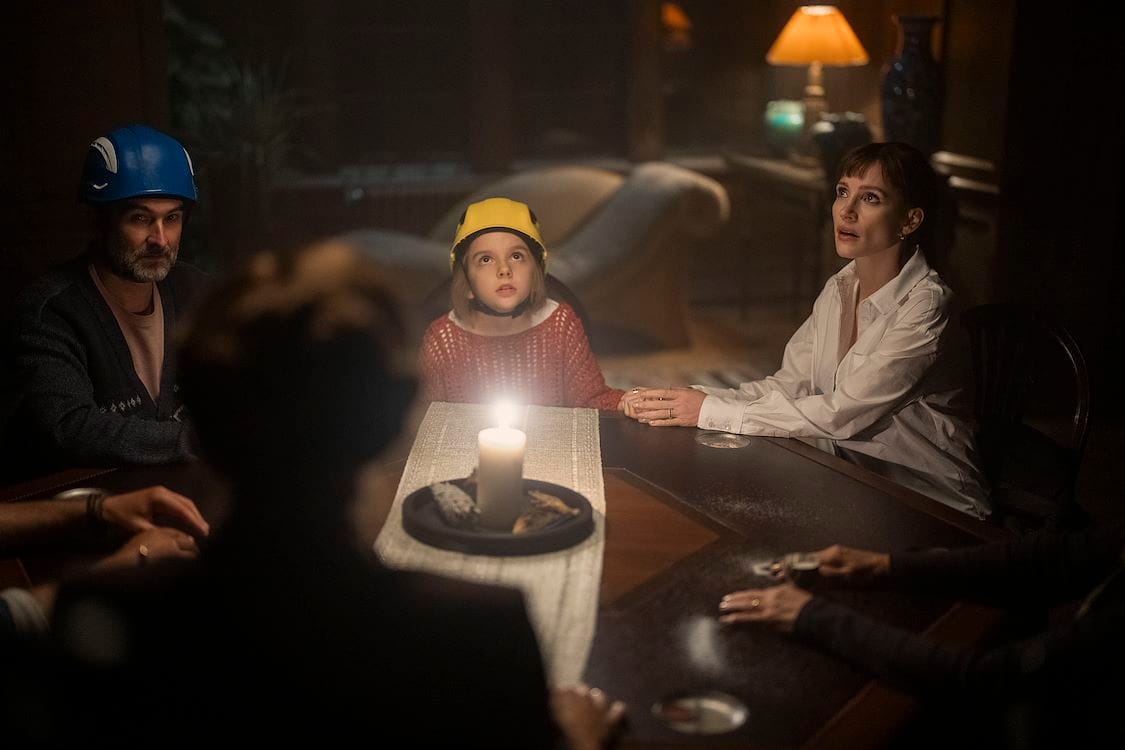
Imagine a fictional scene in which Jo brings a house key back to her former partner, Alex. The written action is simple: she places it on the table. The dramatic action could be less simple. Perhaps Alex keeps clearing a space for her to sit, while she remains beside the door.
Rehearse those actions without a camera. Where does Alex notice that Jo intends to leave What happens if he stands between her and the exit Does the key remain visible when it changes hands
The answers should influence your shots. A close view of the key is useful only if seeing it adds something the wider scene cannot already communicate.

Choose a sequence you could actually edit
Try one wide shot that establishes the door, table and both people. Add a closer view of Jo that includes her hand when she releases the key. Then find Alex's response.
This is an exercise, not a compulsory three shot recipe. You might discover that a single sustained view makes the refusal to sit more painful. You might need a different angle because the key is hidden by a shoulder.
Rehearse the transition between shots. If Jo lowers the key in one take and throws it in another, the editor has a different action to connect. Consistency can give you choices without forcing every performance to become mechanical.
ScreenSkills' script supervisor guidance includes overlapping action, eyelines and sufficient coverage. Treat those as practical questions during rehearsal. Can a cut bridge this movement Does the next image preserve the relationship the previous one established
I would rather have three shots with clear jobs than eight variations recorded because the set felt too quiet.

Let the camera respond to a change
If Alex moves closer after the key lands, a small camera adjustment may reveal the shift in distance. Moving earlier could announce a confrontation before the performance has earned it.
Walk the proposed route with the relevant crew. Check focus, reflections, cables, sound access and what the frame reveals at both ends. A move that works for the camera can create a shadow or remove the microphone's useful position.
Make a brief plan: the scene's essential event, the shots that communicate it and one fallback if time runs short. Discuss it with the performers rather than treating their movement as a diagram they must obey.
After rehearsal, watch a recording without explaining what you intended. Can you identify who is trying to stay, who is trying to leave and when that relationship changes
That is the test I care about. Camera movement should help the audience discover the scene, not ask the scene to justify the equipment.
Sources and further reading
Research checked on October 5, 2026. Original explanatory illustrations by Sami Haraketi, prepared for this article.
Sources and further reading
Research checked on October 5, 2026. Original explanatory illustrations by Sami Haraketi, prepared for this article.
Have a project behind the idea?
I work on websites, branding and film. If you need help turning your next idea into something people can see and use, tell me what you have in mind.
What did you think?
A thought, a different perspective, a little appreciation. You’re welcome here.