Backlinks Explained: Why They Make or Break Your Google Visibility and How to Earn Them in 2026
You pour your heart into writing helpful blog posts and optimising product pages, yet your site stays stuck on page five of Google. Frustration sets in. You start wondering if SEO is even worth the effort.
That fifth‑page reality is maddening, not because your content is bad—it might actually be better than what ranks above you—but because search engines haven't yet found a reason to trust you. Trust is the currency of the internet, and backlinks are how you earn it.
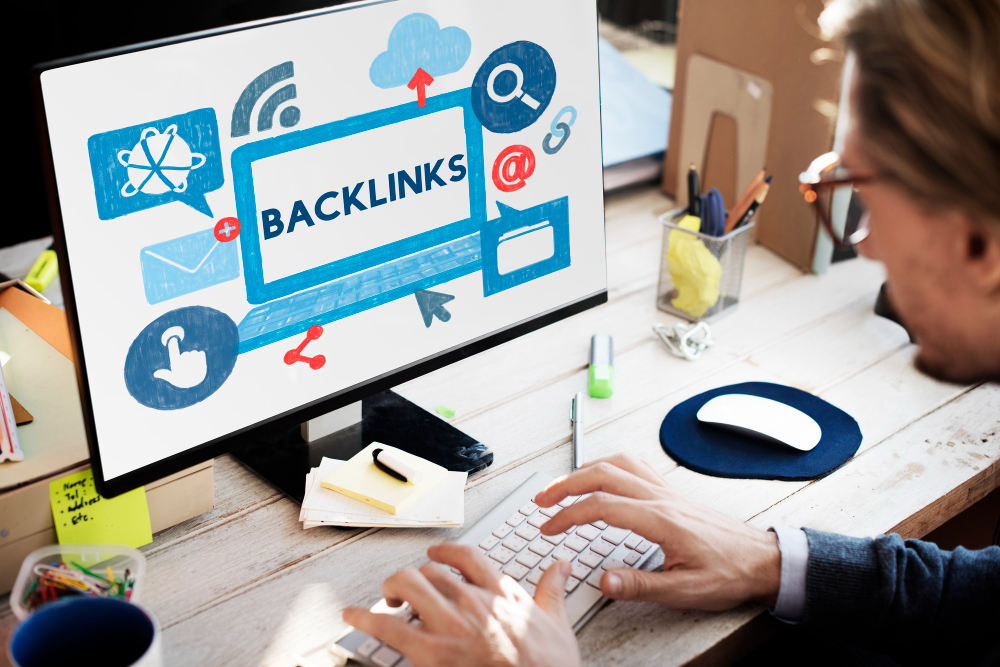
Backlinks are hyperlinks from one website to another. Each link acts like a vote of confidence: when a relevant, trustworthy site points to you, it's telling Google, “This content is worth checking out”. In a world where AI search is rapidly reshaping how people find information, the value of those votes hasn't diminished—it has simply been refined.
Here is everything you need to know about backlinks in 2026: what they are, why they still matter, exactly how they affect your rankings, and the real‑world ways to get them (including a look at the new AI tools that claim to help).

1. What Are Backlinks?
A backlink, also called an inbound link, is created when one website includes a clickable link that leads to another website. For example, if a well‑known industry blog writes an article that references your content and links to you, that is a backlink.
Backlinks are different from internal links (links from one page of your own site to another page on the same domain) and outbound links (links from your site to other sites). The key difference is source: backlinks originate outside your domain and serve as external endorsements.
Three dimensions determine the value of any given backlink:
- Authority: How trusted is the referring domain? A link from a government or educational site carries far more weight than one from a brand‑new blog.
- Relevance: Is the linking page's topic closely related to yours? A link from a food blogger to your restaurant website is valuable; a link from a random gaming forum is not.
- Context: Where does the link appear, and what words surround it? Editorially placed links within the main body of an article are far more powerful than links buried in a footer or sidebar.
Search engines also look at special link attributes to understand intent: nofollow treats the link as a hint rather than a direct endorsement, sponsored flags paid links, and ugc marks user‑generated content. Even these attributes can still drive valuable referral traffic and brand visibility, even if they don't pass full ranking strength.
2. Why Backlinks Are Still Important in 2026
With Google's AI Overviews and conversational search tools like ChatGPT capturing more attention, you might assume backlinks have lost their power. The data says the opposite.
96% of websites ranking in Google's top 10 positions have more than 1,000 backlinks from unique domains. That statistic, based on an analysis of over a thousand million pages, also found that the top‑ranking results have 3.8× more backlinks than those on page two, and more than 90% of all web pages get zero organic traffic largely because they lack quality links.
A comprehensive 2025 analysis of 1,000,000 keywords by Patrick Stox revealed consistent correlation values: the number of referring domains correlates at 0.255, while followed backlinks show a 0.242 correlation with rankings. Those numbers are not massive on their own, but across millions of data points they prove that backlinks remain a fundamental component of Google's ranking algorithm.
In the era of AI search, backlinks play an even more strategic role. Research by Botify and DemandSphere found that 75% of pages cited in Google's AI Overviews already rank in the top 12 organic results. This creates a powerful feedback loop: strong backlinks improve your organic rankings, and good organic rankings make you more likely to be cited by AI overviews. As Itamar Haim, an SEO specialist at Elementor, puts it: “In an AI‑driven landscape, backlinks serve as quality signals that help algorithms distinguish between authoritative and manufactured content”.
Even Google's own internal documents, leaked in 2024, confirmed that the company continues to use links as core ranking signals, calculating SiteAuthority scores based on linking domain quality, emphasising link relevance, and giving particular weight to media site backlinks. According to a 2025 survey, 95% of SEO professionals rank backlinks as “critical” or “very important,” and a staggering 80.9% believe even unlinked brand mentions have an impact on search rankings.
The bottom line: backlinks have not been replaced. They have become more sophisticated, but they remain one of the clearest signals that your site deserves visibility—both in traditional search and in emerging AI search platforms.
3. The Impact of Backlinks on Your Website
High‑quality backlinks affect multiple aspects of your online presence.
Organic Rankings – Backlinks are the strongest off‑page ranking factor. Search engines view each quality link as an endorsement, and the cumulative effect of many such endorsements pushes your site higher for relevant queries. The relationship is most visible in competitive niches: the sites with the best link profiles almost always dominate the first page.
Referral Traffic – When people click a link on another site and land on yours, that traffic is highly targeted. Visitors from relevant, authoritative sources are already primed to trust you, which leads to longer visit durations and higher conversion rates.
Faster Indexing – Search engine bots discover new content primarily by following links. Fresh backlinks from regularly crawled sites can help Google find and index your latest posts much faster than waiting for your sitemap to be processed.
Brand Authority and Trust – Being cited by respected publications or industry leaders adds a layer of legitimacy that no advertising can buy. A reader who sees your brand mentioned in a trusted outlet is far more likely to view you as a credible source of information or products.
Protection Against Algorithm Updates – Sites with natural, high‑quality link profiles tend to be more resilient when Google rolls out major updates. While thin content and spammy links get crushed, a diverse portfolio of editorial links acts as a stabiliser that helps you retain rankings through shifting algorithmic winds.
Visibility in AI Search – Strong backlink profiles increase the chance that your content will be cited by AI overviews or large language models like GPT. As search moves toward summarised answers, being a cited source becomes a new form of highly valuable brand exposure.
It is crucial to note that not all backlinks are beneficial. Low‑quality links from irrelevant, spammy, or penalised websites can actually harm your rankings. Google aggressively devalues manipulative link patterns, and sites that rely on them can experience significant ranking losses. One low‑quality link is rarely a problem, but a pattern of them is a red flag.
4. How to Get Backlinks (Free and Practical Methods)
Earning high‑quality backlinks takes effort. There are no instant shortcuts that work safely in 2026. However, several proven, free methods can yield genuine results.
Create Linkable Assets – Publish original research, detailed how‑to guides, statistics roundups, or interactive tools that other people naturally want to reference. A unique dataset or a genuinely helpful calculator earns links for years with minimal ongoing effort.
Guest Blogging on Relevant Sites – Write thoughtful, non‑promotional articles for blogs in your industry. In exchange, you typically receive an author bio with a link back to your site. Focus on sites that already have engaged audiences and reasonable domain authority (DA 35+).
Resource Page Outreach – Many websites curate “helpful resources” pages for their industry. Find these pages using searches like "[your topic] + resources" or "helpful links" + [your topic]. Then send a short, personal email suggesting your content as a genuine addition.
Broken Link Building – Use a tool (like Ahrefs or a free backlink checker) to find broken links on authoritative websites. Identify a broken resource that once linked out, create or find a suitable replacement on your own site, and politely inform the site owner of the broken link while offering your content as a replacement.
Claim Unlinked Brand Mentions – Set up Google Alerts for your brand name. When someone mentions you but does not link to you, reach out with a quick, friendly email thanking them and suggesting they add a link for readers who want to learn more.
Participate in Q&A Communities – Answer questions on Reddit, Quora, or industry‑specific forums. When genuinely helpful, include a link to a relevant page on your site. These links are often nofollow, but they still drive targeted traffic and can build relationships that lead to dofollow links later.
Submit to Niche Directories – Not all directories are spam. Submit your site to respected, audience‑focused directories in your industry. For local businesses, claim and optimise your Google Business Profile and any local chamber of commerce listings.
Use the Expert Roundup Method – Find a popular online publication in your niche and propose an expert roundup on a trending topic. If you are quoted, that publication will typically link to your site from the article.
All of these methods rely on one underlying principle: quality over quantity. As Neil Patel puts it, one editorial backlink from a trusted, relevant source beats hundreds of weak ones that come from shady directories or automated link farms.
5. AI Tools for Backlinks (What Works and What to Watch For)
The rise of AI has brought a new class of tools that claim to automate backlink building. Some are useful for saving time on repetitive tasks; others make promises that can lead to penalties. Here is what you need to know about using AI for backlinks in 2026.
AI Tools That Can Help
LexonRank – A free, AI‑powered link‑building plugin for WordPress. It uses an intelligent peer‑to‑peer network to find semantic matches for your keywords within existing, high‑traffic articles and rotates links every 24 hours to simulate natural growth. The free version is completely open to all WordPress users.
DupliChecker Backlink Maker – A free one‑click generator that submits your URL to dozens of directories and social bookmarking sites in seconds.
W3era Backlink Generator – A free tool that focuses on citations and embed opportunities rather than pure volume.
SEO Magnifier Backlinks Maker – Best known for high‑page‑rank profile submissions, also free to use.
SmallSEOTools Backlink Generator – A reliable free bulk generation tool that has been around for years and is well‑tested.
LinkWhisper (free version) – An AI‑powered internal linking plugin that also suggests contextual internal links and identifies orphan pages (posts that have zero internal links). It saves time on manual internal linking, a critical companion activity to backlink building. The free version includes AI‑powered link suggestions and a link health report.
What AI Tools Cannot Do for You
The biggest myth is that an AI tool can build legitimate, editorial backlinks on its own. Automated tools that blast your URL across hundreds of low‑quality directories typically create what SEOs call “foundational links” at best, or spammy footprints at worst. These links are unlikely to move the needle for competitive keywords and may even hurt you if detected as unnatural.
Genuine backlinks require human engagement. Getting a respected blogger, journalist, or industry influencer to link to you necessitates outreach, relationships, and trust. AI can help you identify prospects, draft email templates, or analyse competitor link profiles, but the actual earning of a high‑authority link always involves a person on the other end of the conversation.
Furthermore, Google's algorithms have become very good at sniffing out manipulative link patterns. If your site suddenly gains hundreds of backlinks from low‑quality, irrelevant sources, you risk a manual penalty that is both painful and difficult to reverse.
Use AI tools as assistants, not replacements. Let the tools handle the grunt work—scraping directories, generating lists of broken links, checking anchor text distribution—but always review, personalise, and add your own strategic touch before sending that outreach email or publishing that anchor text.
6. How to Monitor and Improve Your Backlink Profile
Building backlinks is only half the battle. You also need to monitor them regularly to protect your investment.
The most accurate and completely free tool is Google Search Console (GSC) . Because the data comes directly from Google, GSC shows you exactly which backlinks Google's own bot has crawled and counted for your rankings. It is the only tool that gives you a 100% true view of what the search engine actually sees.
Ahrefs Webmaster Tools offers a free backlink checker for your own verified site, giving you deep data from Ahrefs' industry‑leading index without paying for a full subscription.
Semrush provides a free backlink checker with 10 daily checks, including authority scores, referring domains, and do‑follow/nofollow indicators.
BacklinkChecker.io is a completely free, no‑login‑required tool that lets you check up to 1,000 URLs at once, download CSV reports, and see key metrics like anchor text and spam score. It is excellent for quick competitor audits or client calls.
What to look for when monitoring:
- New links: Celebrate them, but also ensure they come from relevant, authoritative domains.
- Lost links: If an important link disappears, check whether the page was removed, the site restructured, or your content became outdated. Sometimes a quick email can restore a lost link.
- Low‑quality or spammy links: Regularly scan for suspicious domains. If you find them, use Google's disavow tool to tell Google to ignore those specific links (be cautious; the disavow tool is powerful and easy to misuse).
Actionable improvements to your backlink profile:
- Analyse your competitors. Use Ahrefs or Semrush to see where your top competitors are earning links. Those same sites are likely open to linking to you if you present something even better.
- Refresh old content. When you update an older post with new data or insights, reach out to sites that previously linked to older versions and point them toward the improved version.
- Fix broken internal links. Tools like LinkWhisper or LinkBoss can help you find orphan pages and broken internal links, ensuring that link equity flows smoothly through your site.
- Diversify your anchor text. Too many links with exact‑match keywords look unnatural. Aim for a healthy mix of branded anchors, generic phrases, and long‑tail variations.
Regular monitoring turns backlinks from a one‑time project into a long‑term asset that grows more valuable as your site matures.
7. The Bottom Line
Backlinks are not a relic of old‑school SEO. They are alive, refined, and arguably more important than ever because they now influence not only standard search rankings but also appearances in AI overviews, large language model citations, and the broader trust economy of the web.
The path to earning them is straightforward even when it is not easy: create genuinely useful content, build real relationships in your industry, use free tools to find opportunities, and apply AI as an assistant—not a magician. Avoid shortcuts that promise hundreds of links overnight; they will almost certainly produce low‑quality, penalisable results.
What truly gives you an edge is consistency. A site that earns 5 to 10 solid, relevant backlinks every month for a year will eventually outrank a site that earned 200 spammy links in a single week and then stopped. Every quality link is a step away from page five and towards the visibility, traffic, and authority you deserve.
About the Author
I am Sami Haraketi, a web designer with over 50 websites built and more than 10 sites actively managed daily. I specialise in taking projects from zero to thousands of monthly views through smart design and strategic SEO.
If you need help understanding your current backlink profile, creating a link‑earning strategy, or building a website that attracts natural backlinks from the start, I am available. Visit my portfolio at samiharaketi.com or reach out through the contact page to discuss your project.


More
more
like this
like this
On this blog, I write about what I love: AI, web design, graphic design, SEO, tech, and cinema, with a personal twist.
.png)