Two Worlds, One Planet: The Divide We Do Not Talk About Enough
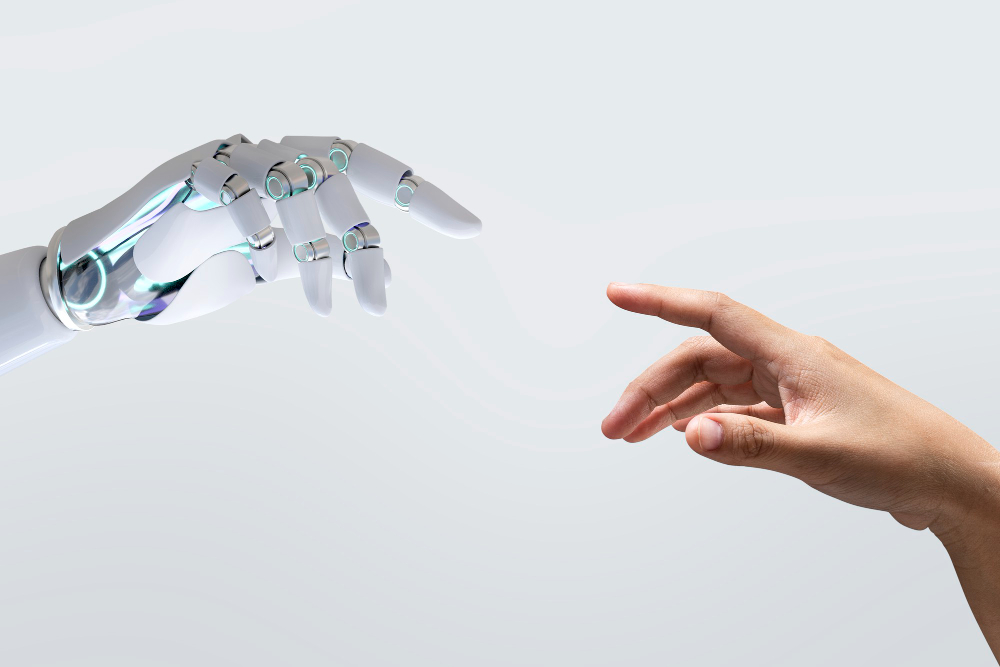
There is a story we tell ourselves about the world. It is a story of progress, of connection, of technology making everything better for everyone. We talk about artificial intelligence writing novels in seconds, about smart homes that anticipate our needs, about a future where every object is connected and every problem has a digital solution.
And that story is true. For some of us.
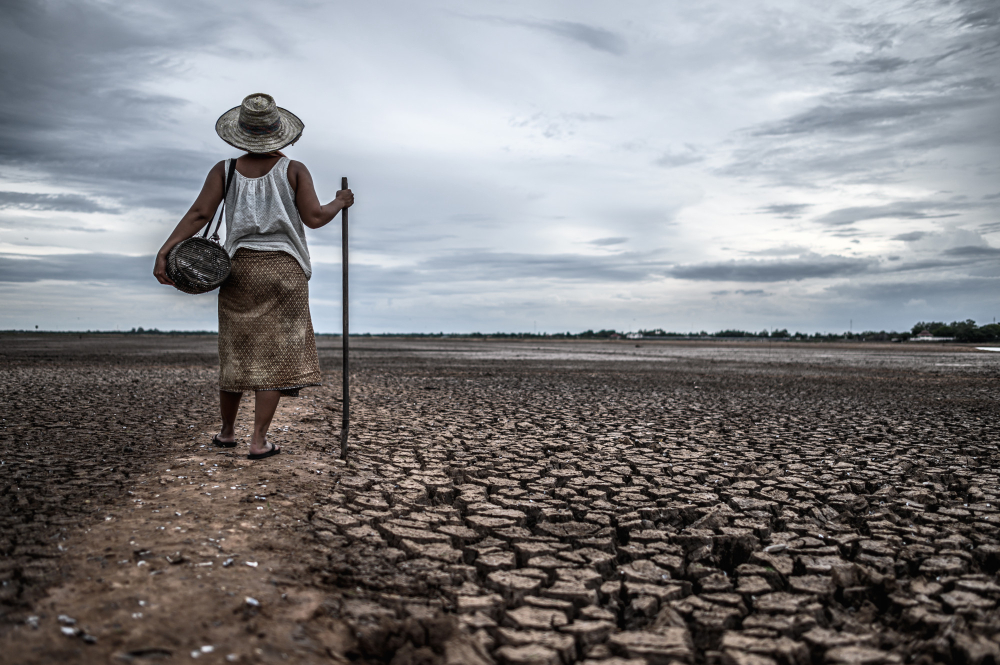
But there is another story happening at the same time. It is happening in places where the electricity does not reach, where the water is not safe, where the internet has never arrived. It is happening to people who are not waiting for the metaverse. They are waiting for a meal.
The world is not heading toward a single future. It is splitting into two worlds that exist side by side, often without seeing each other. And if we are honest with ourselves, we have to admit that this is not a new phenomenon. It is just the latest version of an old one.
The Numbers We Cannot Ignore
Let us start with the facts, because facts are gentle. They do not judge. They just are.
According to the World Bank, 2.2 billion people remain offline as of 2026. That is more than a quarter of humanity. Almost all of them live in low and middle income countries. In low income countries, only 23 percent of people use the internet. In high income countries, it is 94 percent.
That is not a gap. That is a canyon.
The GSMA, which represents mobile operators worldwide, reports that 3.4 billion people do not use mobile internet, even though more than 90 percent of them live within coverage areas. The network exists. They simply cannot afford to use it. The cost of an entry level smartphone can equal 44 percent of a person's monthly income in low and middle income countries.
Now consider artificial intelligence. Microsoft's AI Economy Institute found that in the first quarter of 2026, 27.5 percent of working age people in developed countries used a generative AI tool. In developing countries, that number was 15.4 percent. And the gap is widening.
The International Monetary Fund's AI Preparedness Index tells the same story. Advanced economies score 0.68. Emerging markets score 0.46. Low income countries score just 0.32.
Meanwhile, the world's wealthiest people are getting wealthier at a pace that is almost difficult to comprehend. There are fewer than 4,000 billionaires on the planet, and they hold a record $15.1 trillion in wealth. That is close to half the size of the entire United States economy. The richest 10 percent of humanity controls about 75 percent of global wealth. The poorest half owns just 2 percent.
And where is all that wealth going? Into artificial intelligence infrastructure. Microsoft, Google, Amazon, and Meta are on track to spend approaching $700 billion on capital expenditure in 2026, most of it directed at AI. That is more than the entire GDP of most countries. It is the largest concentrated deployment of private capital in human history.
The World Beyond the Screen
Now let us look at the other side of the divide. Not the digital side. The human side.
The World Bank reported in September 2026 that more than 824 million people, about one in ten worldwide, live in extreme poverty. That means surviving on less than $3.00 per day. And progress is not accelerating. It is barely moving. The poverty rate declined marginally from 10.1 percent in 2024 to 9.8 percent in 2026.
The United Nations reports that 655 million people still lack access to electricity. Eighty six percent of them live in sub Saharan Africa. The gap is concentrated in the world's most fragile and conflict affected countries.
Clean water, the most basic requirement for life, remains out of reach for 2.1 billion people. Women and girls spend an estimated 250 million hours every day collecting water. Every day. That is time not spent in school, not spent earning a living, not spent living.
And the wars continue. The International Rescue Committee reported in June 2026 that conflicts are at their highest levels since the Second World War. More than 117 million people are forcibly displaced. Nearly 40 million face catastrophic hunger. In Lebanon, more than one million people have been displaced by renewed conflict. In South Sudan, over 400,000 people were displaced between January and April 2026 alone.
Drone strikes in Sudan accounted for more than 80 percent of civilian deaths between January and April 2026. The war with Iran has cost $25 billion in its first two months. That is five times the cost of treating every child suffering from acute malnutrition worldwide.
The systems meant to respond to these crises are collapsing. The Global Humanitarian Assistance Report 2026 found that one in three humanitarian dollars has disappeared in just two years. Funding fell for the third year in a row, with a 20 percent drop in 2025.
The UN's 2026 humanitarian response plan for Sudan was less than one third funded. It received $930 million out of nearly $2.9 billion needed.
Maybe They Had Technology Too
There is a thought that keeps returning to me. When we look at ancient civilizations, when we see cave paintings and stone tools, we assume those people were primitive. We assume we are more advanced. We assume our technology is the measure of our progress.
But what if they had their own technology? What if their technology was simply different from ours, shaped by different needs, different resources, different values? What if our ancestors looked at the sky and understood things we have forgotten?
The people without electricity today are not waiting for us to arrive and save them. Many of them live in communities that have survived for generations without the things we consider essential. They have knowledge that does not come from a screen. They have skills that cannot be downloaded. They have communities that function without algorithms.
This is not romanticizing poverty. Poverty is brutal and unjust and unnecessary. But it is worth remembering that the absence of our technology does not mean the absence of intelligence, creativity, or humanity.
What We Are Building
We are building two worlds. One world where a person can speak to an AI and have a novel written in seconds, where a fridge orders groceries, where a house anticipates every need, where wealth accumulates in the hands of a few thousand people beyond any historical precedent.
And another world where a mother walks three hours to collect water, where a child dies from a preventable disease, where a family flees their home with nothing because armed men are coming, where the internet has never arrived and probably never will.
These worlds exist at the same time. They are not in the past. They are now. They are here.
And the technology that powers the first world is being built with resources that could transform the second. The $700 billion being spent on AI infrastructure this year could electrify every home on the planet. It could provide clean water to everyone. It could end hunger.
But it will not. Because that is not the logic of the system we have built.
What We Can Do
This is not a hopeless situation. It is a human situation. And humans have the capacity to change.
We can support organizations that are doing the work. The UN's humanitarian appeals are desperately underfunded. Every dollar helps.
We can pay attention. Not just to the news that entertains us, but to the news that matters. The wars in Sudan and Congo and Lebanon are not less important because they do not trend on social media.
We can question the story we tell ourselves about progress. Progress for whom? Progress measured how? A world with $15 trillion in billionaire wealth and 824 million people in extreme poverty is not a world that has figured out how to be just.
We can remember that the people on the other side of the divide are not statistics. They are not a problem to be solved. They are people, living their lives, doing their best, with the same dignity and the same hopes as anyone else.


More
more
like this
like this
On this blog, I write about what I love: AI, web design, graphic design, SEO, tech, and cinema, with a personal twist.

.png)